Great Science Fiction Authors and Their Timeless Stories
Some writers become memorable because they create characters readers never forget, while others stand out because they imagine possibilities that change the way we think about the world. H. G. Wells, Jules Verne, Edgar Rice Burroughs, Mary Wollstonecraft Shelley, and Philip K. Dick each brought a distinctive imagination to science fiction. Their stories range from scientific experiments and extraordinary journeys to distant planets, underwater worlds, technological change, and questions about human identity.
What makes these writers especially interesting is the variety of stories they created. Some imagined machines that could transform human life, while others explored distant planets, underwater worlds, wilderness adventures, scientific experiments, or uncertain futures. Their settings may be very different, but their stories continue to invite readers to think about curiosity, ambition, courage, discovery, technology, and the unknown.
This article explores these great science fiction authors through several of their works available at PDFBooksWorld. Looking at more than one story from each writer reveals the range of their imagination and helps explain why their writing has remained memorable across generations of readers.
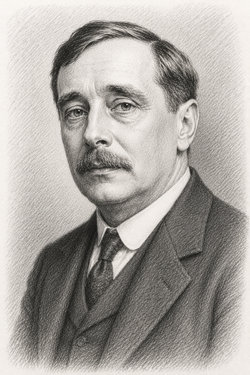
H. G. Wells became one of the most influential writers in the development of science fiction. His stories frequently use extraordinary scientific ideas to examine humanity, society, progress, conflict, and the future. Rather than treating science simply as a source of spectacular inventions, Wells often considered what could happen when new discoveries changed the balance of power or altered the way people understood their world.
The Time Machine takes the idea of time travel far beyond a simple adventure. The journey into the distant future allows Wells to consider the long-term consequences of social development and human change. The unusual world encountered by the Time Traveller gives the story a sense of mystery while encouraging readers to think about civilization and the direction in which humanity might develop.
The War of the Worlds explores an encounter between humanity and beings from another world. The story becomes a powerful examination of survival, fear, technological superiority, and the vulnerability of civilization. The idea of an alien invasion remains familiar to modern audiences, yet Wells's treatment of the subject continues to demonstrate how effectively imaginative fiction can explore human uncertainty.
In The Invisible Man, Wells turns scientific discovery into a story about power, isolation, and responsibility. The possibility of becoming invisible initially appears extraordinary, but the consequences of such a discovery become increasingly troubling. The story demonstrates Wells's ability to transform a scientific possibility into a study of human behavior.
Another memorable example is The Island of Doctor Moreau, where scientific experimentation raises difficult questions about life, nature, and the boundaries of human intervention. The strange island setting adds mystery and tension while giving Wells another opportunity to examine the consequences of unchecked experimentation.
Tales of Space and Time further demonstrates his interest in unusual possibilities and speculative situations. The collection reflects his continuing fascination with time, space, humanity, and the future. Across these works, Wells shows how scientific ideas can become starting points for stories that remain interesting because they also explore human choices and social questions.
The continuing appeal of Wells comes from this combination of imagination and human questions. His stories can be read as adventures, speculative ideas, or reflections on society. This flexibility helps explain why his fiction continues to provide memorable reading experiences long after its original publication.
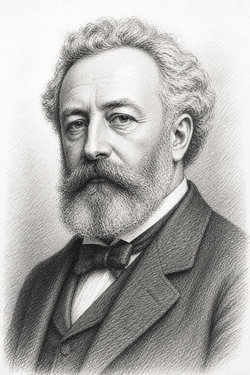
Jules Verne brought scientific curiosity, exploration, invention, and adventure together in stories filled with remarkable journeys. His fiction often takes readers to places that were difficult to imagine reaching in his time. Beneath the adventurous surface, however, his stories demonstrate a fascination with geography, engineering, transportation, exploration, and the possibilities of human ingenuity.
Around the World in Eighty Days turns global travel into an exciting race against time. The journey moves through different countries and forms of transportation while maintaining a strong sense of urgency. The story remains engaging because the central challenge is easy to understand: can the travelers complete their journey within the promised time?
In Twenty Thousand Leagues Under the Seas, Verne takes readers beneath the oceans aboard the Nautilus. The underwater setting provides opportunities to explore marine life, unfamiliar landscapes, technological invention, and the mysterious character of Captain Nemo. The story combines scientific curiosity with adventure, creating an imaginative journey that remains one of the best-known examples of classic speculative fiction.
A Journey to the Centre of the Earth extends Verne's fascination with exploration in another direction. Instead of traveling across oceans or continents, the characters venture beneath the Earth's surface into a mysterious environment filled with natural wonders and dangers. The combination of scientific ideas, underground landscapes, and adventure demonstrates how Verne could turn unfamiliar environments into compelling fictional worlds.
From the Earth to the Moon demonstrates Verne's fascination with space travel and technological possibility. The story imagines an ambitious attempt to reach the Moon and turns an extraordinary scientific challenge into an entertaining adventure filled with invention, planning, and uncertainty.
In The Mysterious Island, Verne combines survival, exploration, invention, and cooperation. Characters must use their knowledge and practical abilities to overcome the challenges of an unfamiliar environment. The story demonstrates another important feature of Verne's writing: curiosity and knowledge are often presented as tools that help characters understand and overcome the world around them.
The continuing appeal of Verne comes partly from his sense of discovery. His stories encourage readers to imagine places beyond ordinary experience and to see scientific curiosity as the beginning of adventure. His journeys remain memorable because they combine unfamiliar destinations with characters facing understandable challenges.
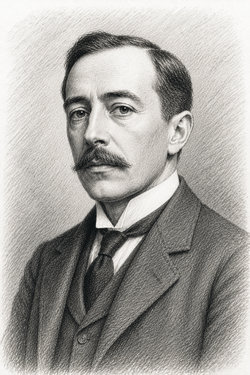
Edgar Rice Burroughs created some of the most imaginative adventure worlds in classic fiction. His writing frequently combines unfamiliar environments, physical danger, exploration, survival, and extraordinary characters. His stories can move from the jungles of Earth to the imagined landscapes of Mars, giving readers a wide range of settings and adventures.
Tarzan of the Apes introduces one of Burroughs's most recognizable characters. Tarzan's unusual upbringing creates a central contrast between wilderness and civilization. His understanding of the natural world gives him abilities that are different from those of people raised in conventional human society. The story combines survival, identity, exploration, danger, and discovery.
The Tarzan adventures continue in The Return of Tarzan, which places the character in new situations and environments. The story broadens the adventure tradition established in the first book and demonstrates how Burroughs could develop a central character through continuing journeys and challenges.
The Beasts of Tarzan adds another chapter to the continuing Tarzan adventures. The story brings together wilderness, danger, relationships, and survival while continuing Burroughs's interest in the contrast between civilization and the natural world.
The series expands further through The Son of Tarzan, bringing family and a new generation into the imaginative world created by Burroughs. The story shows how the themes associated with Tarzan can be extended through new characters and changing circumstances.
Tarzan and the Jewels of Opar takes the adventure into another mysterious setting. Lost places, danger, treasure, and exploration provide the ingredients for another fast-moving adventure while continuing the larger world associated with Tarzan.
Jungle Tales of Tarzan provides another look at Tarzan and his relationship with the wilderness. The stories demonstrate Burroughs's ability to use the jungle environment as an important part of the storytelling rather than simply as a background.
Burroughs also explored planetary adventure in A Princess of Mars. The story transports readers to Mars and introduces an unfamiliar world filled with unusual societies, landscapes, conflicts, and characters. His ability to create dramatic settings far removed from ordinary life demonstrates why his fiction remains attractive to readers interested in imaginative adventure.
Across his different works, Burroughs shows a consistent interest in exploration and extraordinary environments. Whether the setting is a jungle, a lost location, or another planet, his stories give readers a strong feeling of movement and discovery. This imaginative quality is an important part of the lasting appeal of his fiction.
Mary Shelley and the Question of Scientific Responsibility
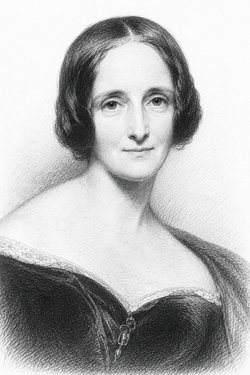
Mary Wollstonecraft Shelley occupies a special place in the history of science fiction and speculative literature. Her writing brought together scientific curiosity, Gothic atmosphere, emotional conflict, and questions about human responsibility. Rather than presenting scientific discovery as something that automatically improves human life, she explored what can happen when ambition moves faster than responsibility.
Her most important work in this tradition is Frankenstein. The story follows an ambitious experiment that results in the creation of a living being and examines the consequences that follow. The novel explores creation, loneliness, rejection, identity, responsibility, knowledge, and the desire to understand the unknown.
What makes Frankenstein particularly enduring is that its central questions remain understandable even when the scientific setting is considered in its historical context. The story asks what responsibilities a creator has toward a creation and what can happen when knowledge is pursued without sufficient consideration of its consequences.
The continuing interest in Shelley's work also comes from the emotional dimension of her storytelling. The novel is not simply concerned with an extraordinary experiment. It examines the feelings of people affected by that experiment, including isolation, fear, anger, grief, and the desire for acceptance. This combination of speculative ideas and human emotion helps explain why Frankenstein continues to be read and discussed.
Among the writers featured in this article, Shelley also demonstrates how a single extraordinary idea can influence generations of later storytelling. The themes introduced through Frankenstein have become part of discussions about science, invention, responsibility, artificial creation, and the boundaries of human knowledge.
Philip K. Dick developed a distinctive approach to science fiction by exploring technology, identity, conflict, uncertainty, and the nature of reality. His stories often begin with situations that appear familiar before introducing an idea that changes the reader's understanding of events. This gives his fiction a strong sense of mystery and encourages readers to question what they initially believe.
Second Variety explores a future shaped by warfare and advanced technology. The story raises questions about machines, survival, trust, and the difficulty of distinguishing human intentions from technological threats. Its focus on changing forms of technology and identity demonstrates Dick's interest in the consequences of inventions that become difficult for people to control.
In The Variable Man, Dick again combines technology and uncertainty. The story considers how an individual can become important within a much larger system of technological planning and conflict. The unusual situation allows him to explore questions about prediction, human choice, and the limits of systems designed to anticipate the future.
The Defenders examines another consequence of prolonged conflict and technological development. The story creates a situation in which assumptions about war, safety, and reality become increasingly complicated. Dick uses the science fiction setting to explore how information can shape people's understanding of events.
His imagination is also evident in Mr. Spaceship, where technological development becomes part of a story about conflict and human ingenuity. The work demonstrates how Dick could develop an unusual scientific idea while keeping the focus on the people affected by it.
The Skull demonstrates another side of Dick's shorter fiction. The story creates an unusual situation in which the relationship between the past, identity, and human choices becomes important. Its compact form allows a speculative idea to develop quickly while leaving readers with questions about its implications.
The Crystal Crypt adds another imaginative situation involving technology, conflict, and unusual circumstances. Like many of Dick's stories, it places characters in a situation where ordinary assumptions become less reliable and unexpected developments change the direction of events.
Beyond Lies the Wub shows Dick's ability to combine an unusual creature with questions about human expectations and unfamiliar forms of life. The story demonstrates how a simple speculative premise can lead to surprising changes in perspective.
In Beyond the Door, Dick again introduces an unusual situation that challenges the reader's expectations. The story reflects his interest in strange possibilities and the uncertainty that can arise when familiar reality is disrupted.
Piper in the Woods provides another example of Dick's interest in unusual behavior and unexplained circumstances. The story uses a speculative setting to create questions about perception, human responses, and the meaning behind unfamiliar events.
The Eyes Have It demonstrates the lighter and more playful side of Dick's imagination. The story uses an unusual idea to create uncertainty about how people interpret ordinary language and situations. Together with his other short works, it demonstrates the range of ideas he could explore within compact narratives.
Across these works, Dick repeatedly uses technology, strange circumstances, and uncertain information to make readers reconsider what they think they know. This distinctive approach remains an important part of the appeal of his fiction.
What Makes These Authors Memorable
These writers demonstrate several different ways of creating lasting science fiction. H. G. Wells uses scientific ideas to examine humanity, society, and possible futures. Jules Verne transforms exploration and invention into exciting journeys across the Earth, beneath the oceans, and into imagined environments. Edgar Rice Burroughs creates larger-than-life adventures in jungles, lost places, and distant worlds.
Mary Wollstonecraft Shelley approaches extraordinary ideas through questions about creation, responsibility, isolation, and human ambition. Philip K. Dick takes another path, using technology and unusual situations to question identity, conflict, information, and reality. Their approaches are different, but each writer demonstrates how speculative ideas can become the foundation for memorable stories.
Their works also show why timeless stories do not necessarily depend on having the same setting or style as modern fiction. A story can remain interesting because the questions it raises continue to matter. What happens when technology becomes powerful? What are the responsibilities that come with discovery? How should people respond to unfamiliar worlds? Can human beings control the consequences of their own inventions? These questions continue to give classic science fiction much of its lasting appeal.
Why Their Stories Still Matter to Readers
The enduring quality of these authors comes from the combination of imaginative settings and recognizable human concerns. Wells writes about the future but also about society and human behavior. Verne writes about extraordinary journeys while emphasizing curiosity and discovery. Burroughs creates fantastic worlds while focusing on courage, survival, identity, and adventure.
Shelley's work turns scientific ambition into a deeply human story about responsibility and isolation, while Dick uses futuristic ideas to examine uncertainty and the relationship between people and technology. These different approaches allow readers to experience science fiction in many forms rather than as a single type of story.
Reading several works by the same author also reveals how much range can exist within one literary career. A writer may return to familiar ideas while changing the setting, characters, conflicts, and questions. This variety gives readers more opportunities to discover memorable characters and imaginative situations.
Discover These Authors and Their Timeless Stories
The works of these five writers provide a broad introduction to classic science fiction and speculative storytelling. Their books contain time travel, alien encounters, underwater exploration, planetary adventures, scientific experiments, technological conflicts, mysterious environments, and questions about human identity.
More importantly, their stories demonstrate the lasting power of imagination. A remarkable invention, an unfamiliar world, an impossible journey, or a strange scientific experiment can become the starting point for a much larger discussion about human life. This is one of the reasons these writers continue to attract new readers across generations.
Explore the works of these remarkable writers at PDFBooksWorld and discover the different stories, ideas, characters, and imaginative worlds they created. From the scientific possibilities of H. G. Wells and the spirit of discovery in Jules Verne to the adventures of Edgar Rice Burroughs, the scientific responsibility explored by Mary Wollstonecraft Shelley, and the uncertain realities of Philip K. Dick, these authors offer many memorable journeys through classic literature.