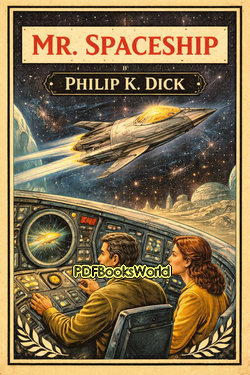
Mr. Spaceship
by Philip K. Dick
When Human Minds and Machines Become One in Philip K. Dick’s Mr. Spaceship
Space warfare, artificial intelligence, and the blurred line between humans and machines come together in Mr. Spaceship by Philip K. Dick. Written during the golden age of science fiction, the story explores futuristic technology while raising deeper questions about consciousness, identity, and the future of humanity.
Although the story is compact, it presents imaginative ideas that later became central themes in modern science fiction. Philip K. Dick combines suspense, emotional conflict, and technological speculation to create a memorable vision of the future.
The result is both an entertaining adventure and a thoughtful exploration of what it means to remain human in an increasingly mechanical world.
A Future Shaped by Interstellar War
The story takes place during a future conflict between Earth and hostile alien forces. Human civilization depends heavily on advanced spacecraft and military technology to survive.
As the war grows more dangerous, scientists develop an unusual idea: placing a human brain inside a spaceship to create a living combat vessel capable of independent thought and strategic decision-making.
This bold experiment leads to unexpected emotional and philosophical consequences.
The narrative includes:
Space warfare, advanced technology, artificial intelligence, military strategy, human consciousness, emotional memory, and ethical conflict.
Main Characters in Mr. Spaceship
- Professor Thomas – An elderly academic whose mind becomes connected to the experimental spacecraft project.
- The Military Scientists – Researchers and engineers attempting to create more effective war technology.
- The Spacecraft – A machine that gradually develops human emotional qualities because of the mind placed within it.
- Military Officials – Leaders focused primarily on victory and survival during the ongoing war.
Major Themes in the Story
- Humanity and Technology – The story questions whether machines can develop human emotions or identity.
- The Ethics of Scientific Progress – Technological advancement creates moral and emotional dilemmas.
- War and Survival – Fear and conflict push society toward increasingly extreme solutions.
- Memory and Consciousness – The story explores whether personality can survive beyond the physical body.
- Individuality Versus Control – Human emotion begins conflicting with military expectations and commands.
Philip K. Dick’s Visionary Science Fiction
Philip K. Dick became famous for writing science fiction that focused less on technology itself and more on the psychological and philosophical consequences of technological change.
In Mr. Spaceship, he imagines a future where machines are no longer entirely separate from human identity.
The story reflects concerns involving:
Artificial intelligence, military automation, consciousness transfer, technological ethics, and the emotional cost of war.
Many of these ideas later became central topics in science fiction films, novels, and discussions about future technology.
The Emotional Side of the Story
Despite its futuristic setting, the story contains a surprisingly emotional core. The spaceship’s human consciousness begins developing emotional attachments and desires that conflict with its military purpose.
This creates tension between mechanical efficiency and human feeling.
The emotional dimension helps the story stand out from more traditional action-focused science fiction adventures.
Why the Story Still Feels Modern
Modern readers continue to connect with Mr. Spaceship because many of its ideas now feel closer to reality than they did when the story was first written.
Questions involving artificial intelligence, machine autonomy, and the merging of humans with technology have become increasingly important in modern society.
The story remains relevant because it:
Explores ethical technology questions, combines emotion with science fiction, examines military dependence on machines, and challenges traditional ideas about consciousness.
Philip K. Dick’s Storytelling Style
Dick’s writing style is fast-moving, imaginative, and intellectually curious. He often introduces unusual scientific ideas while keeping the emotional experiences of characters at the center of the story.
Rather than focusing only on action scenes, he explores uncertainty, identity, and psychological tension.
This balance between imaginative concepts and human emotion became one of his defining strengths as a writer.
Interesting Facts About the Story
Philip K. Dick later became one of the most influential science fiction authors of the twentieth century. Many of his works inspired famous films exploring artificial intelligence, virtual reality, and questions about the nature of identity and consciousness.
Final Thoughts
Mr. Spaceship by Philip K. Dick remains a fascinating blend of futuristic imagination and philosophical reflection. Through its unusual concept of a human mind merged with a machine, the story explores technology, war, emotion, and the uncertain future of human identity.
For readers interested in classic science fiction, artificial intelligence, and thought-provoking futuristic ideas, the story continues to offer an engaging and imaginative reading experience.
Similar Genres
About the Author
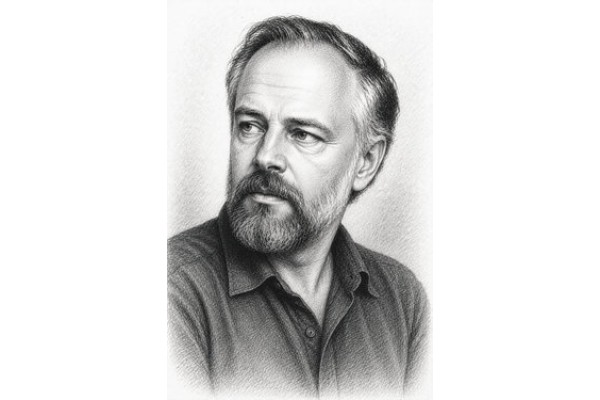
Philip K. Dick reshaped modern science fiction through stories that challenged readers to question the nature of reality, identity, and human consciousness. Born in Chicago in 1928, he wrote during a period of rapid technological and social change, producing novels and short stories that blended speculative ideas with psychological depth. Explore Philip K. Dick books to discover the author's life, literary career, and access notable works, including Second Variety, The Variable Man, The Defenders, The Skull , and more.