The Invisible Man
by H. G. Wells
The Invisible Man: A Timeless Science Fiction Masterpiece
Few science fiction novels have influenced modern storytelling as deeply as The Invisible Man by H. G. Wells. First published in 1897, this classic novel continues to captivate readers with its gripping blend of mystery, suspense, psychological horror, and scientific imagination.
The story explores what happens when scientific discovery is used without morality, making it one of the most thought-provoking novels ever written.
Introduction to The Invisible Man
Set in the quiet English village of Iping, the novel begins with the arrival of a strange and heavily bandaged man at a local inn during a snowstorm. His unusual appearance and secretive behavior quickly attract suspicion among the villagers.
As events unfold, the mysterious stranger is revealed to be Griffin, a brilliant scientist who has discovered a method to make himself invisible.
At first, invisibility seems like an extraordinary scientific breakthrough. However, Griffin’s inability to reverse the experiment slowly pushes him toward paranoia, isolation, and violence. What starts as scientific ambition soon becomes a terrifying descent into madness.
Plot Summary
The novel follows Griffin as he attempts to survive while hiding his invisible condition from society. Since invisible objects cannot easily interact with the visible world, Griffin struggles with everyday life, especially food, shelter, and protection from weather.
His frustrations grow into anger, and he begins using his invisibility for theft, intimidation, and eventually murder.
Griffin later seeks help from Dr. Kemp, an old acquaintance. During their conversations, Griffin reveals how he discovered the secret of invisibility through experiments involving optics and light refraction.
However, his dream of using invisibility for power and control horrifies Kemp, who realizes Griffin has become dangerously unstable.
The story builds toward a dramatic confrontation between Griffin and the townspeople. In the end, the invisible scientist becomes hunted by the very society he once hoped to dominate.
Major Themes in The Invisible Man
1. Science Without Morality
One of the central themes of the novel is the danger of unchecked scientific ambition. Griffin’s discovery is remarkable, but his lack of ethical responsibility turns science into a destructive force.
Wells presents a warning about how intelligence without humanity can lead to disaster.
2. Isolation and Loneliness
Griffin’s invisibility separates him from human society both physically and emotionally. Instead of granting freedom, invisibility traps him in loneliness and fear.
His inability to connect with others contributes heavily to his psychological decline.
3. Power and Corruption
The novel asks an important moral question: What would happen if someone could act without consequences?
Griffin believes invisibility gives him unlimited power, but that freedom slowly corrupts him completely.
4. Fear of the Unknown
The villagers react to Griffin with suspicion and panic because they cannot understand him. Wells effectively uses mystery and uncertainty to create tension throughout the story.
Why The Invisible Man Still Matters Today
Even after more than a century, The Invisible Man remains highly relevant. Modern discussions about scientific ethics, surveillance, identity, and misuse of technology mirror the concerns raised in the novel.
Griffin’s story serves as a reminder that technological progress must always be guided by responsibility and compassion.
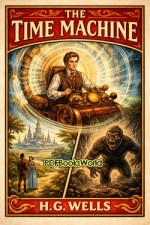
The novel also helped shape the science fiction genre itself. H. G. Wells is often called the “father of science fiction” because of groundbreaking works like The Time Machine, The War of the Worlds, and The Invisible Man.
Literary Style and Writing
Wells combines scientific concepts with suspenseful storytelling in a way that feels surprisingly modern. The narrative moves quickly, balancing mystery, humor, horror, and philosophical reflection.
The rural English setting creates a strong contrast with the extraordinary scientific experiment at the center of the story.
The character of Griffin is especially memorable because he is neither a traditional hero nor a simple villain. He is intelligent and ambitious, yet deeply flawed and morally reckless.
This complexity makes the novel more psychologically engaging than many early science fiction works.
Adaptations and Cultural Impact
The influence of The Invisible Man can be seen across films, television shows, comics, and modern superhero stories.
The concept of invisibility has inspired countless adaptations and reinterpretations over the decades.
The story’s themes of hidden identity and abuse of power continue to resonate with audiences worldwide, proving the lasting impact of Wells’s imagination.
Final Thoughts
The Invisible Man is far more than a simple tale about a man who becomes invisible. It is a powerful exploration of morality, ambition, isolation, and the dangers of scientific obsession.
H. G. Wells crafted a novel that remains thrilling, intelligent, and relevant even in the modern age.
For readers who enjoy classic science fiction, psychological suspense, and thought-provoking literature, this novel remains an essential read.
Griffin’s tragic transformation continues to remind us that the greatest danger is not invisibility itself, but what people choose to do when they believe nobody can see them.
Similar Genres
About the Author
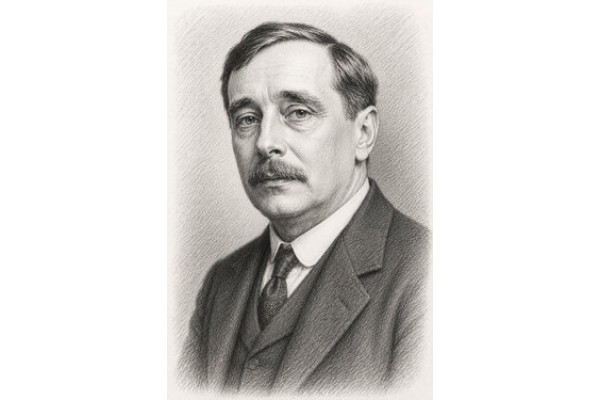
H. G. Wells helped redefine the boundaries of imagination by transforming science fiction into a powerful form of literary storytelling. Born in England in 1866, he combined a keen interest in science with an extraordinary gift for narrative, producing novels that entertained readers while encouraging them to think about the future of humanity. Explore H. G. Wells books to discover the author's life, literary career, and access notable works, including The War of the Worlds, The Time Machine, Tales of Space and Time, A Modern Utopia , and more.