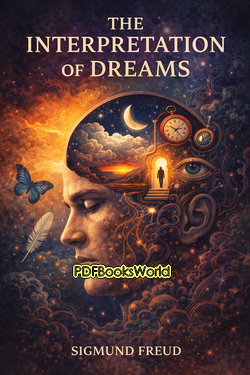
The Interpretation of Dreams
by Sigmund Freud
A Landmark Work in the Study of the Human Mind
The Interpretation of Dreams by Sigmund Freud is one of the most influential books in the history of psychology. First published at the turn of the twentieth century, the work introduced many of the ideas that would become central to psychoanalysis and transformed the way people thought about dreams, memory, desire, and the unconscious mind. Freud argued that dreams are not meaningless mental events but valuable clues to hidden psychological processes.
Through detailed analysis and numerous examples, he sought to demonstrate that dreams possess structure, purpose, and significance. The book established a new framework for understanding the relationship between conscious thought and unconscious motivation, making it a foundational text in modern psychological theory.
Its influence extended far beyond psychology, affecting literature, philosophy, art, and cultural studies throughout the twentieth century.
The Central Idea of the Book
Freud's primary argument is that dreams represent expressions of unconscious wishes and conflicts. According to his theory, thoughts and desires that cannot easily enter conscious awareness may find symbolic expression during sleep.
Rather than viewing dreams as random or meaningless, Freud interprets them as psychological messages that reveal aspects of the dreamer's inner life. He proposes that understanding these messages can provide insight into emotions, fears, memories, and unresolved conflicts.
This perspective fundamentally changed how many scholars and clinicians approached the study of dreams.
Manifest and Latent Content
One of Freud's most famous contributions is his distinction between two levels of dream meaning. The dream as remembered upon waking differs from the deeper psychological significance hidden beneath its surface.
- Manifest content: The images, events, and narrative remembered from the dream.
- Latent content: The underlying wishes, thoughts, and emotions that the dream symbolically expresses.
Freud believed that dream interpretation involves moving beyond the manifest content in order to uncover the latent meanings concealed within the dream's imagery.
The Work of the Unconscious Mind
The book places great emphasis on the unconscious, a realm of mental activity operating outside conscious awareness. Freud argues that many aspects of behavior are influenced by thoughts and feelings that individuals do not fully recognize.
Dreams provide a unique opportunity to observe these hidden processes. During sleep, the usual constraints of conscious thought are relaxed, allowing unconscious material to emerge in symbolic forms.
This concept became one of the defining principles of psychoanalytic theory and remains one of Freud's most enduring intellectual contributions.
Dream Symbols and Interpretation
Freud devoted considerable attention to the symbolic nature of dreams. He observed that unconscious thoughts often appear in disguised forms rather than straightforward representations.
As a result, dream images may combine memories, emotions, and associations into complex symbolic narratives. Freud encouraged interpreters to examine personal experiences and associations rather than relying exclusively on fixed symbolic meanings.
This emphasis on individual interpretation contributed to the development of psychoanalytic methods and therapeutic practice.
Influence Beyond Psychology
The impact of The Interpretation of Dreams extended far beyond clinical psychology. Writers, artists, and intellectuals found Freud's ideas fascinating because they offered new ways of understanding creativity, symbolism, and human motivation.
His theories influenced numerous fields, including:
- Literary criticism and narrative analysis.
- Art and surrealist movements.
- Philosophy and cultural theory.
- Psychotherapy and counseling.
Whether accepted, modified, or challenged, Freud's ideas became part of many important intellectual discussions during the twentieth century.
Debate and Legacy
While the book is widely recognized as a landmark publication, many of Freud's theories have been debated and reassessed by later psychologists. Advances in neuroscience, cognitive psychology, and sleep research have led to alternative explanations for dreaming and mental processes.
Nevertheless, Freud's emphasis on unconscious influences, symbolic meaning, and the complexity of human motivation continues to shape discussions about psychology and culture.
His work remains significant because it encouraged scholars to explore aspects of the mind that had previously received little systematic attention.
Final Thoughts
The Interpretation of Dreams by Sigmund Freud is a groundbreaking exploration of dreams and the unconscious mind. Through his analysis of dream symbolism, hidden wishes, and psychological conflict, Freud developed ideas that profoundly influenced modern thought and helped establish psychoanalysis as a major intellectual movement.
For readers interested in psychology, intellectual history, dream studies, and the evolution of theories about human behavior, this book remains one of the most important and thought-provoking works ever written on the nature of the mind.
Similar Genres
About the Author
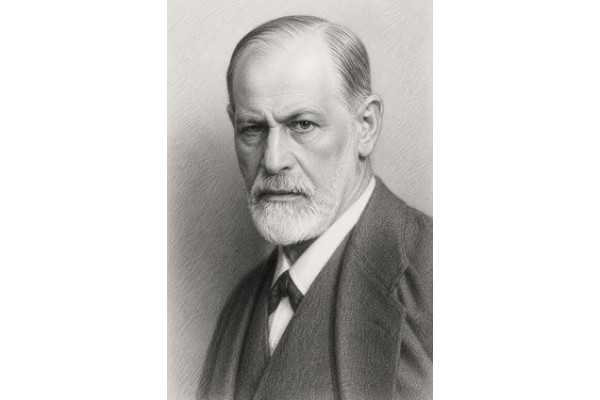
Sigmund Freud was an Austrian neurologist whose pioneering ideas transformed the study of the human mind and laid the foundations of psychoanalysis. Born in 1856 in what is now the Czech Republic and later based in Vienna, Freud devoted his career to exploring memory, dreams, personality, and the hidden forces that influence human behavior. Explore Sigmund Freud books to discover the author's life, literary career, and access notable works, including Dream Psychology, Three Contributions to the Theory of Sex, A General Introduction to Psychoanalysis, Psychopathology of Everyday Life , and more.