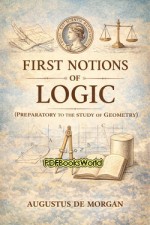
Logic
The Logic catalog offers a comprehensive collection of books dedicated to the principles of reasoning, argumentation, and critical thinking. As one of the foundational branches of philosophy, logic examines the methods by which conclusions are drawn from evidence and how valid reasoning can be distinguished from error or fallacy. The collection provides readers with valuable insights into the structures of thought that underpin philosophy, mathematics, science, law, and everyday decision-making.
Many titles focus on the fundamental concepts of logical analysis, introducing readers to the rules and techniques used to evaluate arguments and assess the validity of conclusions. Through systematic explanations and practical examples, these books explore topics such as deductive reasoning, inductive reasoning, syllogisms, propositions, and logical inference. Readers gain a deeper understanding of how ideas can be examined critically and how sound reasoning contributes to clearer thinking. The collection emphasizes the importance of rational analysis and intellectual discipline in the pursuit of knowledge.
The catalog also explores the historical development of logical thought and its influence on intellectual traditions. Readers can encounter works by influential philosophers and scholars who helped shape the study of logic, from classical systems of reasoning to more modern approaches. These writings reveal how logical principles have evolved over time while continuing to serve as essential tools for philosophical inquiry and scientific investigation.
Another notable feature of the collection is its examination of logic's practical applications. Many books demonstrate how logical reasoning can be applied to problem-solving, debate, decision-making, and the evaluation of evidence. Readers learn to identify common fallacies, construct coherent arguments, and assess competing viewpoints with greater clarity and precision. The collection highlights the value of critical thinking and analytical reasoning in both academic study and everyday life.
The Logic catalog appeals to students, philosophers, mathematicians, legal scholars, researchers, educators, and lifelong learners interested in developing stronger reasoning skills. Its combination of theoretical works, instructional texts, and analytical studies makes it a valuable resource for anyone seeking to improve their understanding of logical thought.
Overall, the Logic catalog serves as a gateway to the study of reasoning and intellectual inquiry. By bringing together works on argumentation, deduction, analysis, and critical thinking, the collection encourages readers to approach ideas with clarity and rigor. It highlights the enduring importance of logical reasoning, sound judgment, and disciplined thought in understanding the world and making informed decisions.
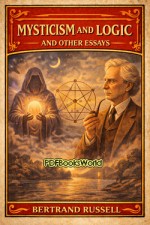
Mysticism and Logic and Other Essays
Bertrand Russell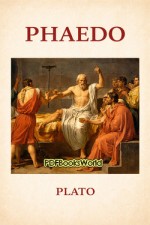
Phaedo
Plato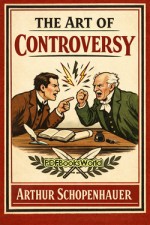
The Art of Controversy
Arthur Schopenhauer
Symbolic Logic
Lewis Carroll
The Game of Logic
Lewis Carroll