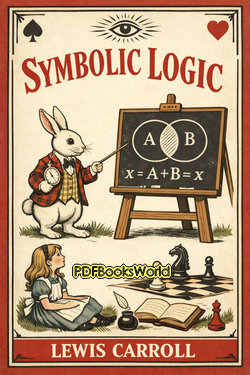
Symbolic Logic
by Lewis Carroll
Lewis Carroll’s Playful but Serious Exploration of Logic and Reasoning
Best known for the imaginative world of Alice’s Adventures in Wonderland, Lewis Carroll also possessed a deep fascination with mathematics, puzzles, and formal reasoning. In Symbolic Logic, he turns his attention toward the structure of logical thought itself, creating a work that combines intellectual rigor with the wit and playful inventiveness that made his literary writing so distinctive.
The book introduces readers to logical analysis through carefully constructed examples, diagrams, and paradoxical situations designed to sharpen reasoning skills.
Making Logic Accessible and Entertaining
Many textbooks on logic can feel abstract and difficult, but Carroll approaches the subject with unusual creativity. Rather than presenting dry theory alone, he invents amusing hypothetical situations involving imaginary characters, strange statements, and curious logical puzzles.
This method transforms formal reasoning into an engaging intellectual game.
Readers are encouraged not merely to memorize rules, but to think carefully about how conclusions are formed.
The Core Ideas Behind Symbolic Logic
The book explores the principles governing valid reasoning and structured argument.
Carroll examines:
- How statements relate logically to one another
- The difference between valid and invalid conclusions
- Methods for organizing complex arguments
- The role of symbols and diagrams in reasoning
These ideas connect mathematics, philosophy, and language through systematic analysis.
Logic as a Kind of Puzzle
One reason the book remains enjoyable is Carroll’s ability to present logic as playful intellectual exploration rather than rigid academic discipline.
Many examples resemble riddles or brainteasers where readers must carefully test assumptions and relationships between statements.
This puzzle-like quality reflects the same imaginative mind that created Wonderland’s paradoxes and linguistic games.
Even serious reasoning becomes strangely entertaining in Carroll’s hands.
The Relationship Between Language and Thought
Carroll also demonstrates how language can create confusion when people reason carelessly.
The book repeatedly shows that:
- Words may appear clear while hiding ambiguity
- Faulty assumptions produce incorrect conclusions
- Careful structure helps prevent logical error
- Reasoning requires precision as well as imagination
This attention to language connects the work closely with Carroll’s literary interests.
The Style of Lewis Carroll
Carroll writes with clarity, humor, and intellectual playfulness. Even technical discussions often contain whimsical examples and subtle jokes.
His explanations aim to guide readers gradually into increasingly sophisticated logical ideas without becoming overwhelmingly formal.
The balance between seriousness and creativity gives the book lasting charm.
Why Symbolic Logic Still Fascinates Readers
Symbolic Logic remains important because logical reasoning continues to shape mathematics, philosophy, science, computer science, and everyday critical thinking.
For readers interested in logic, puzzles, philosophy, mathematics, and the intellectual side of Lewis Carroll, the book offers a uniquely imaginative introduction to the art of reasoning clearly and carefully.
Similar Genres
About the Author
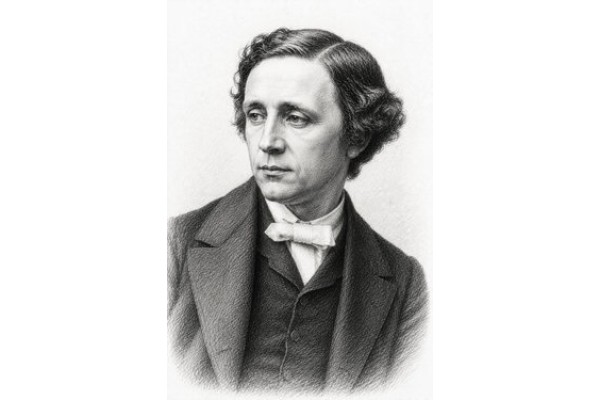
Lewis Carroll, the pen name of Charles Lutwidge Dodgson, created some of the most imaginative and enduring works in children's literature. Born in England in 1832, he was a mathematician, lecturer, photographer, and gifted storyteller whose boundless creativity continues to enchant readers of all ages. Explore Lewis Carroll books to discover the author's life, literary career, and access notable works, including Sylvie and Bruno, Alice Adventures in Wonderland, A Tangled Tale, Phantasmagoria and Other Poems , and more.