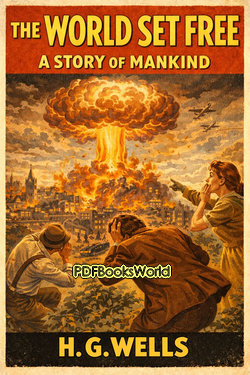
The World Set Free - A Story of Mankind
by H. G. Wells
A Visionary Science Fiction Novel About War and Humanity’s Future
The World Set Free - A Story of Mankind by H. G. Wells is a groundbreaking science fiction novel that explores the terrifying potential of advanced weapons and the possibility of rebuilding human civilization after global destruction. Written before the invention of nuclear weapons, the novel became famous for imagining atomic bombs decades before they became reality.
Wells combines futuristic speculation with political philosophy and social commentary, creating a story that examines both humanity’s capacity for destruction and its hope for progress. The novel reflects his belief that scientific advancement could either save civilization or push it toward catastrophe.
A Future Changed by Scientific Discovery
The story takes place in a future where scientists develop powerful atomic energy capable of producing devastating weapons. These new bombs create destruction on a scale the world has never seen before.
Unlike traditional explosives, the atomic bombs in the novel continue burning and releasing energy long after detonation. This terrifying idea gives the story a sense of urgency and danger that still feels striking today.
The Destruction of the Old World
Global war breaks out as nations use these terrible weapons against one another. Cities collapse, governments fail, and society descends into chaos.
Wells presents war not as heroic adventure but as evidence of humanity’s inability to control its own inventions responsibly. The destruction forces survivors to reconsider how civilization should be organized in the future.
Characters
- Scientists whose discoveries transform the future of warfare
- Political leaders struggling to manage global conflict
- Ordinary citizens affected by war and social collapse
- Thinkers and reformers seeking a better world after destruction
- Characters representing both human ambition and human weakness
The characters reflect Wells’s interest in the relationship between science, politics, and moral responsibility.
Themes
- The dangers of uncontrolled scientific progress
- The destructive power of war and nationalism
- The possibility of global cooperation and peace
- Human responsibility in the use of technology
- The rebuilding of society after catastrophe
These themes give the novel philosophical depth alongside its dramatic futuristic ideas.
H. G. Wells’s Remarkable Prediction of Atomic Weapons
One of the most famous aspects of the novel is Wells’s prediction of atomic warfare long before real nuclear weapons existed. His description of devastating energy-based bombs later appeared surprisingly close to twentieth century technological developments.
This imaginative foresight helped establish Wells as one of the most influential speculative thinkers in modern literature.
A Story About Rebuilding Civilization
Although much of the novel focuses on destruction, Wells ultimately explores hope and reconstruction. After the collapse of old political systems, survivors attempt to create a more peaceful and unified global society.
Wells believed humanity might learn from catastrophe and move toward greater international cooperation and rational governance.
Why the Novel Remains Powerful Today
The World Set Free continues to resonate because its warnings about technology, warfare, and global conflict remain deeply relevant. The novel raises important questions about scientific responsibility and humanity’s ability to control dangerous inventions.
For readers interested in classic science fiction, political thought, and futuristic speculation, the novel offers a fascinating and unsettling exploration of destruction, survival, and the future of human civilization.
Similar Genres
About the Author
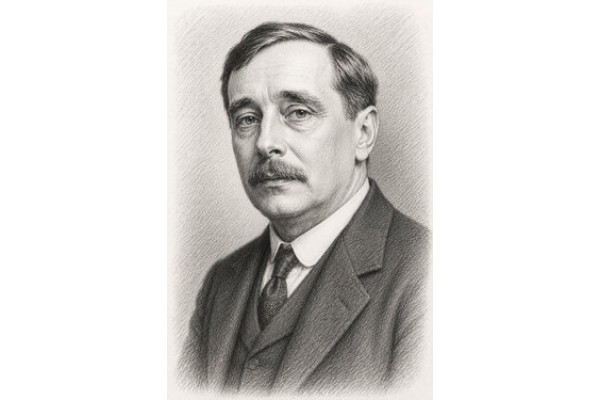
H. G. Wells helped redefine the boundaries of imagination by transforming science fiction into a powerful form of literary storytelling. Born in England in 1866, he combined a keen interest in science with an extraordinary gift for narrative, producing novels that entertained readers while encouraging them to think about the future of humanity. Explore H. G. Wells books to discover the author's life, literary career, and access notable works, including The War of the Worlds, The Time Machine, Tales of Space and Time, The Invisible Man , and more.