The War in the Air
by H. G. Wells
A Futuristic Vision of Global Warfare in the Skies
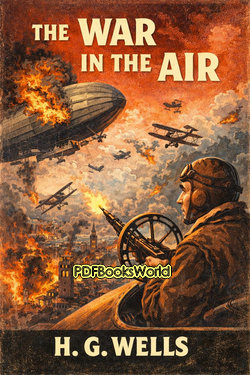
The War in the Air by H. G. Wells is a dramatic science fiction novel that imagines the devastating consequences of advanced aerial warfare long before modern air combat became a reality. Combining adventure, political speculation, and social commentary, Wells presents a world transformed by flying machines and global conflict.
The novel reflects early twentieth century anxieties about technology, militarization, and international rivalry. Through its vivid descriptions of destruction and chaos, Wells warns readers about the dangers of scientific progress when controlled by aggressive political powers.
An Ordinary Man Caught in Extraordinary Events
The story follows Bert Smallways, an ordinary young man with little influence or ambition, whose life changes suddenly when he becomes involved in international conflict connected to experimental aircraft.
Unlike traditional heroic protagonists, Bert is often confused and overwhelmed by the rapidly changing world around him. His ordinary perspective allows readers to experience the chaos of technological warfare from a human and personal viewpoint.
The Rise of Air Power and Modern Warfare
At the center of the novel is the idea that airplanes and flying machines will completely transform warfare. Wells imagined nations using air fleets to attack cities, destroy infrastructure, and spread panic across the world.
Although written before large-scale aerial combat became common, many of Wells’s predictions later resembled real developments during twentieth century wars.
Characters
- Bert Smallways – An ordinary man unexpectedly caught in global conflict
- Butteridge – An inventor connected to revolutionary aircraft technology
- Military and political leaders competing for technological advantage
- Citizens struggling to survive social collapse and warfare
- Characters representing ambition, fear, and the instability of modern society
The characters help illustrate how ordinary people are often affected most deeply by political and technological conflict.
Themes
- The dangers of technological warfare
- The instability created by global competition and militarism
- The vulnerability of civilization during conflict
- The relationship between scientific progress and destruction
- The survival of ordinary individuals during social chaos
These themes give the novel both suspense and lasting political relevance.
H. G. Wells’s Remarkable Futuristic Imagination
Wells wrote the novel during a period when aviation technology was still in its early stages. His ability to imagine large-scale air warfare decades before it became reality demonstrated his extraordinary speculative vision.
The novel’s descriptions of aerial attacks, collapsing cities, and global panic later appeared surprisingly close to real historical events during modern wars.
A Warning About Scientific Progress Without Restraint
Like many of Wells’s works, The War in the Air combines fascination with technology and deep concern about humanity’s moral development. Wells feared that scientific advances could outpace political wisdom and ethical responsibility.
The story suggests that powerful inventions become dangerous when nations focus more on domination than cooperation.
Why the Novel Still Feels Relevant Today
The War in the Air remains compelling because its warnings about warfare, technology, and global instability continue to resonate in the modern world. The novel explores fears that remain familiar in discussions about military innovation and international conflict.
For readers interested in classic science fiction, political speculation, and visionary literature, the novel offers an exciting and thought-provoking exploration of how technology can reshape both civilization and war.
Similar Genres
About the Author
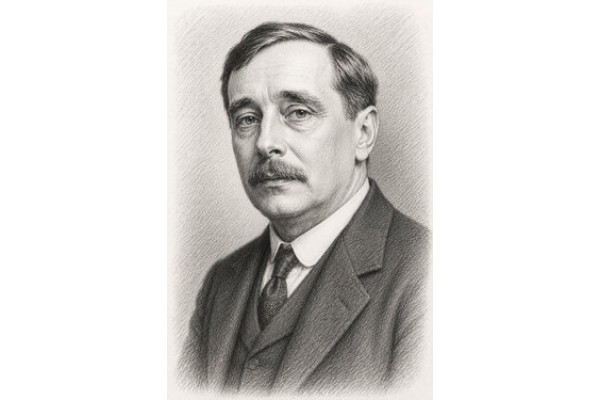
H. G. Wells helped redefine the boundaries of imagination by transforming science fiction into a powerful form of literary storytelling. Born in England in 1866, he combined a keen interest in science with an extraordinary gift for narrative, producing novels that entertained readers while encouraging them to think about the future of humanity. Explore H. G. Wells books to discover the author's life, literary career, and access notable works, including The War of the Worlds, The Time Machine, Tales of Space and Time, The Invisible Man , and more.