
The First Men in the Moon
by H. G. Wells
An Extraordinary Journey Beyond Earth and Into the Unknown
The First Men in the Moon by H. G. Wells is a classic science fiction novel that combines adventure, imagination, and social commentary. The story follows two very different men who travel to the Moon using a revolutionary substance that blocks gravity. Once there, they discover a strange underground civilization filled with mysterious alien beings and unfamiliar social systems.
Like many of Wells’s novels, the story goes beyond scientific fantasy and explores deeper ideas about human ambition, intelligence, greed, and the structure of society. The novel remains one of the most influential early works of space exploration fiction.
The Invention That Makes Space Travel Possible
The adventure begins when the brilliant but eccentric scientist Mr. Cavor invents “Cavorite,” a material capable of shielding objects from gravity. Using this discovery, he and the businessman Bedford build a spacecraft and launch themselves toward the Moon.
The scientific explanation may appear imaginative by modern standards, but Wells uses it primarily as a way to open the door to exploration and philosophical speculation.
A Strange Civilization Beneath the Lunar Surface
After arriving on the Moon, the travelers discover the Selenites, an advanced alien society living beneath the surface. The Moon is not empty and lifeless as expected, but organized in ways completely different from human civilization.
The underground world fascinates and unsettles the explorers. Wells uses the alien society to reflect on human culture, social organization, and the consequences of specialization and control.
Characters
- Mr. Cavor – An inventive scientist driven by curiosity and scientific ambition
- Bedford – A practical and financially motivated businessman
- The Selenites – Intelligent lunar inhabitants with a highly organized society
- Various specialized members of the Moon civilization representing strict social order
- Characters shaped by contrasting attitudes toward knowledge, profit, and survival
The relationship between Cavor and Bedford creates much of the novel’s tension, as their personalities and goals often conflict.
Themes
- The human desire for exploration and discovery
- The conflict between science and greed
- The dangers of social control and specialization
- The encounter between different civilizations
- The limits of human understanding in unfamiliar worlds
These themes give the novel intellectual depth beyond its exciting adventure story.
H. G. Wells’s Imaginative Vision of Space Travel
Long before real space exploration became possible, Wells imagined travel beyond Earth with remarkable creativity. His descriptions of lunar landscapes, strange environments, and alien societies helped shape the future of science fiction literature.
The novel captures both the excitement and uncertainty of exploring completely unknown territory. Wells presents the Moon as a place of wonder but also danger and misunderstanding.
Social Commentary Hidden Within the Adventure
As in many of his works, Wells uses science fiction to discuss real social and political ideas. The highly organized society of the Selenites reflects concerns about industrialization, rigid social systems, and the loss of individuality.
The novel also questions whether human behavior, especially greed and conflict, would continue even in entirely new worlds.
Why the Novel Continues to Inspire Readers
The First Men in the Moon remains one of the great classics of early science fiction because of its imaginative world-building and philosophical depth. The novel combines suspenseful adventure with thoughtful reflections on science, society, and human ambition.
For readers interested in space exploration, classic science fiction, and imaginative speculative storytelling, the novel offers an exciting and intellectually engaging journey far beyond Earth.
Similar Genres
About the Author
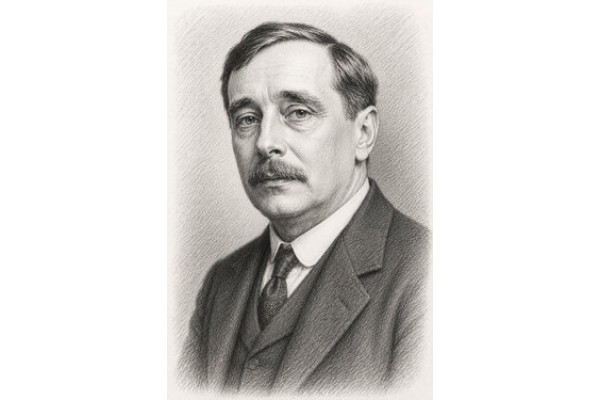
H. G. Wells helped redefine the boundaries of imagination by transforming science fiction into a powerful form of literary storytelling. Born in England in 1866, he combined a keen interest in science with an extraordinary gift for narrative, producing novels that entertained readers while encouraging them to think about the future of humanity. Explore H. G. Wells books to discover the author's life, literary career, and access notable works, including The War of the Worlds, The Time Machine, Tales of Space and Time, The Invisible Man , and more.