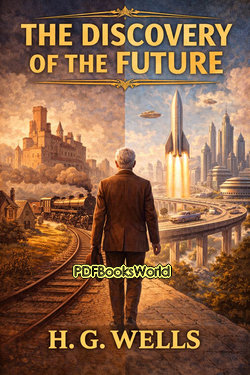
The Discovery of the Future
by H. G. Wells
H. G. Wells and the Idea of Studying the Future
The Discovery of the Future by H. G. Wells is a thought-provoking essay that explores humanity’s growing ability to think scientifically about the future. Rather than treating the future as something completely unknowable, Wells argues that modern science and careful observation allow people to anticipate social, technological, and political change.
Written during the early twentieth century, the work reflects a period when industrial progress and scientific discovery were rapidly transforming society. Wells believed that understanding patterns of change could help humanity prepare for what lay ahead instead of remaining trapped by outdated traditions and limited thinking.
A New Way of Thinking About Time
One of the central ideas in the essay is that earlier civilizations focused mainly on the past. History, tradition, and inherited beliefs shaped most political and social systems for centuries.
Wells argues that modern society was beginning to adopt a more forward-looking perspective. Scientific research, technological development, and global communication encouraged people to think about long-term possibilities and future consequences.
The Influence of Science and Technology
The essay highlights how scientific progress changes the way societies function and evolve. Wells believed that inventions, transportation, industry, and communication technologies would continue reshaping everyday life at an accelerating pace.
Instead of fearing all change, he encouraged readers to study and understand these transformations rationally. This scientific attitude toward the future became one of Wells’s most influential intellectual ideas.
Major Ideas Explored in the Essay
- The importance of thinking about the future scientifically
- The relationship between technological progress and society
- The limitations of tradition and outdated beliefs
- The need for education and intellectual adaptability
- The possibility of shaping a better future through planning
These ideas reveal Wells’s belief that humanity could actively influence its future rather than simply react to events.
Optimism Mixed With Caution
Although Wells was fascinated by progress, he did not blindly celebrate every aspect of modernization. He understood that technological change could create inequality, conflict, and social instability if societies failed to adapt responsibly.
The essay therefore combines optimism about human potential with warnings about intellectual laziness and resistance to change.
H. G. Wells Beyond Science Fiction
While Wells is widely remembered for novels such as The Time Machine and The War of the Worlds, works like The Discovery of the Future reveal his serious interest in social philosophy and political thought.
He viewed science not only as a source of invention but also as a way of understanding civilization itself. His essays often explored education, social reform, and humanity’s long-term future.
A Vision That Influenced Modern Futurism
The essay is historically important because it helped popularize the idea that the future could be analyzed systematically. Many later futurists, planners, and social theorists adopted similar approaches when studying technological and social change.
Wells’s belief in forward-thinking societies influenced discussions about education, urban planning, science policy, and global cooperation.
Why the Essay Still Feels Relevant Today
The Discovery of the Future continues to resonate because modern societies still face rapid technological and social transformation. Questions about artificial intelligence, environmental change, communication technology, and global politics reflect the same challenges Wells discussed more than a century ago.
For readers interested in futurism, philosophy, science, and social thought, the essay offers a fascinating exploration of how humanity attempts to understand and prepare for the unknown future ahead.
Similar Genres
About the Author
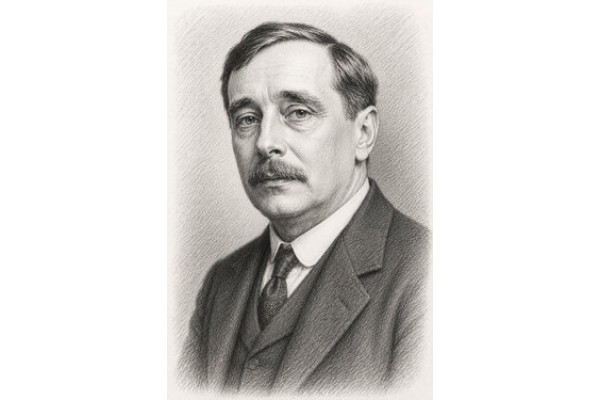
H. G. Wells helped redefine the boundaries of imagination by transforming science fiction into a powerful form of literary storytelling. Born in England in 1866, he combined a keen interest in science with an extraordinary gift for narrative, producing novels that entertained readers while encouraging them to think about the future of humanity. Explore H. G. Wells books to discover the author's life, literary career, and access notable works, including The War of the Worlds, The Time Machine, Tales of Space and Time, The Invisible Man , and more.