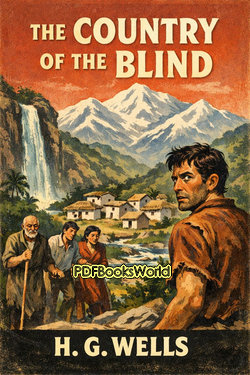
The Country of the Blind
by H. G. Wells
A Thought-Provoking Tale About Perception and Human Difference
The Country of the Blind by H. G. Wells is one of the author’s most famous and philosophically rich short stories. Blending adventure, fantasy, and social commentary, the story explores what happens when a man with sight enters an isolated valley where every inhabitant has been blind for generations.
Through this unusual situation, Wells examines ideas about perception, knowledge, power, and the difficulty of understanding experiences outside one’s own worldview. The story remains memorable because of both its imaginative setting and its deeper psychological meaning.
An Isolated Valley Hidden From the World
The story follows Nunez, a traveler who accidentally discovers a remote mountain valley cut off from civilization. Over many generations, the people living there have adapted completely to blindness after a disease removed sight from the population long ago.
Because nobody in the valley has ever seen, the very concept of vision has disappeared from their understanding of reality. Their society has developed around sound, touch, memory, and routine instead.
The Stranger Who Believes He Has an Advantage
At first, Nunez assumes that his ability to see will make him superior to the blind inhabitants. He remembers the old saying, “In the country of the blind, the one-eyed man is king.”
However, he soon discovers that his vision gives him little power within a society that neither understands nor values sight. Instead of being admired, he is treated as strange, irrational, and unreliable.
Characters
- Nunez – A traveler struggling to prove the value of sight in a blind society
- The blind villagers – People whose culture and daily life function without vision
- Medina-saroté – A woman with whom Nunez develops an emotional connection
- Village leaders who resist unfamiliar ideas and experiences
- Characters representing social conformity and collective belief
The interactions between Nunez and the villagers create both emotional tension and philosophical conflict.
Themes
- The limits of human perception and understanding
- The conflict between individuality and social conformity
- The difficulty of accepting unfamiliar ideas
- The relationship between knowledge and power
- The question of what defines “normal” reality
These themes give the story lasting intellectual and emotional significance.
H. G. Wells’s Blend of Fantasy and Philosophy
Although the story contains adventure and imaginative world-building, Wells uses the setting mainly to explore philosophical questions. The blind society functions logically according to its own experience, even if it appears limited from Nunez’s perspective.
This balance between fantasy and social reflection makes the story far more complex than a simple adventure tale.
A Story About Perspective and Human Certainty
One of the most powerful ideas in the story is that every society tends to believe its own understanding of reality is complete and unquestionable. The villagers cannot imagine sight because it lies completely outside their experience.
At the same time, Nunez struggles to understand that his own assumptions about superiority may also be flawed.
Why the Story Continues to Fascinate Readers
The Country of the Blind remains widely admired because of its imaginative concept and philosophical depth. The story encourages readers to think about perception, prejudice, and the limitations of human understanding.
For readers interested in classic fantasy, speculative fiction, and thought-provoking literature, the story offers a compelling exploration of how reality can appear completely different depending on one’s perspective and experience.
Similar Genres
About the Author
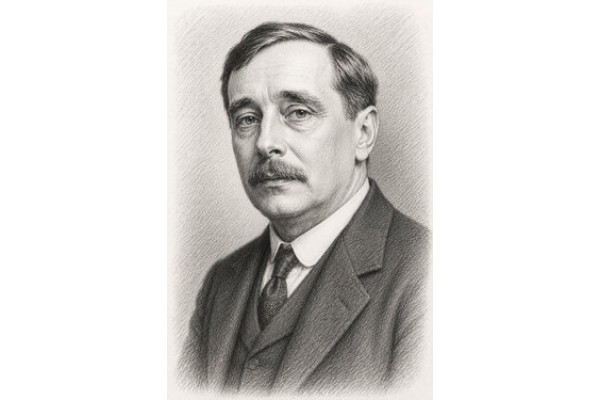
H. G. Wells helped redefine the boundaries of imagination by transforming science fiction into a powerful form of literary storytelling. Born in England in 1866, he combined a keen interest in science with an extraordinary gift for narrative, producing novels that entertained readers while encouraging them to think about the future of humanity. Explore H. G. Wells books to discover the author's life, literary career, and access notable works, including The War of the Worlds, The Time Machine, Tales of Space and Time, The Invisible Man , and more.