Floor Games
by H. G. Wells
A Creative Celebration of Imagination and Childhood Play
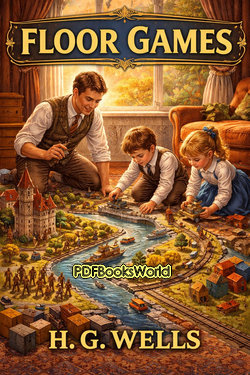
Floor Games by H. G. Wells is a charming and imaginative work that explores the joy of creative play between children and adults. Unlike Wells’s famous science fiction novels, this book focuses on simple indoor games played on the floor using toy soldiers, blocks, miniature buildings, and everyday objects transformed through imagination.
The book reflects Wells’s belief that play is not merely entertainment but an important part of creativity, learning, and emotional development. Through playful descriptions and enthusiastic storytelling, he demonstrates how ordinary household spaces can become worlds of adventure and invention.
The Simple Magic of Inventive Play
At the center of the book is the idea that imagination can transform simple objects into exciting worlds. Wells describes creating cities, castles, roads, rivers, and battlefields using toys, books, cardboard, and furniture.
The games are not strictly competitive. Instead, they focus on storytelling, creativity, exploration, and shared enjoyment between players.
A Different Side of H. G. Wells
Readers familiar with Wells’s darker or more serious science fiction may be surprised by the warmth and playfulness of this book. Floor Games reveals his affection for childhood imagination and his fascination with how games encourage creative thinking.
The writing carries a sense of humor and excitement, making the reader feel invited into the playful world Wells creates with his children.
Major Ideas Explored in the Book
- The importance of imagination in childhood
- Creative storytelling through games and toys
- The emotional value of shared play
- The transformation of ordinary spaces into fantasy worlds
- The connection between play and intellectual creativity
These ideas make the book more thoughtful and meaningful than a simple guide to games.
The Role of Toys and Miniature Worlds
Wells places special importance on toy soldiers, building blocks, trains, and miniature objects. He explains how these items become tools for imagination rather than fixed toys with limited purpose.
Children and adults are encouraged to invent stories, create landscapes, and develop entire fictional worlds using simple materials and creative thinking.
A Book That Encourages Creativity Over Rules
Unlike structured board games with strict instructions, the games described in the book rely heavily on improvisation and imagination. Wells encourages flexibility, invention, and personal creativity rather than rigid competition.
This playful freedom gives the book a timeless appeal, especially for readers interested in imaginative learning and open-ended play.
The Connection Between Play and Storytelling
One of the most interesting aspects of Floor Games is its connection between games and narrative creation. Many of the imagined adventures resemble miniature stories filled with journeys, conflicts, and discoveries.
This imaginative approach reflects Wells’s broader literary talent as a storyteller capable of building entire worlds from simple ideas.
Why Floor Games Still Feels Inspiring Today
Modern readers continue to appreciate the book because it celebrates creativity in a simple and joyful way. In an age often dominated by technology and structured entertainment, Wells’s emphasis on imagination and hands-on play remains refreshing.
For readers interested in childhood creativity, classic literature, or the playful side of H. G. Wells, Floor Games offers a warm and imaginative reminder of how powerful simple play can be.
Similar Genres
About the Author

H. G. Wells helped redefine the boundaries of imagination by transforming science fiction into a powerful form of literary storytelling. Born in England in 1866, he combined a keen interest in science with an extraordinary gift for narrative, producing novels that entertained readers while encouraging them to think about the future of humanity. Explore H. G. Wells books to discover the author's life, literary career, and access notable works, including The War of the Worlds, The Time Machine, Tales of Space and Time, The Invisible Man , and more.