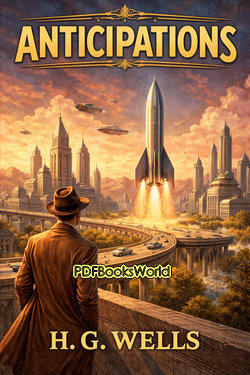
Anticipations
by H. G. Wells
A Vision of the Future From One of Science Fiction’s Greatest Thinkers
Anticipations by H. G. Wells is a fascinating work of social prediction and futuristic speculation. Unlike Wells’s famous science fiction novels filled with fictional adventures, this book examines what the future of society, technology, transportation, politics, and urban life might look like in the coming centuries. Written at the beginning of the twentieth century, the work reveals Wells’s remarkable imagination and his deep interest in scientific and social progress.
The book attempts to predict how modern inventions and changing social systems would transform everyday life. Some of Wells’s ideas proved surprisingly accurate, while others reflect the limitations and assumptions of his own historical period.
Imagining the Future of Technology and Society
Wells believed that rapid scientific and industrial progress would reshape civilization in dramatic ways. He discusses the future of transportation, communication, education, and cities while considering how these developments could affect human behavior and social organization.
One of the book’s most interesting qualities is its serious attempt to treat the future as something that could be studied logically rather than imagined purely through fantasy.
The Transformation of Cities and Travel
A major focus of the book is the future of transportation. Wells predicted that advances in vehicles and road systems would change where people lived and how cities developed.
He imagined growing suburban areas, faster travel, and the gradual reshaping of urban environments because of technological innovation. Many of these predictions later became reality in different forms.
Major Subjects Explored in the Book
- The future impact of science and technology
- Changes in transportation and city planning
- The evolution of political and social systems
- Education and intellectual development
- The relationship between progress and human society
These ideas reveal Wells’s attempt to understand how civilization might evolve in response to scientific change.
Wells’s Optimism and Concerns About Progress
Although Wells admired scientific advancement, he also recognized that rapid progress could create social problems and inequality. The book reflects both excitement and caution about the future.
He believed that societies would need education, organization, and responsible leadership to manage technological change successfully. Without careful planning, progress could lead to instability and conflict.
A Blend of Science, Philosophy, and Social Theory
Anticipations is more than a collection of predictions. The book combines scientific thinking with philosophical reflection and social analysis. Wells examines how technology might influence morality, culture, government, and human relationships.
This broader perspective makes the work intellectually ambitious and historically significant.
The Historical Importance of the Book
Published during a period of rapid industrial growth, the book captures the optimism and uncertainty of the modern age. Wells wrote at a time when electricity, automobiles, and new scientific discoveries were already transforming society.
Readers today can compare Wells’s predictions with actual historical developments, making the book both entertaining and thought-provoking.
Why Anticipations Still Fascinates Readers
Anticipations remains important because it shows how people from earlier generations imagined the future. Some predictions now seem remarkably accurate, while others reveal the cultural assumptions of the early twentieth century.
For readers interested in futurism, social history, technology, and speculative thought, the book offers a compelling exploration of how scientific progress shapes human civilization and imagination.
Similar Genres
About the Author
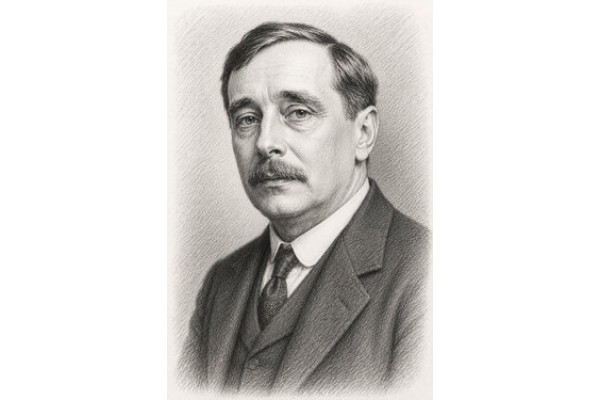
H. G. Wells helped redefine the boundaries of imagination by transforming science fiction into a powerful form of literary storytelling. Born in England in 1866, he combined a keen interest in science with an extraordinary gift for narrative, producing novels that entertained readers while encouraging them to think about the future of humanity. Explore H. G. Wells books to discover the author's life, literary career, and access notable works, including The War of the Worlds, The Time Machine, Tales of Space and Time, The Invisible Man , and more.