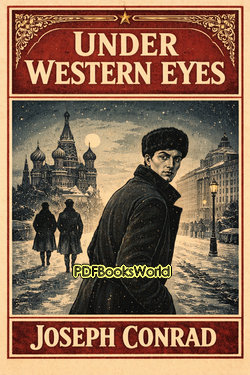
Under Western Eyes
by Joseph Conrad
Revolution, Betrayal, and the Crisis of Conscience
Under Western Eyes by Joseph Conrad is a dark and psychologically intense political novel exploring surveillance, terrorism, isolation, and moral conflict in the shadow of the Russian Empire. Through the tragic story of a young student drawn unwillingly into revolutionary politics, Conrad examines the emotional consequences of fear, secrecy, and divided loyalty.
The novel moves between Russia and Western Europe, contrasting authoritarian repression with the idealism and contradictions of political exile communities. Yet beneath its political themes lies something even deeper: a study of loneliness, guilt, and the difficulty of truly understanding other human beings.
A Student Pulled Into Dangerous Politics
The story centers on Razumov, a quiet and ambitious university student in St. Petersburg who hopes for a stable and respectable future. His life changes suddenly when a fellow student involved in revolutionary activity unexpectedly seeks refuge in his rooms after committing a political assassination.
Razumov becomes trapped between fear of government punishment and anxiety about association with violent revolutionaries.
In a moment that shapes the rest of his life, he makes a decision that entangles him with secret police, political conspiracies, and moral guilt. Eventually sent to Geneva among Russian political exiles, Razumov must live under constant emotional pressure while hiding the truth about his actions.
The Human Figures Within the Political Conflict
- Razumov
A solitary student whose desire for security collapses beneath moral compromise and psychological torment. - Victor Haldin
An idealistic revolutionary whose actions trigger the central crisis of the novel. - Natalia Haldin
A compassionate and intelligent woman whose trust becomes emotionally devastating for Razumov. - The Revolutionary Exiles
Political idealists, radicals, and intellectuals living within a world of suspicion and ideological conflict.
Conrad portrays these individuals with complexity, avoiding simple divisions between heroism and villainy.
A World Filled With Surveillance and Distrust
Throughout the novel, Conrad creates an atmosphere of secrecy, paranoia, and emotional isolation. Governments spy on citizens, revolutionaries distrust one another, and private conversations carry hidden dangers.
Razumov’s psychological suffering becomes increasingly intense because he can never fully escape his own conscience. Even moments of human connection feel unstable due to fear and deception.
The political world of the novel is one where trust becomes almost impossible.
Central Ideas Driving the Novel
- Moral Compromise and Guilt
Razumov’s decisions force him into emotional and psychological self-destruction. - Political Extremism and Violence
The novel examines the human consequences of both authoritarian power and revolutionary fanaticism. - Isolation and Identity
Razumov experiences profound loneliness as he loses connection with both society and himself. - East and West
Conrad contrasts Russian political oppression with Western liberal society while questioning both worlds.
One of Conrad’s Most Psychologically Complex Works
Under Western Eyes is often considered one of Joseph Conrad’s greatest achievements because of its emotional depth and political sophistication. The novel combines espionage, philosophy, and psychological realism in a remarkably layered narrative.
Conrad avoids presenting ideology as simple or heroic. Instead, he focuses on how political systems and moral pressure affect individual human beings internally.
The narrative voice itself adds complexity, as the story is partly filtered through an English narrator attempting to interpret Russian psychology and culture from an outsider’s perspective.
Why the Novel Still Feels Disturbingly Relevant
Modern readers continue finding Under Western Eyes strikingly relevant because its themes remain deeply connected to contemporary political life. Surveillance, political violence, misinformation, ideological division, and state control continue shaping societies around the world.
The novel also feels modern in its understanding of psychological fragmentation. Conrad portrays guilt, fear, and emotional alienation with extraordinary realism.
For readers interested in political fiction, psychological literature, and morally complex classics, this novel remains unsettling, intellectually powerful, and unforgettable.
Similar Genres
About the Author
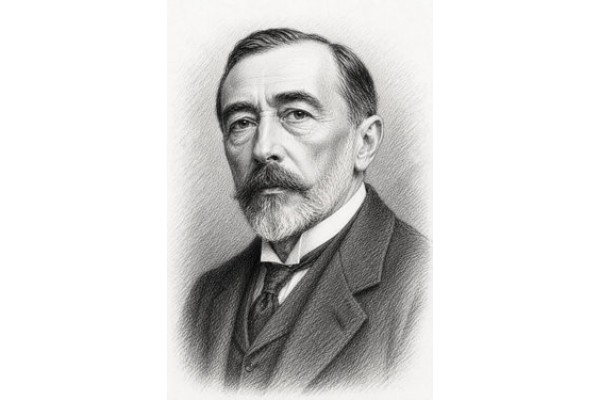
Joseph Conrad brought a unique international perspective to English literature, drawing upon his experiences as a merchant sailor to craft stories of adventure, moral conflict, and human resilience. Born in present-day Ukraine to Polish parents in 1857, he did not learn English fluently until adulthood, yet he went on to become one of the language's most admired novelists. Explore Joseph Conrad books to discover the author's life, literary career, and access notable works, including Heart of Darkness, The Secret Agent - A Simple Tale, Lord Jim, Nostromo - A Tale of the Seaboard , and more.