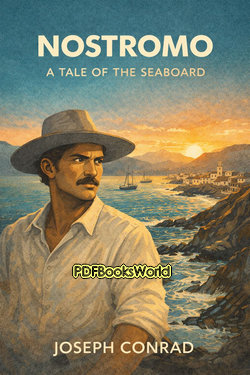
Nostromo - A Tale of the Seaboard
by Joseph Conrad
Power, Greed, and Revolution in Joseph Conrad’s Nostromo
Political unrest, hidden ambitions, dangerous wealth, and personal betrayal all collide in Nostromo: A Tale of the Seaboard by Joseph Conrad. Published in 1904, the novel is widely regarded as one of Conrad’s greatest literary achievements and a major work of political fiction.
Set in the fictional South American country of Costaguana, the story explores how wealth and power influence individuals, governments, and entire societies. At the center of the novel lies a valuable silver mine whose riches attract revolutionaries, businessmen, politicians, and opportunists.
Rather than focusing only on action, Conrad carefully examines the emotional and moral struggles of people living in a world shaped by greed and political instability.
A Story Built Around Conflict and Ambition
The novel follows several interconnected characters whose lives become tied to the silver mine of San Tomé. Political revolutions threaten the region, and control over wealth becomes increasingly dangerous.
As tensions rise, loyalty and personal integrity begin to weaken under pressure.
The story moves through:
Political conspiracies, armed uprisings, hidden treasure, social unrest, moral conflict, and personal ambition.
Conrad uses these events to explore how power can slowly change both individuals and societies.
Main Characters in Nostromo
- Nostromo – A respected and charismatic sailor known for his bravery and reliability, whose relationship with power and wealth becomes increasingly complicated.
- Charles Gould – The owner of the San Tomé silver mine who believes economic progress can bring stability to the country.
- Mrs. Emilia Gould – Charles Gould’s intelligent and thoughtful wife who observes the growing moral consequences of wealth and political influence.
- Dr. Monygham – A cynical but insightful doctor shaped by political suffering and personal hardship.
- Decoud – A journalist and intellectual deeply involved in political events and revolutionary movements.
Major Themes in the Novel
- Greed and Corruption – Wealth becomes a powerful force that changes relationships and moral values.
- Political Instability – Revolutions and shifting governments create uncertainty and fear throughout the country.
- Power and Influence – Characters struggle to control resources, public opinion, and political authority.
- Identity and Reputation – Nostromo’s public image begins to conflict with his personal desires and emotional struggles.
- Moral Complexity – Conrad avoids simple heroes and villains, presenting characters with complicated motivations.
Joseph Conrad’s Distinctive Writing Style
Joseph Conrad became famous for his psychologically complex storytelling and richly detailed prose. In Nostromo, he combines political drama with deep character exploration.
The narrative moves between multiple viewpoints, allowing readers to understand the thoughts, fears, and ambitions of different characters.
Conrad’s writing often feels reflective and philosophical, encouraging readers to think carefully about morality, loyalty, and human ambition.
The Political and Historical Influence Behind the Novel
Although Costaguana is fictional, the novel reflects real political tensions and economic struggles found in parts of Latin America during the late nineteenth and early twentieth centuries.
Conrad examines how foreign business interests, political revolutions, and economic dependence can shape nations and individuals alike.
The novel discusses issues connected to:
Colonial influence, economic power, political violence, international trade, and social inequality.
These themes continue to feel relevant in modern discussions about politics and global economics.
Why Nostromo Remains Important Today
Modern readers continue to admire Nostromo because of its realistic political themes and emotionally layered characters. The novel explores how wealth and ambition can affect personal morality and public life.
Readers often appreciate the book because it:
Combines political suspense with psychological depth, examines human ambition realistically, and presents complex moral questions without easy answers.
The story’s exploration of corruption and power still connects strongly with modern audiences.
Interesting Facts About the Novel
Many literary critics consider Nostromo one of the greatest political novels ever written. The book influenced later writers interested in politics, revolution, and psychological realism. Although it was not immediately successful when first published, its reputation grew steadily over time.
Final Thoughts
Nostromo: A Tale of the Seaboard by Joseph Conrad remains a powerful exploration of wealth, revolution, ambition, and moral conflict. Through memorable characters and a richly detailed political setting, Conrad creates a novel that continues to challenge and fascinate readers more than a century after its publication.
For readers interested in classic literature, political fiction, or psychologically complex storytelling, Nostromo offers a rewarding and thought-provoking reading experience.
Similar Genres
About the Author
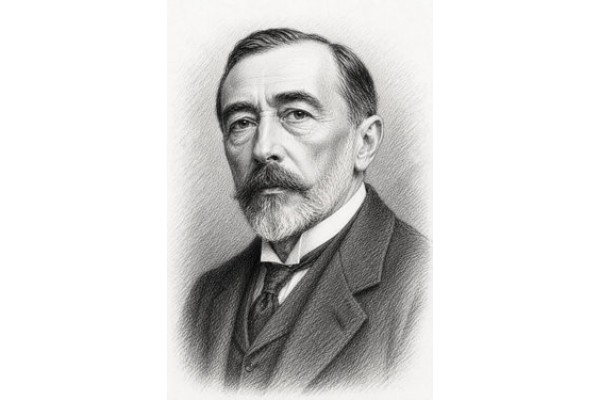
Joseph Conrad brought a unique international perspective to English literature, drawing upon his experiences as a merchant sailor to craft stories of adventure, moral conflict, and human resilience. Born in present-day Ukraine to Polish parents in 1857, he did not learn English fluently until adulthood, yet he went on to become one of the language's most admired novelists. Explore Joseph Conrad books to discover the author's life, literary career, and access notable works, including Heart of Darkness, The Secret Agent - A Simple Tale, Lord Jim, Some Reminiscences , and more.