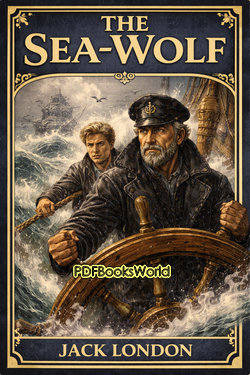
A Powerful Adventure of Survival and Philosophy at Sea
The Sea-Wolf is one of the most intense and psychologically complex novels written by Jack London. Published in 1904, the novel combines adventure, survival, and philosophical conflict within the harsh environment of the Pacific Ocean. Through dangerous sea voyages and powerful character clashes, London explores human nature, strength, morality, and the struggle between civilization and brutality.
Thrown Into A Brutal World
The story follows Humphrey Van Weyden, an educated literary critic whose comfortable life changes suddenly after a ferry accident leaves him stranded at sea. He is rescued by the Ghost, a sealing schooner captained by the feared Wolf Larsen. Although Van Weyden expects to be returned safely to shore, he soon discovers that life aboard the ship is dominated by violence, fear, and relentless physical hardship.
Forced to work among the rough crew, Van Weyden must adapt quickly in order to survive. The brutal conditions of the voyage gradually transform him from a sheltered intellectual into someone capable of physical endurance and self-reliance.
The Fearsome Captain Wolf Larsen
Wolf Larsen stands as one of Jack London’s most unforgettable literary creations. Physically powerful, highly intelligent, and emotionally ruthless, Larsen rules the ship through intimidation and strength. Despite his cruelty, he is also deeply philosophical, often engaging Van Weyden in discussions about life, morality, survival, and human existence.
Larsen’s belief that life is driven only by power and survival creates the central philosophical conflict of the novel. His personality combines intellectual brilliance with emotional coldness, making him both fascinating and terrifying throughout the story.
Adventure Mixed With Psychological Conflict
While The Sea-Wolf contains storms, mutiny, violence, and dangerous sea journeys, the novel also explores deeper psychological and philosophical themes. Jack London examines the tension between civilization and primal instinct, questioning what truly defines strength, morality, and human dignity.
The arrival of Maud Brewster later in the story introduces emotional warmth and compassion into the harsh environment of the ship. Her presence also highlights the growing changes within Van Weyden as he develops confidence, courage, and emotional maturity.
Modern readers continue to admire The Sea-Wolf because it offers more than a traditional adventure story. The novel combines suspenseful action with philosophical depth, allowing readers to reflect on human behavior, power, and survival while still enjoying the excitement of life at sea. Jack London’s vivid descriptions of the ocean, storms, and shipboard life also give the novel a strong sense of realism and atmosphere that continues to impress readers today.
The Lasting Influence of The Sea-Wolf
The novel remains one of Jack London’s most respected works and has inspired numerous film, television, and theatrical adaptations over the decades. Wolf Larsen, in particular, is often considered one of literature’s greatest antiheroes because of his combination of intelligence, strength, and moral complexity.
The book’s influence can also be seen in later adventure and psychological novels that explore survival, isolation, and the darker aspects of human nature.
Final Thoughts
The Sea-Wolf remains a remarkable combination of adventure fiction and philosophical drama. Through dangerous voyages, unforgettable characters, and intense emotional conflict, Jack London created a novel that continues to challenge and captivate readers more than a century after its publication.
For readers interested in classic adventure stories, psychological conflict, and thought-provoking literature, this novel remains a powerful and unforgettable reading experience.