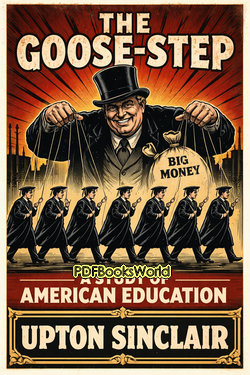
The Goose-step: A Study of American Education
by Upton Sinclair
Upton Sinclair's Powerful Critique of Higher Education in America
The Goose-step: A Study of American Education by Upton Sinclair is one of the author's most ambitious works of investigative social criticism. Published in 1923, the book examines the structure, leadership, funding, and ideological influences within American colleges and universities. Best known for exposing conditions in the meatpacking industry through The Jungle, Sinclair applied the same investigative approach to education, arguing that many institutions served powerful economic interests rather than the broader public good.
The title itself is deliberately provocative. The phrase "goose-step" evokes rigid discipline and unquestioning obedience, suggesting that educational institutions were encouraging conformity rather than independent thought. Through extensive research and documentation, Sinclair sought to demonstrate how wealth, politics, and institutional authority shaped American higher education.
What Sinclair Set Out to Expose
Rather than focusing on classroom teaching alone, Sinclair investigated the broader systems governing universities. He believed that educational institutions often reflected the priorities of influential donors, trustees, and business interests.
According to Sinclair, these relationships could affect:
- Faculty appointments and dismissals.
- Academic freedom and intellectual independence.
- Research priorities and funding.
- Administrative decision-making.
- The ideas and values promoted on campus.
His critique was not directed at education itself but at structures that he believed limited genuine inquiry and public service.
An Investigative Approach
One of the book's most distinctive features is its method. Sinclair assembled a vast collection of reports, testimonies, public records, and examples from universities across the United States. He approached educational institutions much as a journalist might investigate government agencies or corporations.
The result is a work that combines documentation with passionate argument. Readers encounter not only Sinclair's conclusions but also the evidence he believed supported them.
This extensive research helped make the book one of the most detailed critiques of American higher education produced during the early twentieth century.
The Themes at the Heart of the Book
Throughout the study, Sinclair returns to several recurring concerns.
Academic Freedom: The ability of scholars and teachers to pursue truth without fear of political or financial pressure.
Power and Influence: The relationship between educational institutions and wealthy individuals or organizations.
Democracy and Education: Whether universities serve the public interest or narrower private interests.
Intellectual Independence: The importance of encouraging critical thinking rather than conformity.
These themes continue to generate discussion in modern debates about higher education.
The Writing Style of Upton Sinclair
Sinclair writes with energy, conviction, and a clear sense of purpose. Unlike detached academic studies, The Goose-step is openly argumentative. The author seeks not merely to inform readers but to persuade them that reform is necessary.
His prose is direct and accessible, making complex institutional issues understandable to a general audience. Even when discussing administrative structures or financial arrangements, Sinclair maintains a sense of urgency that keeps the narrative engaging.
Why the Book Remains Relevant
Although written more than a century ago, The Goose-step continues to attract attention because many of the questions it raises remain familiar. Debates concerning university funding, academic independence, donor influence, and the purpose of higher education continue to shape public discussion.
The book also serves as an important historical document, revealing how educational institutions were viewed during a period of significant social and economic change in the United States.
Whether readers agree with Sinclair's conclusions or not, his investigation provides valuable insight into the relationship between education and power.
A Lasting Contribution to Social Criticism
Like much of Sinclair's work, The Goose-step reflects his belief that institutions should be examined critically and held accountable to the public. His willingness to challenge established authority helped make him one of the most influential reform-minded writers of his era.
The book remains an example of investigative writing applied to a field often regarded as beyond public scrutiny.
Final Thoughts
The Goose-step: A Study of American Education by Upton Sinclair is a bold and meticulously researched critique of higher education in early twentieth-century America. Through documentation, analysis, and passionate advocacy, Sinclair challenges readers to consider how power, wealth, and institutional structures influence the pursuit of knowledge.
For readers interested in educational history, social reform, investigative journalism, and American intellectual life, this work remains both provocative and historically significant.
Similar Genres
About the Author
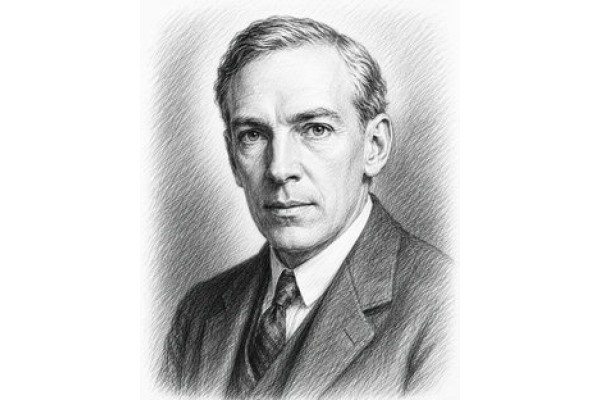
Upton Sinclair was one of America's most influential novelists and social reformers, using fiction as a powerful tool to expose injustice and inspire change. Born in Maryland in 1878, Sinclair devoted his literary career to examining the lives of ordinary people affected by poverty, industrialization, political corruption, and economic inequality. Explore Upton Sinclair books to discover the author's life, literary career, and access notable works, including The Jungle, The Brass Check - A Study of American Journalism, The Cruise of the Training Ship, Good Health and How We Won It , and more.