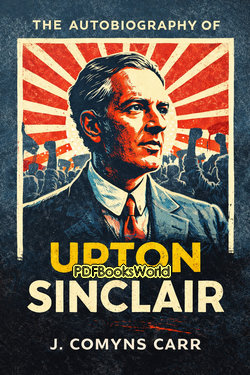
The Autobiography of Upton Sinclair
by Upton Sinclair
The Life and Ideas of One of America’s Most Influential Writers
The Autobiography of Upton Sinclair by Upton Sinclair offers a firsthand account of the remarkable life of a writer whose work helped shape public opinion and inspire social reform. In this autobiographical narrative, Sinclair reflects on his personal experiences, literary career, political activism, and the events that influenced his thinking. More than a story of individual achievement, the book provides a window into the social, economic, and political changes that transformed America during the late nineteenth and early twentieth centuries.
From Humble Beginnings to Literary Success
Sinclair recounts his early years, describing the challenges and opportunities that shaped his development as a writer. Growing up in a family with limited financial resources gave him firsthand insight into economic inequality, a subject that would later become central to much of his work. His determination to succeed through education and writing laid the foundation for a long and influential career.
A Writer with a Purpose
Unlike authors who wrote purely for entertainment, Sinclair believed literature could be a powerful tool for social change. Throughout his career, he used novels, essays, and articles to draw attention to issues such as poverty, labor conditions, political corruption, and economic injustice. His autobiography reveals the motivations behind these efforts and the challenges he encountered along the way.
Important Aspects of Sinclair’s Life
- Literary Achievement: He produced a large body of influential works across multiple genres.
- Social Reform: Many of his writings sought to improve conditions for ordinary people.
- Political Engagement: Sinclair actively participated in public debates and reform movements.
- Personal Reflection: The autobiography explores both successes and disappointments.
The Impact of Public Advocacy
One of the most interesting elements of the book is Sinclair’s discussion of how writing can influence society. He reflects on the reactions to his publications, the controversies they generated, and the reforms they helped inspire. His experiences demonstrate the potential power of literature to shape public awareness and encourage change.
Major Themes in the Autobiography
- Social Justice: A commitment to addressing inequality and unfair treatment.
- Perseverance: Determination in the face of personal and professional challenges.
- Political Activism: The belief that citizens can help improve society.
- Truth and Awareness: The importance of exposing problems and encouraging discussion.
- Personal Growth: The evolution of ideas through experience and reflection.
Upton Sinclair’s Writing Style
Sinclair writes with clarity, honesty, and conviction. His autobiographical approach allows readers to understand not only what happened during his life but also why certain events mattered to him. The narrative combines personal memories with broader discussions of social and political issues, creating a work that is both informative and engaging.
Why the Book Remains Relevant
The Autobiography of Upton Sinclair continues to attract readers because it explores themes that remain important today. Questions about social responsibility, economic fairness, political participation, and the role of journalism are as relevant now as they were during Sinclair’s lifetime. For readers interested in American history, literature, and social reform, this autobiography provides valuable insights into the life of a writer who sought to change the world through words.
Similar Genres
About the Author

Upton Sinclair was one of America's most influential novelists and social reformers, using fiction as a powerful tool to expose injustice and inspire change. Born in Maryland in 1878, Sinclair devoted his literary career to examining the lives of ordinary people affected by poverty, industrialization, political corruption, and economic inequality. Explore Upton Sinclair books to discover the author's life, literary career, and access notable works, including The Jungle, The Brass Check - A Study of American Journalism, The Goose-step: A Study of American Education, The Cruise of the Training Ship , and more.