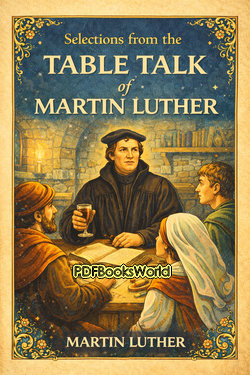
Selections from the Table Talk of Martin Luther
by Martin Luther
Conversation, Theology, and Everyday Reflections from the Protestant Reformer
Selections from the Table Talk of Martin Luther by Martin Luther is a collection of informal conversations, reflections, theological comments, personal observations, and moral teachings recorded by Luther’s students and companions during meals and social gatherings. Unlike his formal theological treatises and sermons, the Table Talk reveals Luther in a more personal and conversational setting, offering insight into his personality, humor, religious convictions, and opinions on daily life, politics, scripture, education, and society.
The collection presents Luther not only as a theologian and reformer, but also as a vivid and outspoken individual deeply engaged with the practical and spiritual concerns of ordinary life.
The Informal Voice of the Reformation
The book gathers remarks spoken by Luther at his dinner table and within domestic settings, where students and visitors recorded his spontaneous discussions. Topics range widely across theology, morality, biblical interpretation, church corruption, education, family life, government, music, temptation, and human weakness.
Luther often combines serious religious reflection with humor, storytelling, sharp criticism, and practical advice.
Rather than presenting carefully structured academic arguments, the work captures the immediacy and energy of spoken conversation.
The volume reflects the intellectual and religious atmosphere of the Protestant Reformation while also preserving the personal voice of one of its central figures.
Its tone shifts between devotional seriousness, lively wit, emotional intensity, and direct moral instruction.
Faith and Everyday Life
A major theme throughout the collection is that Christian faith should shape ordinary daily existence rather than remain confined to formal religious ceremony.
Luther repeatedly discusses work, marriage, parenting, friendship, suffering, temptation, and social responsibility while emphasizing trust in God’s grace and the importance of scripture.
The work also reflects his concern with conscience, spiritual struggle, and the dangers of hypocrisy and empty religious performance.
This blending of theology with everyday conversation helped make Luther’s ideas accessible to broader audiences.
Religious and Social Themes Explored Throughout the Collection
- Faith and Christian Living: Luther explains how spiritual belief influences ordinary conduct and moral responsibility.
- Scripture and Theology: Biblical interpretation and doctrinal discussion appear throughout the conversations.
- Church Reform and Religious Criticism: The collection reflects Luther’s opposition to corruption and misuse of religious authority.
- Family, Work, and Society: Everyday responsibilities are presented as meaningful parts of Christian vocation.
- Human Weakness and Divine Grace: Luther frequently reflects upon temptation, suffering, and dependence upon God’s mercy.
The work became one of the most famous collections of personal reflections associated with the Protestant Reformation.
The Humanity of a Religious Reformer
One of the work’s strongest features is its portrayal of Luther as a complex human personality rather than only a formal theologian.
The conversations reveal his humor, impatience, compassion, intellectual curiosity, and emotional intensity while showing how deeply religion shaped his understanding of politics, education, and human behavior.
The collection also demonstrates how important spoken discussion and domestic gatherings were within the intellectual culture of the Reformation.
This personal dimension gives the work unusual historical and literary interest.
Martin Luther’s Conversational Style
Selections from the Table Talk of Martin Luther demonstrates Luther’s remarkable ability to speak plainly and vividly about profound religious and moral questions.
The language remains energetic, direct, and strongly grounded in practical examples and scriptural references.
Luther consistently combines theological seriousness with memorable imagery, humor, and emotional candor.
Why the Book Still Holds Historical and Religious Importance
Modern readers continue finding Selections from the Table Talk of Martin Luther valuable because it provides a rare glimpse into the private thoughts and daily conversations of one of history’s most influential religious reformers.
The collection also offers insight into the intellectual culture of the Reformation and the ways theological ideas circulated through personal discussion as well as formal writing.
Its reflections on faith, morality, scripture, society, and human weakness continue attracting readers interested in both theology and historical personality.
For readers interested in Christianity, Reformation history, theology, religious autobiography, social history, devotional literature, and the life of Martin Luther, this work remains historically revealing, spiritually engaging, and intellectually memorable.
Similar Genres
About the Author

Martin Luther was a German theologian, scholar, and reformer whose ideas transformed Christianity and profoundly influenced the course of European history. Born in Eisleben in 1483, Luther initially pursued a career in law before entering a monastery and dedicating his life to religious study. Explore Martin Luther books to discover the author's life, literary career, and access notable works, including Commentary on the Epistle to the Galatians, Disputation of Doctor Martin Luther on the Power and Efficacy of Indulgences, Concerning Christian Liberty, A Treatise on Good Works , and more.