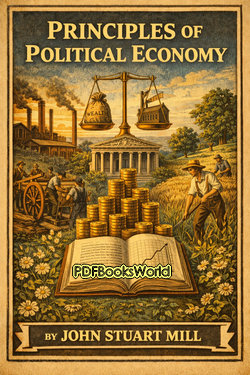
Principles Of Political Economy
by John Stuart Mill
Economics, Society, and Wealth in Principles of Political Economy
Principles of Political Economy by John Stuart Mill is one of the most influential economic works of the 19th century. The book examines how wealth is produced, distributed, and used within society while also exploring the relationship between economics, morality, labor, and government.
More than a technical study of money and trade, the work reflects Mill’s broader interest in human welfare, social progress, and political reform.
What Is Political Economy?
Political economy was the term once used for the study of economics and society together. Instead of focusing only on markets and finance, thinkers like Mill examined how economic systems affected everyday life, government, workers, and social stability.
The book discusses subjects such as production, wages, trade, taxation, labor, industry, and property ownership.
Main Economic Ideas in the Book
Mill explains how economies function through the interaction of labor, capital, production, and consumption. He also studies how governments and social institutions influence economic outcomes.
Important topics include:
The role of industry, the growth of wealth, competition, international trade, worker conditions, and economic inequality.
Important Themes Explored
- Wealth and Distribution
Mill examines not only how wealth is created but also how it is shared within society. - Labor and Human Welfare
The book pays significant attention to workers, wages, and living conditions. - Freedom and Government
Mill explores the balance between individual economic freedom and state involvement. - Social Progress
Economic systems are evaluated according to their effect on human improvement and social stability.
John Stuart Mill’s Approach
John Stuart Mill combines economic analysis with philosophy and social thought.
His writing style is:
- Logical and organized
- Analytical but readable
- Focused on practical social issues
- Concerned with ethics as well as economics
Unlike purely mathematical economic writing, Mill often discusses the human consequences of economic policy.
Why the Book Became Influential
The work became highly important because it connected economic theory with broader social and political questions.
It influenced discussions involving:
Free markets, labor reform, social justice, taxation, industrial development, and the responsibilities of government.
For many years, the book served as a major textbook in economics and political thought.
Mill’s Views on Society and Reform
Although Mill supported many principles of economic freedom, he also recognized the dangers of poverty, inequality, and exploitation.
He believed society should encourage:
- Education and opportunity
- Fair treatment of workers
- Responsible government policy
- Improvement of social conditions
These concerns gave his economic writing a strong moral dimension.
Why Readers Still Study the Book
Even today, Principles of Political Economy remains historically important because many modern economic debates still involve questions Mill discussed long ago.
Readers continue to find value in the book’s exploration of:
Economic inequality, labor rights, social welfare, trade, industrial growth, and the relationship between economics and ethics.
Who May Enjoy This Work?
The book is especially suited for readers interested in:
Economic history, political philosophy, social reform, classical economics, government policy, and 19th-century intellectual thought.
Final Thoughts
Principles of Political Economy by John Stuart Mill remains a major work in the history of economics and political thought. Through careful analysis and moral reflection, Mill examines how economic systems shape both wealth and human society.
Intellectual, practical, and socially aware, the book continues to offer valuable insight into the economic and ethical questions that still influence the modern world.
Similar Genres
About the Author
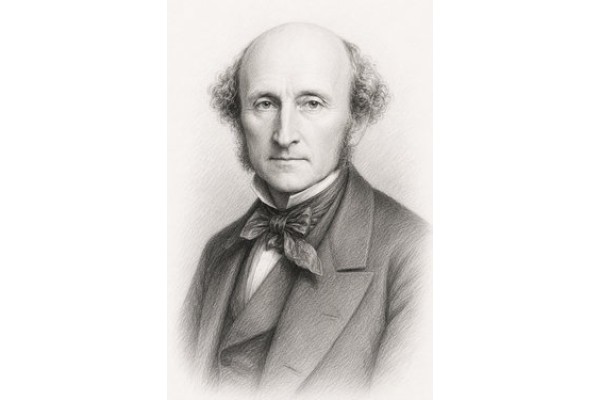
John Stuart Mill was an English philosopher, economist, political theorist, and social reformer whose writings became foundational works in modern liberal thought. Born in London in 1806, Mill was educated from an early age by his father, James Mill, developing an extraordinary command of philosophy, economics, history, and classical literature. Explore John Stuart Mill books to discover the author's life, literary career, and access notable works, including Utilitarianism, On Liberty , and more.