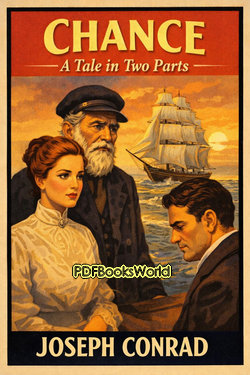
Chance - A Tale in Two Parts
by Joseph Conrad
A Young Woman’s Fate Told Through Memory, Gossip, and Uncertainty
Chance: A Tale in Two Parts by Joseph Conrad is a layered and psychologically intricate novel centered on loneliness, marriage, reputation, and the unpredictable role of chance in human life. Combining maritime settings with social drama, Conrad builds the narrative through conversations, recollections, and fragmented perspectives rather than direct storytelling.
The result is a novel where truth emerges slowly through interpretation, rumor, memory, and emotional misunderstanding.
Flora de Barral and a Life Shaped by Misfortune
The emotional center of the novel is Flora de Barral, the daughter of a disgraced financial speculator whose public scandal destroys both family reputation and social security. Left emotionally isolated and vulnerable, Flora struggles to navigate a world that treats her with suspicion, pity, or opportunistic interest.
Her eventual marriage to Captain Anthony, a sincere but emotionally reserved sailor, appears at first to offer stability and protection.
Yet their relationship becomes increasingly complicated by emotional distance, jealousy, insecurity, and the influence of outside observers attempting to interpret their lives.
Conrad presents Flora not as a passive victim, but as a psychologically complex figure shaped by fear, humiliation, and emotional uncertainty.
The Figures Surrounding Flora’s Story
- Flora de Barral
A lonely and emotionally guarded woman struggling against shame, insecurity, and social judgment. - Captain Anthony
A devoted sailor whose emotional sincerity clashes with his inability to fully communicate. - Marlow
Conrad’s recurring narrator, piecing together events through conversation and reflection. - The Social Observers
Individuals whose interpretations and assumptions shape the reader’s understanding of events.
The narrative constantly shifts between viewpoints, emphasizing how difficult it is to fully know another person’s inner life.
A Story Told Through Fragments and Voices
One of the novel’s most distinctive qualities is its narrative structure. Conrad does not tell Flora’s story directly from beginning to end. Instead, events are reconstructed through dialogue, memory, secondhand reports, and Marlow’s reflections.
This layered approach creates emotional ambiguity and psychological depth. Readers must gradually assemble meaning from incomplete information and conflicting perspectives.
The structure itself reinforces the novel’s central idea that human lives are never fully transparent or easily understood.
Major Themes Within the Novel
- Isolation and Emotional Insecurity
Flora’s experiences reveal how shame and loneliness can shape personality and relationships. - Marriage and Misunderstanding
Conrad examines how love can become strained by silence, fear, and emotional uncertainty. - Reputation and Social Judgment
Public scandal continues affecting private life long after the original event has passed. - The Role of Chance
Accidents, coincidences, and unpredictable encounters shape the course of human destiny.
A More Personal and Emotional Conrad Novel
Chance differs from some of Conrad’s darker political works because of its stronger focus on domestic emotion and female experience. The novel pays close attention to psychological vulnerability and the emotional effects of social humiliation.
At the same time, Conrad’s characteristic concerns remain present: uncertainty, fragmented truth, isolation, and the difficulty of communication.
The maritime world still plays an important role, but emotional relationships now occupy the center of the narrative.
Why the Novel Continues to Fascinate Readers
Modern readers continue finding Chance compelling because its emotional themes remain deeply recognizable. Shame, loneliness, relationship anxiety, and the struggle for emotional trust continue shaping modern lives.
The novel also feels strikingly modern in its fragmented narrative structure and psychological realism. Conrad anticipates later literary techniques that emphasize perspective, ambiguity, and subjective interpretation.
For readers interested in literary modernism, emotionally complex fiction, and psychologically layered storytelling, this novel remains intricate, haunting, and rewarding.
Similar Genres
About the Author
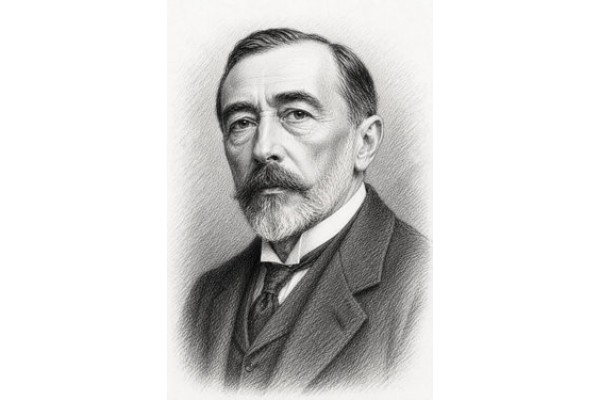
Joseph Conrad brought a unique international perspective to English literature, drawing upon his experiences as a merchant sailor to craft stories of adventure, moral conflict, and human resilience. Born in present-day Ukraine to Polish parents in 1857, he did not learn English fluently until adulthood, yet he went on to become one of the language's most admired novelists. Explore Joseph Conrad books to discover the author's life, literary career, and access notable works, including Heart of Darkness, The Secret Agent - A Simple Tale, Lord Jim, Nostromo - A Tale of the Seaboard , and more.