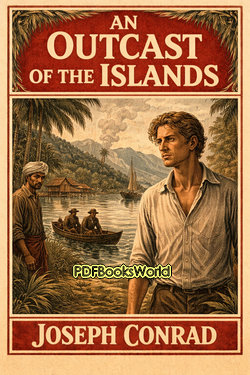
An Outcast of the Islands
by Joseph Conrad
A Man Destroyed by Greed, Isolation, and Moral Collapse
An Outcast of the Islands by Joseph Conrad is a dark and psychologically intense novel set within the colonial trading world of Southeast Asia. Combining adventure, betrayal, obsession, and moral decay, Conrad examines what happens when a weak and self-serving individual becomes isolated from both society and his own remaining sense of dignity.
The novel is filled with oppressive atmosphere, emotional tension, and gradual psychological disintegration. Rather than presenting colonial life romantically, Conrad portrays it as unstable, morally dangerous, and deeply corrupting.
Peter Willems and the Beginning of His Fall
The story follows Peter Willems, a European trader whose dishonesty and selfish ambition ruin his professional reputation. After financial misconduct destroys his position, he is rescued by Captain Tom Lingard, an experienced trader who offers him another opportunity in the remote Malay islands.
Instead of rebuilding his life honorably, Willems becomes increasingly consumed by greed, resentment, vanity, and desire.
His emotional instability grows more dangerous after he becomes involved with Aissa, a mysterious local woman whose influence deepens his separation from European society and from his own moral restraints.
Conrad portrays Willems not as a tragic hero, but as a deeply flawed man gradually surrendering to weakness and self-destruction.
The Figures Surrounding Willems’s Collapse
- Peter Willems
A selfish and emotionally unstable trader whose moral weakness drives the novel’s tragedy. - Captain Tom Lingard
A powerful and respected trader attempting unsuccessfully to save Willems from ruin. - Aissa
A passionate and enigmatic woman whose relationship with Willems intensifies his isolation. - The Colonial Traders and Local Communities
Groups shaped by commerce, rivalry, exploitation, and shifting loyalties.
The relationships within the novel are marked by distrust, emotional manipulation, and cultural tension.
A World of Heat, Isolation, and Corruption
Conrad creates an atmosphere thick with humidity, darkness, silence, and psychological pressure. Rivers, jungles, trading stations, and isolated settlements become spaces where ordinary moral structures begin to weaken.
The physical environment mirrors Willems’s inner deterioration. The farther he moves from organized society, the more unstable and self-destructive he becomes.
Conrad repeatedly suggests that isolation exposes weaknesses already present within the human character.
Key Ideas Running Through the Novel
- Moral Decay and Self-Destruction
Willems gradually destroys himself through vanity, greed, and emotional weakness. - Colonial Corruption
The novel portrays imperial trading society as unstable and morally compromised. - Isolation and Alienation
Characters become emotionally disconnected from both society and themselves. - Desire and Obsession
Emotional impulses repeatedly overpower reason and judgment.
One of Conrad’s Earliest Major Novels
An Outcast of the Islands was one of Conrad’s first major novels, yet it already displays many qualities that later defined his greatest works. Atmospheric prose, morally ambiguous characters, and psychological intensity shape nearly every scene.
The novel also introduces Captain Lingard, a figure who appears in several Conrad works and represents a rough but genuine personal code within a morally unstable world.
Conrad’s treatment of colonial settings remains especially striking because he avoids simplistic adventure stereotypes, focusing instead on emotional and ethical instability.
Why the Novel Still Holds Power Today
Modern readers continue finding An Outcast of the Islands compelling because its themes remain psychologically and politically relevant. Corruption, alienation, exploitation, and emotional self-destruction continue to resonate strongly within contemporary life.
The novel also feels modern in its refusal to offer comforting moral clarity. Conrad portrays people as fragile, contradictory, and vulnerable to their own hidden weaknesses.
For readers interested in literary modernism, colonial fiction, and psychologically dark narratives, this novel remains intense, atmospheric, and deeply unsettling.
Similar Genres
About the Author

Joseph Conrad brought a unique international perspective to English literature, drawing upon his experiences as a merchant sailor to craft stories of adventure, moral conflict, and human resilience. Born in present-day Ukraine to Polish parents in 1857, he did not learn English fluently until adulthood, yet he went on to become one of the language's most admired novelists. Explore Joseph Conrad books to discover the author's life, literary career, and access notable works, including Heart of Darkness, The Secret Agent - A Simple Tale, Lord Jim, Nostromo - A Tale of the Seaboard , and more.