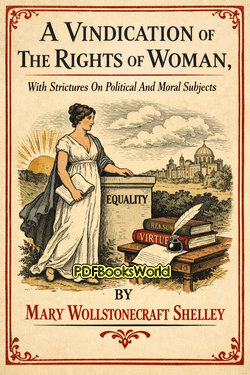
A Vindication Of The Rights Of Woman, With Strictures On Political And Moral Subjects
by Mary Wollstonecraft Shelley
One of the Foundational Works of Feminist Political Thought
A Vindication Of The Rights Of Woman, With Strictures On Political And Moral Subjects by Mary Wollstonecraft stands as one of the most influential books ever written about women’s education, equality, independence, and social rights. First published in the late eighteenth century, the work challenged deeply rooted assumptions about gender roles and argued that women deserved the same opportunities for intellectual and moral development as men.
Rather than accepting the idea that women existed mainly for beauty, obedience, or domestic dependence, Wollstonecraft insisted that women were rational human beings capable of education, virtue, and meaningful participation in society.
Why the Book Was Revolutionary
At the time the book appeared, many societies restricted women’s education and legal independence. Women were often encouraged to focus almost entirely on appearance, manners, and social expectations rather than intellectual growth.
Wollstonecraft strongly opposed this system. She argued that limiting women’s education weakened both individuals and society itself. According to her, a nation could not become morally strong if half its population was denied proper intellectual and personal development.
Her arguments were considered radical for the era because they directly challenged political traditions, social customs, and educational systems.
Central Ideas Discussed Throughout the Work
The book explores a wide range of political, educational, and moral questions connected with equality and human dignity.
- Equal educational opportunities for women
- The importance of reason and intellectual independence
- Criticism of social systems that encourage female dependence
- The relationship between morality, freedom, and education
- The role of women within family and society
Wollstonecraft repeatedly argues that women should be valued for intelligence and character rather than superficial social expectations.
A Critique of Society and Education
One of the strongest aspects of the book is its criticism of educational systems that encouraged women to remain passive and dependent. Wollstonecraft believed that poor education prevented women from developing confidence, judgment, and moral independence.
She also criticized social customs that rewarded vanity and emotional weakness instead of knowledge and self-discipline. In her view, women and men alike benefited from rational education and moral responsibility.
These arguments helped establish the foundation for later feminist philosophy and educational reform movements.
The Writing Style and Intellectual Tone
The writing style is passionate, direct, and intellectually forceful. Wollstonecraft combines philosophical reasoning with emotional conviction, creating arguments that feel both personal and politically urgent.
Her prose often challenges readers directly, encouraging critical thought about authority, tradition, and inequality. Although written centuries ago, many of her ideas still feel strikingly modern because of their focus on education, dignity, and equal opportunity.
Enduring Influence and Historical Importance
A Vindication Of The Rights Of Woman became one of the defining texts in the history of feminist thought and political philosophy. The book influenced later movements for women’s rights, educational reform, and social equality across Europe and beyond.
Modern readers continue to study the work because it raises important questions about freedom, justice, identity, and the role of education in shaping society. Its arguments remain historically important not only for feminism but also for broader discussions about human rights and intellectual independence.
Mary Wollstonecraft’s work continues to stand as a powerful defense of equality, reason, and the belief that education and opportunity should belong to all people regardless of gender.
Similar Genres
About the Author
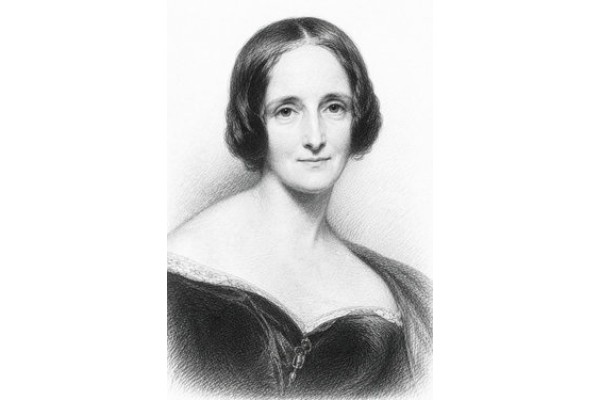
Mary Wollstonecraft Shelley occupies a remarkable place in literary history as the author of Frankenstein, a novel that not only transformed Gothic fiction but also laid the foundations of modern science fiction. Born in London in 1797, she grew up in an intellectually vibrant household as the daughter of philosopher William Godwin and pioneering feminist Mary Wollstonecraft. Explore Mary Wollstonecraft Shelley books to discover the author's life, literary career, and access notable works, including Frankenstein, Lodore, Vol. 3 (of 3), Lodore, Vol. 2 (of 3), Lodore, Vol. 1 (of 3) , and more.