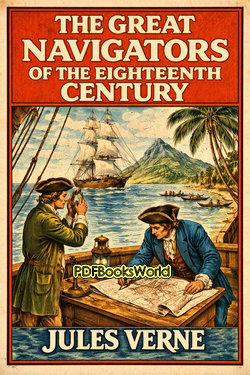
The Great Navigators of the Eighteenth Century
by Jules Verne
A Detailed Look at the Explorers Who Expanded the World Map
The Great Navigators of the Eighteenth Century by Jules Verne is a fascinating historical work that examines the major sea voyages and explorations of the eighteenth century. Rather than presenting fictional adventures, Verne focuses on the real navigators, scientists, and explorers who crossed dangerous oceans and charted unknown territories during one of history’s greatest periods of maritime discovery.
Through vivid storytelling and historical detail, Verne transforms exploration history into an exciting narrative filled with courage, hardship, scientific curiosity, and international competition.
An Age of Exploration Across the Oceans
The eighteenth century witnessed dramatic improvements in navigation, cartography, and scientific observation. European nations sent expeditions across the Pacific, Arctic, and other distant regions in search of trade routes, scientific knowledge, and territorial influence.
Verne describes how these long voyages changed humanity’s understanding of geography while connecting distant parts of the world more closely than ever before.
The Challenges Faced by Early Navigators
Exploration during this era was extremely dangerous. Sailors and explorers faced violent storms, disease, starvation, freezing temperatures, shipwrecks, and uncertain maps while traveling across unfamiliar seas.
Verne emphasizes the endurance and determination required to survive months or years away from home in harsh and unpredictable conditions.
Important Explorers and Expeditions
- Captain James Cook – Famous for exploring the Pacific Ocean and mapping new territories
- Louis Antoine de Bougainville – A French navigator known for global voyages and scientific observation
- Jean-François de La Pérouse – An explorer whose expedition became one of history’s great maritime mysteries
- Scientists and cartographers accompanying voyages to study geography and natural history
- Sailors and crews enduring extreme hardship during long expeditions
These figures helped reshape geographical knowledge and influenced future generations of explorers.
Themes
- The human desire to explore the unknown
- The relationship between science and navigation
- Courage and endurance during dangerous voyages
- The expansion of global geographical knowledge
- The political and cultural impact of exploration
These themes give the work historical importance and adventurous excitement.
Jules Verne’s Enthusiasm for Geography and Discovery
Verne writes with admiration for the navigators and scientists who expanded the world’s geographical understanding. His detailed descriptions of ships, oceans, islands, and exploration routes reveal deep fascination with maritime history.
Even though the book focuses on real historical events, Verne’s energetic narrative style keeps the material engaging and accessible.
A Blend of History, Science, and Adventure
One of the work’s strengths is its ability to combine historical information with the excitement of adventure literature. Verne presents exploration not simply as political expansion but as a dramatic struggle against nature, uncertainty, and physical hardship.
The scientific discoveries connected to these voyages also demonstrate the growing importance of observation and research during the Enlightenment era.
Why the Book Continues to Fascinate Readers
The Great Navigators of the Eighteenth Century remains valuable because of its rich historical detail, adventurous atmosphere, and celebration of exploration. The book captures a time when vast regions of the world remained mysterious to European societies and travel itself demanded extraordinary courage.
For readers interested in maritime history, exploration narratives, geography, and scientific discovery, the work offers an engaging and informative journey through one of history’s most adventurous centuries.
Similar Genres
About the Author

Jules Verne is celebrated as one of the founding fathers of science fiction, captivating readers with extraordinary adventures that blended scientific knowledge with boundless imagination. Explore Jules Verne books to discover the author's life, literary career, and access notable works, including Around the World in Eighty Days, In the Year 2889, From the Earth to the Moon, Twenty Thousand Leagues Under the Seas , and more.