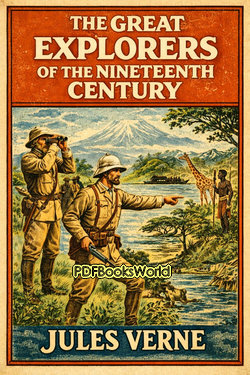
The Great Explorers of the Nineteenth Century
by Jules Verne
A Grand Chronicle of Courageous Journeys Into the Unknown
The Great Explorers of the Nineteenth Century by Jules Verne is a sweeping historical work that celebrates the explorers, scientists, and adventurers who expanded humanity’s knowledge of the world during the nineteenth century. Rather than creating fictional heroes, Verne focuses on real expeditions that crossed deserts, jungles, mountains, rivers, and polar regions in pursuit of discovery.
Filled with geographical detail, historical insight, and dramatic storytelling, the book transforms exploration history into an exciting narrative about curiosity, endurance, and scientific ambition.
An Era Driven by Exploration and Discovery
The nineteenth century became one of the greatest periods of global exploration. Advances in navigation, transportation, science, and mapping allowed explorers to travel farther into previously unknown regions.
Verne examines how expeditions pushed into Africa, Asia, the Arctic, and other remote areas while gathering information about geography, climate, wildlife, and local cultures.
The Dangers Faced by Nineteenth Century Explorers
Exploration during this period involved enormous physical and emotional hardship. Travelers faced disease, extreme weather, starvation, dangerous terrain, and isolation far from civilization.
Verne emphasizes that exploration required not only scientific knowledge but also extraordinary determination and courage.
Important Explorers and Expeditions
- David Livingstone – Explorer and missionary known for journeys across Africa
- Richard Francis Burton – A skilled traveler and linguist exploring unfamiliar regions
- John Franklin – Arctic explorer connected to dangerous polar expeditions
- Alexander von Humboldt – Scientist and explorer studying geography and nature
- Surveyors, scientists, and expedition teams expanding global knowledge
These figures helped reshape understanding of the planet through observation, mapping, and scientific research.
Themes
- The human desire to understand the unknown
- The relationship between science and exploration
- Courage and endurance during dangerous journeys
- The expansion of geographical and cultural knowledge
- The influence of exploration on world history
These themes give the work educational depth while maintaining an adventurous spirit.
Jules Verne’s Passion for Geography and Scientific Discovery
Verne writes with admiration for explorers who risked their lives in pursuit of knowledge. His detailed descriptions of landscapes, rivers, deserts, and polar regions reveal deep fascination with geography and travel.
The book reflects Verne’s belief that scientific curiosity and exploration represented important forces shaping the modern world.
A Historical Work With the Excitement of Adventure Fiction
Although the book is based on real historical events, Verne presents exploration with the suspense and drama of adventure literature. Dangerous crossings, survival struggles, and unexpected discoveries give the narrative strong emotional energy.
This storytelling style makes historical exploration feel vivid and engaging for readers.
Why the Book Continues to Inspire Readers
The Great Explorers of the Nineteenth Century remains fascinating because of its celebration of curiosity, courage, and human determination. The work captures a time when much of the world still appeared mysterious and unexplored.
For readers interested in history, geography, scientific discovery, and travel narratives, the book offers an informative and adventurous journey through one of the most remarkable periods of global exploration.
Similar Genres
About the Author
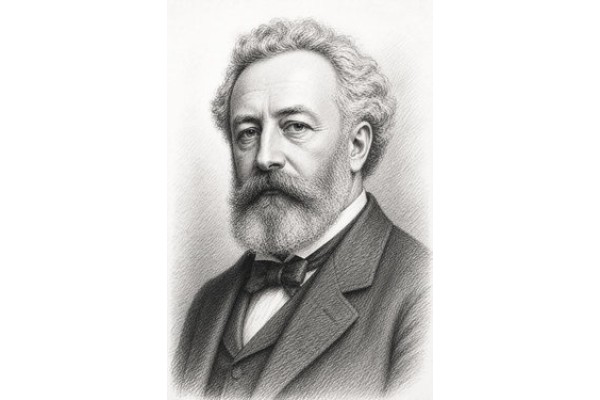
Jules Verne is celebrated as one of the founding fathers of science fiction, captivating readers with extraordinary adventures that blended scientific knowledge with boundless imagination. Explore Jules Verne books to discover the author's life, literary career, and access notable works, including Around the World in Eighty Days, In the Year 2889, From the Earth to the Moon, Twenty Thousand Leagues Under the Seas , and more.