Zoonomia; Or, the Laws of Organic Life, Vol. II
by Erasmus Darwin
Disease, Human Behavior, and the Continuing Search for the Laws of Life
Zoonomia; Or, the Laws of Organic Life, Vol. II by Erasmus Darwin continues the ambitious scientific and philosophical exploration begun in the first volume, focusing more extensively upon disease, medical classification, mental processes, and the interaction between bodily systems and human behavior. Written during the late eighteenth century, the work reflects Enlightenment efforts to explain life, health, and illness through systematic natural laws and scientific reasoning.
Erasmus Darwin combines medicine, physiology, psychology, and speculative biology while attempting to construct a unified understanding of organic life and its disorders.
The Classification and Causes of Disease
The book examines numerous diseases and bodily disorders while proposing systems for classifying illnesses according to physiological causes and nervous activity. Darwin discusses fevers, inflammation, muscular disorders, sensory disturbances, digestion, circulation, and mental conditions.
He attempts to explain disease as the result of changes in the body’s natural processes rather than supernatural influence or isolated symptoms alone.
Rather than relying solely upon traditional medical authority, the work emphasizes observation, comparison, and the search for general biological principles underlying illness and bodily function.
The volume reflects the transitional period when medicine was moving gradually toward more scientific and physiological approaches to health and disease.
Its tone combines medical investigation with philosophical speculation and scientific ambition.
The Nervous System and Human Experience
A major theme throughout the book is the importance of the nervous system in shaping sensation, emotion, movement, thought, and bodily activity.
Darwin repeatedly suggests that many physical and mental conditions arise from patterns of nervous stimulation and physiological response.
The work also explores habits, instincts, desires, imagination, and emotional behavior while attempting to connect mental life with physical processes occurring within the body.
This effort to unify psychology and physiology helped anticipate later developments in neuroscience and behavioral medicine.
Scientific and Philosophical Topics Explored Throughout the Book
- Disease Classification and Medical Theory: Darwin examines illnesses through systematic physiological analysis.
- The Nervous System and Sensation: The book explores the relationship between nerves, perception, and bodily response.
- Mind, Emotion, and Organic Function: Mental processes are connected to physical and biological activity.
- Habit, Instinct, and Human Behavior: The work investigates how repeated actions and sensations influence conduct.
- The Search for Universal Biological Laws: Darwin seeks broad principles governing health, disease, and organic life.
The book reflects Enlightenment confidence in the power of scientific reasoning to explain complex aspects of life and human experience.
Medicine as a Science of Natural Processes
One of the work’s strongest ideas is that disease should be understood scientifically as part of the body’s natural functioning rather than as an isolated mystery.
Darwin repeatedly demonstrates how physiological imbalance, nervous activity, environment, and bodily processes interact in producing illness and behavior.
The book also reveals an early effort to approach medicine systematically through classification and theoretical organization.
This broad scientific perspective helped influence later developments in physiology, psychology, and medical science.
Erasmus Darwin’s Expansive Intellectual Style
Zoonomia; Or, the Laws of Organic Life, Vol. II demonstrates Erasmus Darwin’s remarkable attempt to combine medicine, biology, psychology, and philosophy into a unified scientific worldview.
The writing remains ambitious, analytical, and strongly focused upon discovering patterns and laws underlying organic existence.
Darwin consistently presents scientific inquiry as a means of understanding the interconnected nature of body, mind, health, and environment.
Why the Book Still Holds Historical and Scientific Interest
Modern readers continue finding Zoonomia; Or, the Laws of Organic Life, Vol. II historically important because it reflects one of the earliest large-scale attempts to explain physiology, disease, and behavior through natural scientific principles.
The book also provides insight into pre-modern medicine during a period when scientific biology and psychology were only beginning to emerge as organized disciplines.
Its discussions of nervous activity, habit, emotion, and physiological processes remain historically significant within the development of medical theory and early biological science.
For readers interested in medical history, physiology, psychology, Enlightenment science, evolutionary thought, philosophy of nature, and the origins of modern biology, this work remains intellectually ambitious, historically revealing, and scientifically influential.
Similar Genres
About the Author
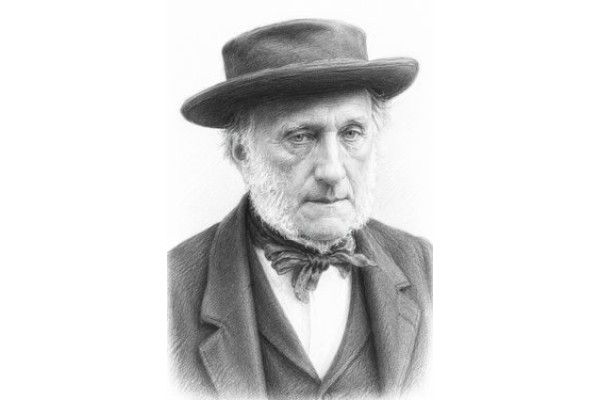
Erasmus Darwin was an English physician, natural philosopher, poet, inventor, and author whose remarkable ideas anticipated many later developments in biology, medicine, and evolutionary thought. Born in Elston, Nottinghamshire, in 1731, Darwin became one of the leading intellectual figures of the Enlightenment and a founding member of the Lunar Society of Birmingham. Explore Erasmus Darwin books to discover the author's life, literary career, and access notable works, including Zoonomia; Or, the Laws of Organic Life, Vol. I , and more.