Erasmus Darwin
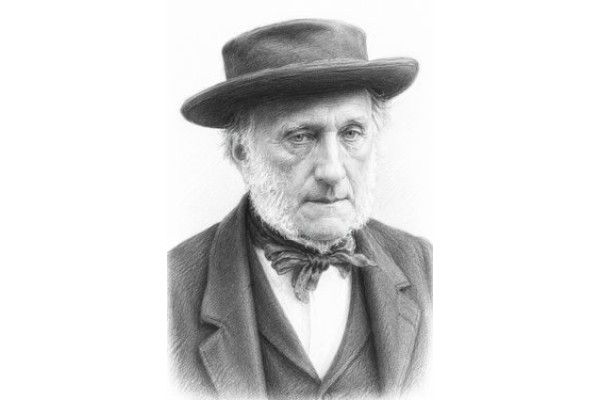
Erasmus Darwin was an English physician, natural philosopher, poet, inventor, and author whose remarkable ideas anticipated many later developments in biology, medicine, and evolutionary thought. Born in Elston, Nottinghamshire, in 1731, Darwin became one of the leading intellectual figures of the Enlightenment and a founding member of the Lunar Society of Birmingham. His writings explored medicine, botany, natural history, philosophy, and poetry, combining scientific observation with imaginative insight. As the grandfather of Charles Darwin, he played an important role in shaping the intellectual tradition that would later transform the biological sciences.
Uniting Science, Medicine, and Natural Philosophy
Erasmus Darwin believed that careful observation of nature could reveal the principles governing life and the natural world. His books examined physiology, botany, evolution, medicine, and scientific discovery while encouraging readers to appreciate the interconnectedness of living organisms. Combining poetic expression with scientific reasoning, he presented complex ideas in an engaging style that appealed to both scholars and general readers. His bold thinking and interdisciplinary approach placed him among the most innovative scientific writers of the eighteenth century.
Beyond his medical practice, Darwin was an inventor, educator, and advocate for scientific progress whose influence extended across literature, agriculture, engineering, and the natural sciences. His enduring legacy continues to interest historians of science and readers exploring the origins of evolutionary thought.
Essential Works
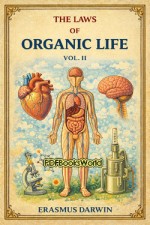
- Zoonomia; or, The Laws of Organic Life is Darwin's monumental medical and philosophical work, presenting his theories on physiology, disease, heredity, and the development of living organisms while anticipating many later ideas in evolutionary biology.
- The Botanic Garden combines scientific knowledge with poetry, celebrating the beauty of plants while introducing readers to contemporary discoveries in natural history and botany.
- The Temple of Nature explores the origins and development of life through a poetic vision that reflects Darwin's pioneering ideas about the evolution of living beings.
- Phytologia examines agriculture, plant nutrition, and botanical science, offering practical and scientific observations on plant life.
- A Plan for the Conduct of Female Education in Boarding Schools presents Darwin's progressive views on education, advocating a broad and practical curriculum for young women.
- The Economy of Vegetation blends scientific observation with imaginative poetry, exploring the processes and wonders of the natural world.
An Enduring Legacy in Science and Medicine
Erasmus Darwin's writings continue to inspire readers through their originality, scientific curiosity, and visionary thinking. From Zoonomia and The Botanic Garden to The Temple of Nature, Phytologia, and The Economy of Vegetation, his works remain important milestones in the history of medicine, botany, and evolutionary thought. His enduring legacy continues to demonstrate how imagination and scientific inquiry can work together to deepen humanity's understanding of nature.
If you enjoy the history of science, medicine, botany, natural philosophy, and classic works that explore the living world, the writings of Erasmus Darwin are well worth exploring. At PDFBooksWorld, you can discover a carefully curated collection of his enduring works and experience the scholarship of one of the Enlightenment's most remarkable scientific thinkers.

Zoonomia; Or, the Laws of Organic Life, Vol. I
Erasmus Darwin