Zoonomia; Or, the Laws of Organic Life, Vol. I
by Erasmus Darwin
Life, Evolutionary Thought, and the Scientific Laws Governing Living Organisms
Zoonomia; Or, the Laws of Organic Life, Vol. I by Erasmus Darwin is a remarkable scientific and philosophical work exploring the nature of life, disease, physiology, sensation, and the functioning of living organisms. Written during the late eighteenth century, the book reflects one of the earliest ambitious attempts to explain biological processes through natural laws rather than purely metaphysical or theological interpretation.
Erasmus Darwin, physician, natural philosopher, and grandfather of Charles Darwin, presents living beings as complex systems governed by observable principles of motion, sensation, adaptation, and organic function.
An Early Scientific Theory of Organic Life
The book examines the structure and activity of living organisms while discussing physiology, muscular motion, nerves, digestion, circulation, sensation, and disease. Darwin attempts to classify bodily functions according to systematic natural principles that govern both physical and mental activity.
He also explores how organisms respond to stimuli, adapt to their environment, and maintain life through interconnected physiological processes.
Rather than treating life as entirely mysterious or supernatural, the work demonstrates a strong belief that biological phenomena can be investigated scientifically through observation, comparison, and reasoning.
The volume reflects the intellectual atmosphere of the Enlightenment, when science increasingly sought natural explanations for complex processes within nature and human existence.
Its tone combines medical analysis with philosophical speculation and scientific curiosity.
The Relationship Between Body, Mind, and Environment
A major theme throughout the book is that living organisms constantly interact with external conditions through sensation, movement, and adaptation.
Darwin repeatedly explains how bodily reactions arise from stimuli acting upon nerves and muscles, linking physiology to behavior and perception.
The work also reflects early evolutionary ideas suggesting that life changes gradually over time through natural processes and adaptation.
This broad attempt to unify medicine, biology, and natural philosophy gives the book lasting historical significance.
Scientific and Philosophical Topics Explored Throughout the Book
- Physiology and Organic Function: Darwin explains bodily systems involving movement, sensation, circulation, and digestion.
- Nerves, Sensation, and Mental Activity: The book explores the connection between physical processes and perception.
- Disease and Medical Observation: Scientific investigation is applied to illness and bodily disorder.
- Adaptation and Early Evolutionary Thought: Organisms are presented as capable of gradual change and response to environment.
- The Laws Governing Life: The work seeks universal principles underlying biological activity and organic behavior.
The book reflects one of the earliest major efforts to construct a broad scientific philosophy of life and living systems.
Early Evolutionary and Biological Speculation
One of the work’s strongest ideas is that life operates according to discoverable natural laws rather than isolated miraculous intervention.
Darwin repeatedly suggests that living organisms develop, adapt, and respond to conditions through continuous interaction with their environment.
The book also contains ideas that later influenced evolutionary thinking, especially concerning gradual change and the unity of organic life.
This speculative biological vision helped prepare intellectual ground for later developments in evolutionary science and modern biology.
Erasmus Darwin’s Philosophical Scientific Style
Zoonomia; Or, the Laws of Organic Life demonstrates Erasmus Darwin’s extraordinary effort to combine medicine, biology, psychology, and philosophy into a unified interpretation of life.
The writing remains ambitious, reflective, and strongly focused upon discovering broad natural principles governing living organisms.
Darwin consistently presents science as a means of uncovering the hidden order connecting body, mind, and nature.
Why the Book Still Holds Historical and Scientific Interest
Modern readers continue finding Zoonomia; Or, the Laws of Organic Life historically important because it represents an early attempt to explain biology, physiology, and behavior through scientific reasoning and natural law.
The book also provides insight into pre-Darwinian evolutionary speculation and the intellectual climate that shaped later developments in biology and medicine.
Its discussions of adaptation, sensation, physiology, and organic systems remain historically significant within the broader development of evolutionary theory and life science.
For readers interested in biology, medical history, physiology, evolutionary thought, Enlightenment science, philosophy of nature, and the origins of modern life science, this work remains intellectually ambitious, historically revealing, and scientifically influential.
Similar Genres
About the Author
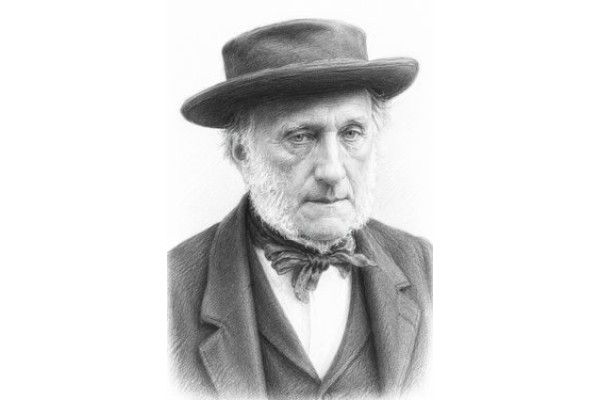
Erasmus Darwin was an English physician, natural philosopher, poet, inventor, and author whose remarkable ideas anticipated many later developments in biology, medicine, and evolutionary thought. Born in Elston, Nottinghamshire, in 1731, Darwin became one of the leading intellectual figures of the Enlightenment and a founding member of the Lunar Society of Birmingham. Explore Erasmus Darwin books to discover the author's life, literary career, and access notable works, including Zoonomia; Or, the Laws of Organic Life, Vol. II , and more.