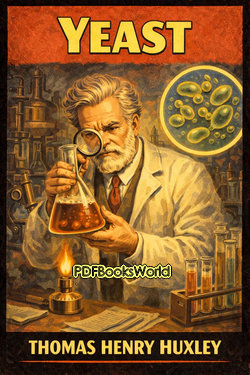
Yeast
by Thomas Henry Huxley
How a Tiny Organism Helped Explain the Science of Life
Yeast by Thomas Henry Huxley may focus on a microscopic organism, but the book opens the door to much larger scientific ideas. Huxley uses yeast as a starting point to explain biology, chemistry, fermentation, and the hidden processes constantly taking place in nature.
Rather than presenting dry scientific facts, the work approaches science through curiosity and observation. Huxley shows how something as ordinary as yeast can reveal important truths about living organisms and the natural world.
The book reflects the growing scientific interest of the nineteenth century, when researchers were beginning to understand life at a microscopic level.
More Than an Ingredient in Bread and Brewing
Many people know yeast because it is used in baking and fermentation, but Huxley explains that yeast is actually a living organism. Through careful discussion, he shows how these tiny cells grow, reproduce, and create chemical changes.
The book explores how yeast affects everyday activities such as:
- Bread making
- Brewing and fermentation
- Food preparation
- Chemical reactions
- Biological growth processes
By connecting science to familiar experiences, Huxley makes complex ideas easier for general readers to understand.
A Simple Organism With Scientific Importance
One of the central ideas in the book is that even the smallest living things deserve careful study. Huxley explains that microorganisms can reveal patterns that apply to larger forms of life as well.
His discussion of yeast introduces readers to broader scientific subjects including:
Cell Structure
The book helps explain how living cells function and reproduce.
Fermentation
Readers learn how yeast creates chemical changes that influence food and drink production.
Microscopic Life
Huxley encourages curiosity about organisms too small to be seen with the human eye alone.
Scientific Observation
The text demonstrates the importance of experimentation and careful evidence in science.
The Writing Feels Educational Without Becoming Heavy
Thomas Henry Huxley was known for explaining scientific ideas in a way ordinary readers could follow. In Yeast, he avoids unnecessary complexity while still treating the subject seriously.
Instead of overwhelming readers with technical language, he builds explanations step by step. This teaching style makes the work approachable even for people without scientific backgrounds.
The book feels less like a strict textbook and more like a guided lesson from an experienced teacher.
Why Huxley’s Ideas Mattered
During Huxley’s time, science was rapidly changing public understanding of nature and biology. Discoveries involving cells and microorganisms were reshaping medicine, chemistry, and agriculture.
The book reflects several important ideas from that period:
- Science should rely on evidence and observation
- Microscopic organisms influence everyday life
- Nature operates through understandable processes
- Education helps people better understand the world
- Small discoveries can lead to major scientific progress
These themes helped make scientific knowledge more accessible to wider audiences.
A Valuable Introduction to Early Biological Thought
Yeast remains interesting because it captures a moment when scientists were uncovering the hidden world of microorganisms. Huxley takes a small subject and uses it to explain larger biological principles in a clear and thoughtful way.
Readers interested in the history of science, biology, or scientific education may appreciate how the book transforms an ordinary organism into a fascinating topic of study. Even today, the work stands as an example of science writing designed to inform, educate, and inspire curiosity.
Similar Genres
About the Author
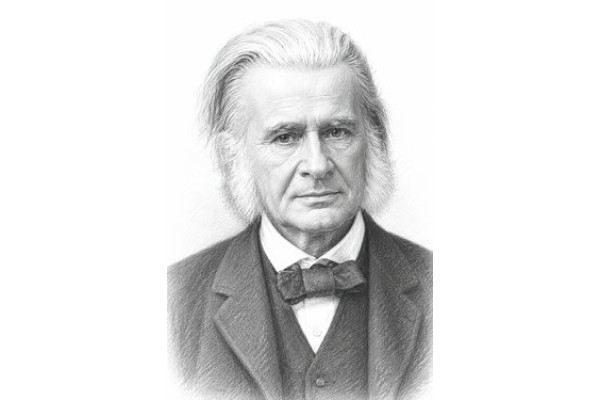
Thomas Henry Huxley was an English biologist, comparative anatomist, educator, and author whose vigorous defense of scientific inquiry earned him the title "Darwin's Bulldog." Born in Ealing, England, in 1825, Huxley became one of the nineteenth century's foremost advocates of evolutionary theory and scientific education. Explore Thomas Henry Huxley books to discover the author's life, literary career, and access notable works, including William Harvey And The Discovery Of The Circulation Of The Blood , and more.