
William Harvey And The Discovery Of The Circulation Of The Blood
by Thomas Henry Huxley
Medical Discovery, Experimental Science, and the Revolution in Understanding Blood Circulation
William Harvey And The Discovery Of The Circulation Of The Blood by Thomas Henry Huxley is a scientific and historical study examining one of the most important breakthroughs in medical history: William Harvey’s discovery that blood circulates continuously through the body by means of the heart and blood vessels. Written by the influential biologist and science educator Thomas Henry Huxley, the work explores both Harvey’s scientific achievements and the broader transformation of medicine through observation and experimentation.
Huxley presents Harvey’s discovery as a turning point in scientific thought, marking the transition from ancient medical speculation toward modern experimental physiology.
The Revolutionary Discovery of Blood Circulation
The book explains how William Harvey challenged centuries of accepted medical theory by demonstrating that blood moves continuously through the body in a circular system driven by the pumping action of the heart.
Before Harvey’s work, many physicians relied upon ancient teachings that misunderstood the movement and function of blood. Harvey’s careful experiments, dissections, and observations revealed that the heart functioned as a mechanical pump sending blood throughout the body and back again.
Huxley describes how Harvey used evidence, measurement, and direct observation to overturn long-established beliefs and establish a more accurate understanding of physiology.
The volume reflects the emergence of modern scientific method within medicine during the seventeenth century.
Its tone combines historical explanation with admiration for scientific reasoning and discovery.
The Rise of Experimental Physiology
A major theme throughout the book is that scientific progress depends upon observation, experiment, and willingness to question traditional authority.
Huxley repeatedly emphasizes that Harvey succeeded because he tested ideas through evidence rather than blindly accepting inherited theories.
The work also demonstrates how Harvey’s methods helped establish physiology as an experimental science concerned with measurable bodily processes.
This transformation marked an important stage in the development of modern medicine and biological research.
Scientific and Historical Topics Explored Throughout the Book
- The Circulation of the Blood: Huxley explains Harvey’s discovery of the continuous movement of blood through the body.
- The Heart and Blood Vessels: The book examines the mechanical and physiological functions of the circulatory system.
- Experimental Method in Medicine: Observation and evidence are presented as foundations of scientific discovery.
- The History of Physiology: Harvey’s work is placed within the broader development of medical science.
- The Challenge to Ancient Medical Authority: Scientific reasoning replaces long-standing misconceptions about bodily function.
The book reflects Huxley’s broader commitment to scientific education and rational inquiry.
Science and the Courage to Challenge Tradition
One of the work’s strongest ideas is that genuine scientific advancement often requires questioning accepted beliefs and relying upon evidence rather than authority.
Huxley repeatedly demonstrates how Harvey’s experiments contradicted established medical doctrine but ultimately transformed understanding of the human body.
The book also reveals how experimental science gradually replaced speculative philosophy within medicine and physiology.
This emphasis on evidence-based reasoning gives the work enduring scientific and educational importance.
Thomas Henry Huxley’s Clear Scientific Style
William Harvey And The Discovery Of The Circulation Of The Blood demonstrates Thomas Henry Huxley’s remarkable ability to explain scientific history and physiological concepts in clear, organized, and engaging language.
The writing remains educational, analytical, and strongly focused upon showing how scientific discoveries emerge through disciplined observation and intellectual courage.
Huxley consistently presents science as a progressive search for truth grounded in evidence and experimentation.
Why the Book Still Holds Historical and Scientific Interest
Modern readers continue finding William Harvey And The Discovery Of The Circulation Of The Blood historically valuable because it explains one of the foundational discoveries underlying modern medicine and physiology.
The book also provides insight into the rise of experimental science during a period when observation and evidence began transforming medical understanding.
Its discussion of Harvey’s work remains important within the broader history of anatomy, physiology, circulation research, and scientific method.
For readers interested in medical history, physiology, anatomy, scientific discovery, biology, and the development of modern medicine, this work remains historically revealing, educational, and intellectually inspiring.
Similar Genres
About the Author
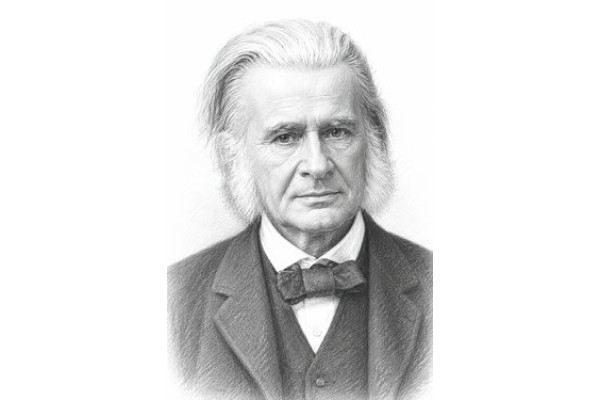
Thomas Henry Huxley was an English biologist, comparative anatomist, educator, and author whose vigorous defense of scientific inquiry earned him the title "Darwin's Bulldog." Born in Ealing, England, in 1825, Huxley became one of the nineteenth century's foremost advocates of evolutionary theory and scientific education. Explore Thomas Henry Huxley books to discover the author's life, literary career, and access notable works, including Yeast , and more.