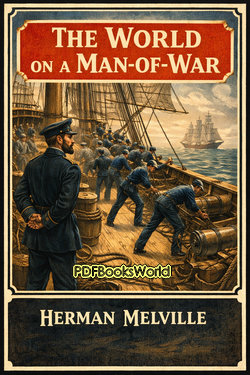
White Jacket; Or, The World on a Man-of-War
by Herman Melville
Life Aboard a Warship and the Harsh Machinery of Naval Discipline
White-Jacket; or, The World in a Man-of-War by Herman Melville is a vivid maritime novel based on the author’s experiences serving aboard a United States naval vessel. Combining adventure, satire, social criticism, and autobiographical realism, the book presents life aboard a warship as a complete floating society governed by rigid hierarchy, brutal discipline, and constant tension.
More than a sea adventure, the novel becomes a powerful critique of institutional cruelty and the dehumanizing effects of military authority.
A Sailor Named White-Jacket
The narrator, nicknamed White-Jacket because of the unusual white coat he wears aboard ship, serves on a massive naval frigate crowded with sailors, officers, marines, and strict regulations.
Through his observations, readers experience the exhausting routines, dangers, punishments, and social divisions shaping daily life at sea.
The ship functions almost like a miniature world isolated from ordinary society, where every movement is controlled by rank, discipline, and fear of punishment.
White-Jacket himself remains observant, thoughtful, and increasingly critical of the harsh treatment inflicted upon sailors by naval authority.
The Floating Society Within the Warship
- White-Jacket
A reflective sailor whose experiences reveal the realities and injustices of naval life. - The Officers
Figures enforcing discipline, hierarchy, and military order aboard the vessel. - The Sailors
Men enduring danger, labor, confinement, and physical punishment within the naval system. - The Ship Itself
A symbol of institutional authority, isolation, and collective human existence.
Melville fills the novel with detailed portraits of personalities, routines, conflicts, and emotional struggles aboard the ship.
The Brutality of Naval Punishment
One of the novel’s most important elements is its condemnation of flogging and physical punishment within the navy. Melville portrays these practices as degrading, cruel, and destructive to human dignity.
The fear of punishment shapes the emotional atmosphere of the ship, influencing relationships between officers and sailors alike.
Melville’s criticism was so influential that the novel contributed to public opposition against flogging in the United States Navy.
The story therefore functions not only as fiction, but also as social protest.
Major Themes Running Through the Novel
- Authority and Oppression
The novel examines how rigid systems of power can dehumanize individuals. - Life as Collective Experience
The warship becomes a floating society where people depend upon one another for survival. - Freedom and Confinement
Sailors experience physical movement across oceans while remaining socially imprisoned by discipline. - Human Dignity and Resistance
Melville emphasizes the emotional and moral importance of preserving humanity within harsh institutions.
Melville’s Blend of Realism and Social Criticism
White-Jacket differs from Melville’s later symbolic masterpieces because of its strong grounding in direct observation and realistic detail. The novel vividly captures shipboard labor, naval customs, weather, hierarchy, and maritime culture.
At the same time, Melville’s philosophical and psychological interests already appear clearly. He transforms the ship into a symbolic world reflecting broader questions about power, obedience, and social organization.
The result feels both documentary and deeply literary.
Why the Novel Still Feels Relevant
Modern readers continue finding White-Jacket compelling because its concerns about institutional authority, human dignity, and abusive systems remain highly relevant.
The novel also offers an extraordinary portrait of nineteenth-century naval life while anticipating later critiques of bureaucracy, militarism, and social control.
For readers interested in maritime fiction, social criticism, military history, and classic American literature, this novel remains vivid, humane, and intellectually powerful.
Similar Genres
About the Author

Herman Melville stands among the greatest voices in American literature, celebrated for novels that combine thrilling adventures with profound reflections on humanity, nature, and destiny. Born in New York City in 1819, Melville spent several years at sea, experiences that became the foundation of many of his most memorable works. Explore Herman Melville books to discover the author's life, literary career, and access notable works, including Moby Dick or The Whale, Israel Potter - His Fifty Years of Exile, John Marr and Other Sailors, Mardi - and A Voyage Thither, Vol. II , and more.