The Wives of the Dead
by Nathaniel Hawthorne
A Quiet and Haunting Tale of Grief, Uncertainty, and Emotional Isolation
The Wives of the Dead by Nathaniel Hawthorne is a subtle and psychologically atmospheric short story exploring mourning, uncertainty, secrecy, and the fragile emotional state created by grief. Set during a period of sickness and death in colonial New England, the story unfolds through quiet conversations, misunderstandings, and emotional tension rather than dramatic action.
Hawthorne creates an eerie emotional atmosphere where sorrow and uncertainty blur the line between truth, misunderstanding, and inner fear.
Two Sisters Confront Loss in Isolation
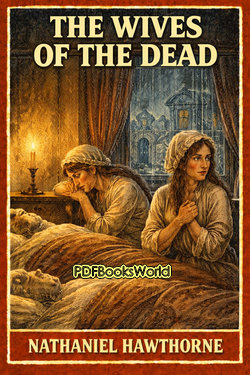
The story centers on two sisters, Mary and Margaret, who are married to brothers. After an outbreak of illness, news arrives suggesting that both husbands have died.
The women spend the night together inside a dark and emotionally heavy household, each privately overwhelmed by grief and uncertainty.
As the evening continues, confusing messages and partial information begin complicating their understanding of what has actually happened.
Each woman secretly receives information that may alter the situation, yet neither fully communicates her knowledge to the other.
This silence creates a tense emotional atmosphere filled with doubt, loneliness, and psychological uncertainty.
The Figures Within Hawthorne’s Domestic Tragedy
- Mary
A grieving wife struggling with fear, confusion, and emotional restraint. - Margaret
A sorrowful sister similarly trapped between hope and despair. - The Absent Husbands
Figures whose uncertain fate shapes the emotional tension of the story.
The story’s emotional intensity emerges from what remains unspoken as much as from direct action.
Grief and the Uncertainty of Human Knowledge
One of the story’s most powerful ideas is that grief isolates individuals emotionally even when they remain physically close to others. Mary and Margaret suffer together, yet they remain psychologically separated by private fears and incomplete communication.
Hawthorne also explores how uncertainty magnifies emotional suffering. The women cannot fully distinguish between rumor, hope, fear, and reality.
This unstable emotional condition gives the story its haunting psychological quality.
Major Themes Running Through the Story
- Grief and Emotional Isolation
Sorrow creates distance even between closely connected individuals. - Uncertainty and Incomplete Knowledge
Characters struggle to understand what is true amid confusing information. - Silence and Miscommunication
Important emotions and discoveries remain hidden rather than openly shared. - Psychological Atmosphere
The story emphasizes mood, emotional tension, and inward experience over action.
Hawthorne’s Subtle Psychological Storytelling
The Wives of the Dead demonstrates Hawthorne’s mastery of emotional restraint and psychological ambiguity. Much of the story’s power comes from suggestion rather than explanation.
The dark domestic setting, quiet dialogue, and uncertain information create an atmosphere filled with emotional fragility and suspense.
Hawthorne avoids dramatic resolution, allowing uncertainty itself to remain central to the experience of the story.
Why the Story Still Feels Powerful
Modern readers continue finding The Wives of the Dead compelling because of its psychological realism and emotional subtlety. The experience of waiting, fearing, and struggling with incomplete knowledge remains universally human.
The story also feels modern in its focus on internal emotional states rather than external events.
For readers interested in psychological fiction, gothic atmosphere, and emotionally nuanced short stories about grief and uncertainty, this tale remains haunting, elegant, and deeply affecting.
Similar Genres
About the Author
Nathaniel Hawthorne occupies a distinguished place in American literature for his masterful exploration of morality, guilt, and the complexities of human nature. Born in Salem, Massachusetts, in 1804, he drew inspiration from New England's colonial history and Puritan heritage, transforming historical settings into timeless works of fiction. Explore Nathaniel Hawthorne books to discover the author's life, literary career, and access notable works, including The Scarlet Letter, Mosses from an Old Manse and Other Stories, The House of the Seven Gables, The New Adam and Eve (From "Mosses from an Old Manse") , and more.