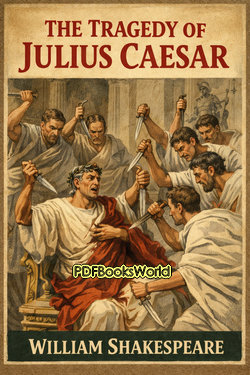
The Tragedy of Julius Caesar
by William Shakespeare
Power, Betrayal, and Political Chaos in Shakespeare’s Roman Tragedy
Crowded public speeches, secret conspiracies, political ambition, and violent betrayal drive the dramatic force of The Tragedy of Julius Caesar by William Shakespeare. Set in ancient Rome during a period of political instability, the play examines the dangerous relationship between personal loyalty, republican ideals, public opinion, and the pursuit of power.
Although centered on one of history’s most famous assassinations, the tragedy reaches far beyond a single political murder to explore how fear, ambition, and manipulation can destabilize an entire society.
The Fear of Absolute Power
At the beginning of the play, Julius Caesar appears increasingly powerful and admired by the Roman people. Some characters fear that his growing influence threatens the Roman Republic and may lead to dictatorship.
These anxieties motivate a group of conspirators led by Cassius and joined by Brutus, one of Caesar’s closest friends.
Brutus believes he acts not from personal hatred, but from duty to Rome itself.
This moral conflict gives the tragedy much of its emotional depth.
Brutus and the Burden of Honor
Brutus stands at the emotional center of the play because he struggles between friendship and political principle.
He values honor, reason, and public virtue, yet his decision to join the conspiracy leads to devastating consequences.
Shakespeare presents him as noble but tragically vulnerable to misjudgment.
The play repeatedly asks whether honorable intentions can justify violent political action.
Public Speech and Political Manipulation
One of the drama’s most famous aspects is its portrayal of rhetoric and crowd psychology.
After Caesar’s assassination, public opinion shifts dramatically through competing speeches delivered by Brutus and Mark Antony.
The play explores:
- The emotional power of persuasive language
- How crowds can be influenced and manipulated
- The instability of political loyalty
- The tension between reason and emotion in public life
Words become as powerful as weapons throughout the tragedy.
Rome Descending Into Disorder
Although the conspirators claim to protect liberty, Caesar’s death unleashes chaos rather than stability.
Violence, revenge, and civil conflict spread rapidly across Rome.
Shakespeare suggests that political violence often creates consequences beyond anyone’s control.
The tragedy grows increasingly dark as ideals collapse beneath ambition and war.
The Style and Dramatic Power of Shakespeare
Shakespeare combines philosophical reflection with emotional intensity and political suspense. The dialogue moves between intimate conversation, public oratory, and moments of psychological turmoil.
Memorable speeches and powerful imagery give the play enormous dramatic energy.
The balance between historical narrative and timeless human conflict explains the play’s lasting influence.
Why The Tragedy of Julius Caesar Still Feels Relevant
The Tragedy of Julius Caesar continues to resonate because its themes remain deeply connected to modern political life. Questions involving leadership, democracy, loyalty, propaganda, ambition, and political violence remain universal.
For readers interested in Shakespeare, classical tragedy, Roman history, political drama, and psychological conflict, the play remains one of literature’s most powerful examinations of power and the fragile nature of public order.
Similar Genres
About the Author

William Shakespeare is widely regarded as the greatest playwright in the English language and one of the most influential writers in world literature. Born in Stratford-upon-Avon in 1564, he transformed the stage with works that explored love, ambition, jealousy, power, revenge, and the enduring complexities of human nature. Explore William Shakespeare books to discover the author's life, literary career, and access notable works, including Romeo and Juliet, Hamlet, Macbeth, The Tempest , and more.