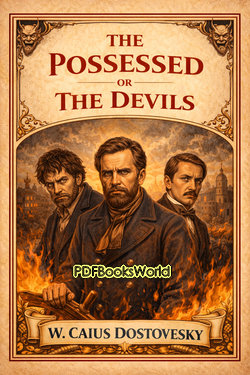
The Possessed or The Devils
by Fyodor Dostoyevsky
Revolution, Moral Chaos, and Psychological Darkness in Dostoyevsky’s Political Masterpiece
Violent ideology, spiritual emptiness, manipulation, and emotional instability dominate the turbulent world of The Possessed; or, The Devils by Fyodor Dostoyevsky. Often regarded as one of the author’s most politically charged and psychologically intense novels, the work explores the destructive consequences of extremism, nihilism, and moral disintegration within a society losing faith in traditional values and institutions.
The novel combines political satire, philosophical debate, psychological drama, and tragedy into a powerful examination of ideological fanaticism and human weakness.
A Society on the Edge of Collapse
Set in provincial Russia during a period of growing political unrest, the novel portrays a community slowly descending into confusion, paranoia, and violence as radical revolutionary ideas spread among intellectuals and discontented young activists.
Dostoyevsky presents a society where old beliefs are weakening while new ideologies promise liberation but often produce emotional and moral chaos instead.
The atmosphere grows increasingly tense and unstable throughout the narrative.
Characters
The novel contains a large and emotionally volatile cast whose personal conflicts mirror broader political and philosophical struggles.
- Nikolai Stavrogin emerges as one of Dostoyevsky’s most mysterious and psychologically disturbing characters, combining charisma, detachment, and deep inner corruption.
- Pyotr Verkhovensky acts as a manipulative revolutionary organizer determined to spread disorder and ideological extremism.
- Stepan Trofimovich Verkhovensky, Pyotr’s father, represents an older generation of intellectual idealism increasingly disconnected from political reality.
- Shatov, Kirillov, and other figures embody competing philosophical responses to faith, freedom, nationalism, and despair.
Each character contributes to the novel’s portrait of ideological and spiritual crisis.
Themes
Dostoyevsky uses the story to investigate profound moral, political, and psychological questions.
- The danger of ideological extremism and revolutionary fanaticism
- The loss of spiritual belief and moral direction
- The psychological effects of nihilism and alienation
- The conflict between freedom, responsibility, and moral order
- The manipulation of individuals through political movements
The title itself suggests people spiritually “possessed” by destructive ideas and emotional forces beyond rational control.
Politics and Human Psychology
Unlike simple political fiction, The Possessed focuses heavily on the emotional and psychological motives behind radical behavior. Dostoyevsky suggests that pride, loneliness, resentment, vanity, and spiritual emptiness often drive ideological extremism as much as political theory itself.
The novel therefore examines revolution not only as social movement, but also as psychological and moral crisis.
The Writing Style of Fyodor Dostoyevsky
Dostoyevsky writes with emotional intensity, philosophical depth, and dramatic energy. Conversations frequently become fierce intellectual confrontations filled with psychological tension and moral conflict.
The narrative moves between dark satire, tragedy, psychological realism, and moments of spiritual reflection.
The emotional atmosphere often feels chaotic, mirroring the instability consuming the characters and society itself.
Why The Possessed Still Feels Powerful
The Possessed; or, The Devils remains deeply relevant because the novel’s warnings about extremism, ideological manipulation, political violence, and moral fragmentation continue to resonate in the modern world.
For readers interested in Russian literature, political philosophy, psychological fiction, revolutionary history, and morally complex storytelling, Dostoyevsky’s novel stands as one of literature’s most intense explorations of the destructive forces that can consume both individuals and societies.
Similar Genres
About the Author
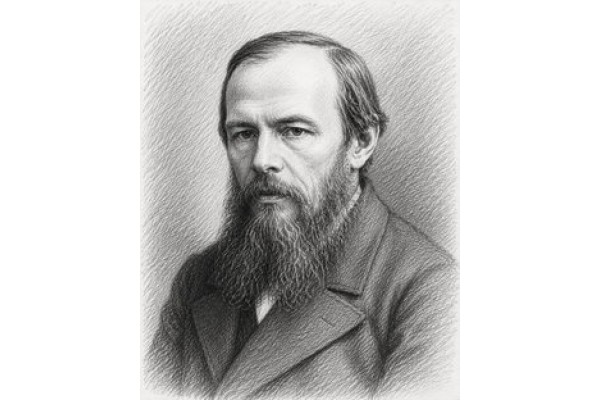
Fyodor Dostoyevsky stands among the greatest novelists in world literature, celebrated for his profound exploration of the human mind and the moral questions that shape our lives. Born in Moscow in 1821, Dostoyevsky experienced hardship, imprisonment, exile, and financial struggle, experiences that deeply influenced his writing. Explore Fyodor Dostoyevsky books to discover the author's life, literary career, and access notable works, including Crime and Punishment, Notes from the Underground, The Idiot, Short Stories of Fyodor Dostoyevsky , and more.