The Paradise of Children
by Nathaniel Hawthorne
A Mythic Story of Innocence, Curiosity, and the Beginning of Human Sorrow
The Paradise of Children by Nathaniel Hawthorne is a beautifully retold version of the Greek myth of Pandora, adapted for younger readers with imagination, emotional warmth, and symbolic depth. Part of Hawthorne’s mythological story collections, the tale explores innocence, curiosity, temptation, suffering, and hope through a magical and emotionally resonant fantasy world.
Hawthorne transforms the ancient myth into a gentle yet meaningful story about the fragile balance between happiness and human experience.
Pandora Arrives in a World of Joy
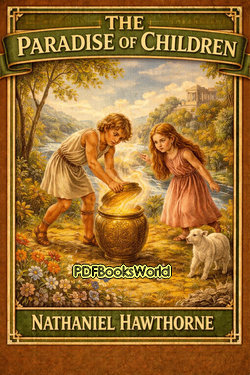
The story begins in a peaceful and idyllic world where children live happily without pain, fear, sickness, or sorrow. Into this paradise arrives Pandora, a beautiful and curious young girl carrying a mysterious box she has been warned never to open.
At first, life remains joyful and harmonious.
Yet Pandora becomes increasingly fascinated by the forbidden box. Her curiosity grows stronger despite repeated warnings and uncertainty about what the container might hold.
Eventually, unable to resist, she opens it.
From the box escape countless forms of suffering, grief, illness, conflict, and human trouble that spread rapidly across the once-perfect world.
However, one final presence remains inside after the chaos: Hope.
The Figures Within the Mythic Tale
- Pandora
A curious and emotionally complex young girl whose actions transform the human world. - Epimetheus
Pandora’s gentle companion living peacefully before suffering enters existence. - The Children
Figures representing innocence, joy, and emotional purity. - Hope
A comforting and sustaining force remaining after sorrow is released.
Hawthorne presents the myth with emotional softness while preserving its symbolic seriousness.
Curiosity, Suffering, and Human Experience
One of the story’s central ideas is that curiosity and suffering become inseparable parts of human existence. Pandora’s action brings pain into the world, yet Hawthorne does not portray her simply as wicked or malicious.
Instead, her curiosity appears deeply human and emotionally understandable.
The story suggests that sorrow and difficulty may become part of the larger process through which humanity gains emotional depth, compassion, and resilience.
Hope’s survival at the end gives the tale its emotional balance and lasting comfort.
Major Themes Running Through the Story
- Curiosity and Temptation
Pandora’s desire to know the unknown changes the world permanently. - Innocence and Loss
The paradise of childhood gives way to suffering and emotional complexity. - Hope Amid Human Sorrow
Even after pain enters the world, hope remains as a sustaining force. - Myth and Moral Imagination
Fantasy becomes a way of exploring human emotion and experience.
Hawthorne’s Gentle Mythological Storytelling
The Paradise of Children demonstrates Hawthorne’s remarkable talent for adapting ancient myths into emotionally accessible stories without losing their symbolic richness.
His prose remains elegant, warm, and imaginative, allowing younger readers to engage with difficult ideas through wonder and narrative beauty.
The balance between sadness and hope gives the story lasting emotional resonance.
Why the Story Still Touches Readers
Modern readers continue loving The Paradise of Children because its themes remain universally meaningful. Curiosity, loss, suffering, and hope continue shaping human life across every generation.
The story also remains powerful because it treats emotional complexity with gentleness rather than harshness.
For readers interested in mythology, symbolic storytelling, children’s classics, and timeless reflections on human experience, this tale remains beautiful, thoughtful, and enduringly memorable.
Similar Genres
About the Author
Nathaniel Hawthorne occupies a distinguished place in American literature for his masterful exploration of morality, guilt, and the complexities of human nature. Born in Salem, Massachusetts, in 1804, he drew inspiration from New England's colonial history and Puritan heritage, transforming historical settings into timeless works of fiction. Explore Nathaniel Hawthorne books to discover the author's life, literary career, and access notable works, including The Scarlet Letter, Mosses from an Old Manse and Other Stories, The House of the Seven Gables, The New Adam and Eve (From "Mosses from an Old Manse") , and more.