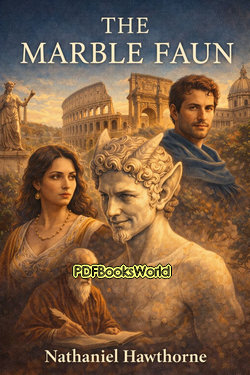
The Marble Faun
by Nathaniel Hawthorne
Art, Innocence, Guilt, and Mystery in Romantic Italy
The Marble Faun by Nathaniel Hawthorne is a richly atmospheric novel blending psychological drama, symbolism, romance, and moral mystery against the backdrop of nineteenth-century Italy. Filled with artists, ancient ruins, emotional secrets, and spiritual uncertainty, the novel explores the relationship between innocence and experience, beauty and corruption, sin and moral awakening.
More meditative and ambiguous than a traditional romance, the story unfolds through emotional tension, symbolic suggestion, and haunting psychological change.
Four Travelers in Rome
The novel centers on four main characters living within the artistic and historical world of Rome: Miriam, a mysterious and emotionally burdened woman; Hilda, an innocent American copyist devoted to purity and art; Kenyon, a sculptor; and Donatello, a joyful young Italian nobleman whose resemblance to an ancient faun statue gives the novel its title.
At first, their lives seem shaped mainly by art, friendship, and romantic possibility.
Gradually, however, a dark and mysterious event alters the emotional and moral atmosphere surrounding them.
After this turning point, innocence begins giving way to guilt, secrecy, emotional suffering, and spiritual transformation.
The Figures Within Hawthorne’s Roman Drama
- Donatello
A cheerful and innocent young nobleman whose moral awakening changes him profoundly. - Miriam
A talented and secretive woman haunted by an unsettling connection to her past. - Hilda
An idealistic artist representing innocence, purity, and moral sensitivity. - Kenyon
A thoughtful sculptor observing the emotional changes affecting the group.
The relationships between these characters create an atmosphere filled with fascination, affection, guilt, and uncertainty.
Innocence Lost Through Experience
One of the novel’s central concerns is the transformation that occurs when innocence encounters moral complexity. Hawthorne repeatedly asks whether true humanity requires experience with suffering, guilt, and imperfection.
Donatello’s development especially reflects this idea. His joyful simplicity begins changing after exposure to violence and emotional responsibility.
Hawthorne suggests that moral awareness may deepen human understanding while also destroying emotional innocence.
This tension gives the novel its haunting emotional power.
Major Themes Running Through the Novel
- Innocence and Moral Awakening
Characters undergo emotional and spiritual transformation through guilt and experience. - Art and Beauty
Rome’s artistic and historical atmosphere shapes the emotional world of the novel. - Sin, Guilt, and Redemption
Hawthorne explores how wrongdoing alters identity and conscience. - Mystery and Psychological Ambiguity
Important truths remain emotionally suggestive rather than fully explained.
Hawthorne’s Most Atmospheric Romance
The Marble Faun stands apart for its richly descriptive Italian setting and dreamlike emotional atmosphere. Hawthorne uses Rome’s ruins, catacombs, sculptures, and ancient history almost symbolically, surrounding the characters with reminders of beauty, decay, and historical memory.
The novel’s ambiguity also contributes to its lasting fascination. Hawthorne avoids complete explanations, allowing mystery and emotional uncertainty to linger throughout the narrative.
The result feels reflective, symbolic, and deeply psychological.
Why the Novel Still Captivates Readers
Modern readers continue appreciating The Marble Faun because of its exploration of innocence, guilt, identity, and emotional transformation. Its psychological complexity and symbolic richness continue rewarding interpretation.
The novel also feels modern in its fascination with ambiguity and the hidden depths of human consciousness.
For readers interested in gothic romance, psychological fiction, art and literature, and morally complex classic novels, this work remains haunting, elegant, and unforgettable.
Similar Genres
About the Author
Nathaniel Hawthorne occupies a distinguished place in American literature for his masterful exploration of morality, guilt, and the complexities of human nature. Born in Salem, Massachusetts, in 1804, he drew inspiration from New England's colonial history and Puritan heritage, transforming historical settings into timeless works of fiction. Explore Nathaniel Hawthorne books to discover the author's life, literary career, and access notable works, including The Scarlet Letter, Mosses from an Old Manse and Other Stories, The House of the Seven Gables, The New Adam and Eve (From "Mosses from an Old Manse") , and more.