The Blithedale Romance
by Nathaniel Hawthorne
An Idealistic Community Slowly Consumed by Secrecy, Desire, and Disillusionment
The Blithedale Romance by Nathaniel Hawthorne is a psychological and symbolic novel exploring utopian idealism, emotional obsession, social reform, and the hidden complexities beneath human relationships. Inspired partly by Hawthorne’s experiences at the Brook Farm communal experiment, the novel examines what happens when dreams of perfect social harmony collide with jealousy, pride, secrecy, and personal desire.
Although centered on a reform community, the story ultimately becomes less about politics and more about the emotional instability hidden beneath noble ideals.
A Narrator Enters an Experimental Community
The novel is narrated by Miles Coverdale, a reflective and often unreliable observer who joins the rural community of Blithedale, a cooperative society founded on ideals of equality, shared labor, and moral improvement.
At first, the project appears hopeful and intellectually exciting. The residents believe they can create a better and more authentic form of life outside ordinary society.
Yet emotional tensions gradually emerge among the community’s central figures.
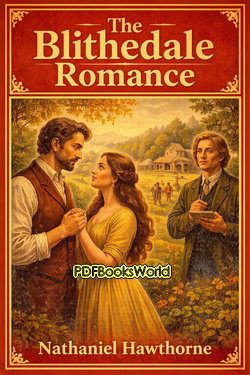
Coverdale becomes increasingly fascinated by the mysterious relationships connecting Zenobia, a passionate and independent woman, the fragile and secretive Priscilla, and Hollingsworth, a charismatic reformer consumed by his own social mission.
As hidden motives and emotional rivalries deepen, the idealistic dream of Blithedale begins to unravel.
The Individuals at the Heart of the Community
- Miles Coverdale
A thoughtful but emotionally detached narrator observing the community with fascination and uncertainty. - Zenobia
An intelligent, proud, and emotionally intense woman struggling with love and personal independence. - Priscilla
A quiet and mysterious young woman whose fragile innocence conceals hidden emotional significance. - Hollingsworth
A passionate reformer whose moral idealism gradually becomes controlling and destructive.
The emotional tensions between these characters shape the novel’s growing psychological darkness.
The Failure of Idealism
One of the novel’s central ideas is that human imperfection cannot easily be removed through social reform alone. The residents of Blithedale attempt to build a rational and harmonious community, yet personal ambition, emotional longing, jealousy, and pride repeatedly disrupt their vision.
Hawthorne suggests that private human complexity often resists organized idealism.
The community’s collapse therefore becomes both social and psychological.
Major Themes Running Through the Novel
- Utopian Idealism and Disillusionment
The novel questions whether perfect social systems can overcome human weakness. - Secrecy and Hidden Emotion
Characters conceal motives, desires, and emotional truths from one another. - Individual Desire Versus Collective Vision
Personal relationships conflict with the community’s larger ideals. - Observation and Emotional Distance
Coverdale’s narration raises questions about interpretation, voyeurism, and unreliable perception.
Hawthorne’s Blend of Symbolism and Psychological Realism
The Blithedale Romance combines realistic social observation with symbolic atmosphere and emotional ambiguity. Hawthorne transforms the reform community into a symbolic landscape where moral ideals and hidden passions collide.
The novel’s psychological subtlety remains especially striking. Characters frequently misunderstand both themselves and each other, while emotional motives remain layered and uncertain.
This ambiguity gives the narrative lasting emotional depth.
Why the Novel Still Feels Modern
Modern readers continue finding The Blithedale Romance compelling because its themes remain highly relevant. Questions involving idealistic movements, social experimentation, personal identity, emotional manipulation, and the tension between public ideals and private desire continue shaping modern life.
The novel also feels modern in its psychological complexity and skepticism toward simplified solutions to human problems.
For readers interested in American literary classics, psychological fiction, and symbolic explorations of idealism and human nature, this novel remains intelligent, haunting, and deeply thought-provoking.
Similar Genres
About the Author
Nathaniel Hawthorne occupies a distinguished place in American literature for his masterful exploration of morality, guilt, and the complexities of human nature. Born in Salem, Massachusetts, in 1804, he drew inspiration from New England's colonial history and Puritan heritage, transforming historical settings into timeless works of fiction. Explore Nathaniel Hawthorne books to discover the author's life, literary career, and access notable works, including The Scarlet Letter, Mosses from an Old Manse and Other Stories, The House of the Seven Gables, The New Adam and Eve (From "Mosses from an Old Manse") , and more.