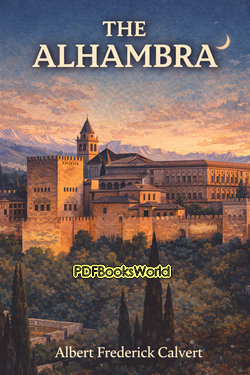
The Alhambra
by Albert Frederick Calvert
Moorish Splendor and the Architectural Wonder of Granada
The Alhambra by Albert Frederick Calvert is a richly descriptive historical and artistic study examining the famous palace-fortress complex of the Alhambra in Granada, Spain. Combining architectural history, cultural reflection, and visual appreciation, the work explores the beauty, symbolism, and historical importance of one of the greatest surviving monuments of Islamic Spain.
Calvert presents the Alhambra not merely as a building, but as a masterpiece of artistic imagination reflecting centuries of political power, cultural achievement, and refined craftsmanship.
The History of the Alhambra
The book traces the origins and development of the Alhambra during the period of Moorish rule in Spain, particularly under the Nasrid dynasty. Built upon a hill overlooking Granada, the complex served as both royal residence and defensive fortress while becoming a center of art, learning, and political authority.
Calvert describes the gradual expansion of the palace with its intricate courtyards, decorative arches, fountains, and geometric ornamentation. Following the Christian conquest of Granada in 1492, the Alhambra entered a new historical phase while preserving much of its Islamic artistic character.
Rather than treating the structure solely as a historical ruin, the work emphasizes its continuing emotional and cultural beauty.
Architecture and Artistic Beauty
A major theme throughout the book is the extraordinary elegance of Moorish architecture and decoration. Calvert repeatedly highlights the delicate carvings, patterned tiles, arabesques, gardens, and flowing water features that create the Alhambra’s unique atmosphere.
The work also reflects fascination with Islamic art and the blending of architectural design with poetry, geometry, and natural harmony. Light, color, shadow, and proportion all contribute to the palace’s remarkable aesthetic effect.
At the same time, the book explores the Alhambra as a symbol of Spain’s complex cultural history shaped by Christian, Islamic, and Mediterranean influences.
This combination of historical scholarship and artistic appreciation gives the work lasting cultural importance.
Historical and Artistic Themes Explored Throughout the Book
- Moorish Architecture: Islamic artistic traditions shape the palace’s design and decoration.
- Cultural and Historical Legacy: The Alhambra reflects centuries of Spanish and Islamic history.
- Beauty and Symmetry: Geometry, ornament, and landscape combine harmoniously.
- Art and Spiritual Atmosphere: Architecture creates emotional and contemplative experience.
- The Preservation of Cultural Heritage: Historical monuments connect modern readers with the past.
Albert Frederick Calvert’s Descriptive Style
The Alhambra demonstrates Albert Frederick Calvert’s ability to combine historical detail with vivid artistic description. His writing remains elegant, informative, and strongly focused upon helping readers visualize the beauty and grandeur of the palace complex.
Calvert consistently presents the Alhambra as one of the great architectural treasures of world civilization.
Why the Book Still Holds Historical and Artistic Interest
Modern readers continue finding The Alhambra valuable because it preserves detailed appreciation for one of the world’s most celebrated architectural landmarks. The work also provides insight into Islamic art, Spanish history, and the cultural exchanges that shaped medieval Europe.
Its themes of architecture, beauty, history, and cultural memory continue appealing to readers interested in art history, Spanish studies, Islamic civilization, travel literature, and architectural heritage.
Similar Genres
About the Author

Albert Frederick Calvert was a British author, historian, and travel writer whose works introduced English-speaking readers to the rich history, art, architecture, and cultural heritage of Spain. Born in London in 1872, Calvert devoted much of his career to documenting the country's remarkable monuments, landscapes, and historical traditions through beautifully illustrated books. Explore Albert Frederick Calvert books to discover the author's life, literary career, and access notable works, including Toledo, Seville, Catalonia & The Balearic Islands, Granada and the Alhambra , and more.