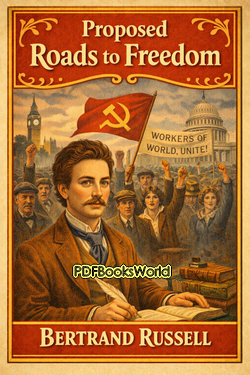
Proposed Roads to Freedom
by Bertrand Russell
Politics, Liberty, and Social Change in a Visionary Work of Modern Philosophy
Proposed Roads to Freedom by Bertrand Russell is a major political and philosophical work examining socialism, anarchism, syndicalism, individual liberty, labor, and the future organization of society. Written during a period of intense political transformation and industrial unrest, the book explores how modern civilization might balance social cooperation with personal freedom.
Russell combines careful analysis with moral idealism, seeking alternatives to systems built upon inequality, exploitation, and authoritarian control.
A Search for Better Forms of Society
The book investigates several influential political movements and social theories that emerged in response to industrial capitalism and economic inequality during the nineteenth and early twentieth centuries.
Russell examines socialism, anarchism, and syndicalism not merely as abstract ideologies, but as serious attempts to solve problems involving poverty, labor exploitation, centralized power, and restrictions on individual freedom.
Rather than fully embracing any single doctrine, he evaluates both the strengths and dangers within each system.
Russell consistently argues that economic structures should exist to support human creativity, happiness, and intellectual development rather than mechanical obedience or profit alone.
The work therefore becomes both political critique and philosophical exploration of human possibility.
The Political and Intellectual Forces Within the Book
- Socialism: Presented as an effort to reduce inequality and reorganize economic power more fairly.
- Anarchism: Explored as a philosophy emphasizing freedom from coercive authority and centralized control.
- Syndicalism: Examined as a labor-centered movement seeking worker control over industry and production.
- The Modern Industrial State: Criticized for limiting individuality, creativity, and genuine human fulfillment.
Russell’s analysis remains balanced, intellectually curious, and deeply concerned with practical human consequences.
Freedom Beyond Mere Political Power
One of the book’s strongest ideas is that genuine freedom requires more than formal political rights alone. Russell argues that economic insecurity, oppressive labor conditions, and excessive state or corporate control can undermine personal liberty just as effectively as overt political tyranny.
He believes societies should encourage creativity, independent thought, education, and meaningful work.
The book repeatedly questions systems treating human beings primarily as economic instruments rather than individuals capable of intellectual and emotional growth.
This humane philosophical perspective gives the work lasting relevance.
Major Themes Running Through the Work
- Freedom and Individual Development: Human flourishing requires intellectual, emotional, and economic liberty.
- Critique of Industrial Capitalism: Economic systems often reduce people to mechanical labor and dependency.
- Authority and Power: Russell questions centralized political and economic control.
- Social Justice and Cooperation: Societies should balance equality with personal independence and creativity.
Russell’s Clear and Humane Political Philosophy
Proposed Roads to Freedom demonstrates Bertrand Russell’s remarkable ability to discuss complex political ideas with clarity, balance, and intellectual honesty. He avoids rigid dogmatism while seriously engaging with competing social theories.
Russell’s writing remains analytical yet deeply humanistic, consistently returning to questions of happiness, dignity, and freedom.
The book reflects both philosophical rigor and moral concern for ordinary lives shaped by political systems.
Why the Book Still Feels Important Today
Modern readers continue finding Proposed Roads to Freedom highly relevant because debates surrounding economic inequality, labor rights, political authority, and personal freedom remain central to contemporary society.
Russell’s thoughtful criticism of both capitalism and authoritarianism continues resonating across political and philosophical discussions.
For readers interested in political philosophy, social theory, economic justice, and intellectually accessible discussions about freedom and the future of society, this work remains insightful, challenging, and deeply thought-provoking.
Similar Genres
About the Author
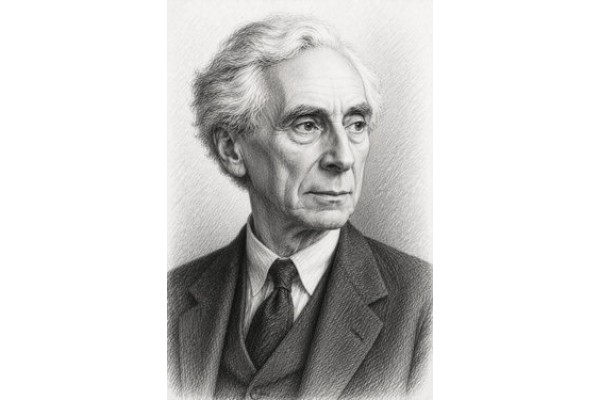
Bertrand Russell was one of the twentieth century's most influential philosophers, mathematicians, and public intellectuals. Born in Wales in 1872, he devoted his life to the pursuit of knowledge, using clear reasoning and careful analysis to examine some of humanity's most important questions. Explore Bertrand Russell books to discover the author's life, literary career, and access notable works, including Mysticism and Logic and Other Essays, The Problems of Philosophy, The Analysis of Mind, The Problem of China , and more.