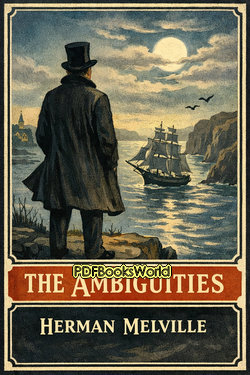
Pierre; or The Ambiguities
by Herman Melville
A Dark and Troubled Journey Into Identity, Desire, and Moral Confusion
Pierre; or, The Ambiguities by Herman Melville is one of the most psychologically intense and unconventional novels of the nineteenth century. Blending family drama, philosophical speculation, emotional obsession, and gothic tragedy, the novel explores the collapse of certainty within a world shaped by hidden desire, unstable identity, and destructive idealism.
Unlike the adventurous spirit of Typee or the symbolic grandeur of Moby-Dick, this novel turns inward, focusing on emotional turmoil and psychological fragmentation.
The result is strange, difficult, and deeply haunting.
Pierre’s Life Begins to Disintegrate
The story follows Pierre Glendinning, a privileged and sensitive young man raised within wealth, comfort, and the belief that his family history is honorable and secure.
His world changes dramatically after he encounters Isabel, a mysterious young woman claiming to be his father’s illegitimate daughter.
Shocked by the possibility that his admired father led a hidden life, Pierre becomes emotionally consumed by guilt, responsibility, and fascination with Isabel herself.
Determined to protect her, he abandons social respectability and gradually destroys his relationships, financial security, and emotional stability.
As the novel progresses, Pierre’s moral idealism turns increasingly self-destructive and psychologically unstable.
The Characters Within Melville’s Emotional Labyrinth
- Pierre Glendinning
A passionate and emotionally conflicted young man driven toward psychological and moral collapse. - Isabel
A mysterious woman whose uncertain origins and emotional intensity reshape Pierre’s entire life. - Lucy Tartan
Pierre’s devoted fiancée representing emotional innocence and social stability. - Mrs. Glendinning
Pierre’s proud mother whose ideals of family honor begin collapsing under painful revelations.
The emotional relationships within the novel become increasingly tangled, obsessive, and destructive.
A Novel Obsessed With Uncertainty
The word “ambiguities” in the title reflects the novel’s central concern with uncertainty. Truth, morality, identity, love, and even reality itself become unstable as Pierre struggles to understand his emotions and responsibilities.
Melville repeatedly refuses clear answers. Characters misunderstand themselves and others, while motives remain psychologically uncertain.
The narrative itself becomes increasingly fragmented and philosophical, mirroring Pierre’s mental and emotional disintegration.
Major Themes Within the Novel
- Identity and Psychological Fragmentation
Pierre’s sense of self gradually collapses under emotional pressure and moral confusion. - Idealism and Self-Destruction
The novel questions whether extreme moral idealism can become dangerous and destructive. - Hidden Desire and Emotional Obsession
Relationships are shaped by secrecy, fascination, guilt, and emotional instability. - Truth and Ambiguity
Melville explores how difficult it is to distinguish certainty from illusion.
Melville’s Most Experimental Psychological Novel
Pierre shocked many readers upon publication because of its emotional intensity, unconventional structure, and philosophical complexity. Melville abandoned traditional realism in favor of symbolism, introspection, and psychological extremity.
The novel frequently shifts tone, moving between gothic drama, satire, tragedy, and philosophical reflection. This instability gives the work unusual emotional force.
Modern readers often recognize the novel as far ahead of its time in its treatment of mental conflict and fractured identity.
Why the Novel Continues to Fascinate
Today, Pierre; or, The Ambiguities is admired as one of Melville’s boldest and most psychologically daring works. Its themes of emotional confusion, unstable identity, family secrets, and self-destructive idealism continue to resonate strongly.
The novel also feels remarkably modern in its rejection of simple morality and clear narrative certainty. Melville portrays human consciousness as chaotic, contradictory, and emotionally unpredictable.
For readers interested in psychological fiction, gothic literature, and experimental literary classics, this novel remains disturbing, ambitious, and unforgettable.
Similar Genres
About the Author

Herman Melville stands among the greatest voices in American literature, celebrated for novels that combine thrilling adventures with profound reflections on humanity, nature, and destiny. Born in New York City in 1819, Melville spent several years at sea, experiences that became the foundation of many of his most memorable works. Explore Herman Melville books to discover the author's life, literary career, and access notable works, including Moby Dick or The Whale, Israel Potter - His Fifty Years of Exile, John Marr and Other Sailors, Mardi - and A Voyage Thither, Vol. II , and more.