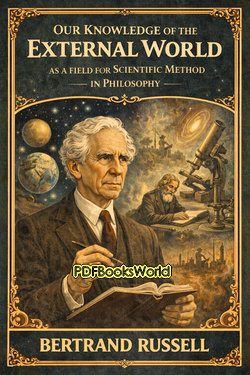
Our Knowledge of the External World as a Field for Scientific Method in Philosophy
by Bertrand Russell
Science, Logic, and the Search for Reliable Knowledge in Modern Philosophy
Our Knowledge of the External World as a Field for Scientific Method in Philosophy by Bertrand Russell is a landmark philosophical work exploring how logic, mathematics, and scientific reasoning can transform philosophy into a more precise and rigorous discipline. Based on a series of lectures, the book examines the nature of reality, perception, knowledge, space, time, causation, and the limits of human understanding.
Russell argues that philosophy should move away from vague speculation and instead adopt methods resembling those of science and logical analysis.
A New Approach to Philosophical Inquiry
The book reflects Russell’s central role in the development of analytic philosophy, a movement emphasizing clarity, logical structure, and careful examination of language and concepts.
Rather than treating philosophy as purely abstract metaphysics, Russell proposes that many philosophical problems can be clarified or solved through logical analysis and scientific method.
He investigates how human beings acquire knowledge about the external world despite relying upon sensory experience, interpretation, and conceptual frameworks.
The work also explores how modern mathematics and symbolic logic reveal hidden structures beneath ordinary thought and language.
Russell believes philosophy becomes more productive when it works alongside science rather than opposing it.
The Intellectual Foundations Within the Book
- Logic and Analytical Method: Russell uses logical analysis to clarify philosophical problems and assumptions.
- Scientific Method in Philosophy: Philosophy should pursue precision, evidence, and intellectual rigor similar to science.
- Knowledge and Perception: The book examines how humans understand reality through sensory experience and reasoning.
- Mathematics and Abstract Structure: Russell explores how logical systems shape understanding of space, time, and physical reality.
The work helped redefine modern philosophy by emphasizing clarity and formal reasoning.
Can Human Knowledge Reach Objective Reality?
One of the book’s strongest concerns is the relationship between immediate experience and the external world. Russell examines how people move from personal sensory impressions toward broader scientific understanding of objective reality.
He argues that careful logical analysis can reduce confusion surrounding concepts traditionally treated as mysterious or metaphysical.
The book also reflects optimism regarding the power of reason and intellectual discipline to expand reliable human knowledge.
At the same time, Russell remains aware that certainty has limits and that philosophy must proceed with intellectual humility.
Major Themes Running Through the Work
- Logic and Precision in Philosophy: Clear reasoning helps eliminate confusion and false assumptions.
- Science and Human Knowledge: Scientific methods provide valuable tools for philosophical investigation.
- Reality and Perception: Russell examines how people understand the external world through experience and analysis.
- Mathematics and Abstract Thought: Logical structures reveal hidden relationships underlying physical reality.
Russell’s Revolutionary Philosophical Style
Our Knowledge of the External World demonstrates Bertrand Russell’s extraordinary ability to combine technical intellectual rigor with accessible prose. Although the subject matter involves difficult philosophical ideas, Russell explains concepts with unusual clarity and discipline.
The work helped establish analytic philosophy as one of the dominant traditions in twentieth-century thought.
Russell’s emphasis on logic, language, and scientific reasoning deeply influenced later philosophy, mathematics, and cognitive theory.
Why the Book Still Matters Today
Modern readers continue finding Our Knowledge of the External World important because many of its questions remain central to philosophy, science, mathematics, and epistemology today.
The relationship between perception, language, logic, and objective reality continues shaping debates across philosophy, physics, artificial intelligence, and cognitive science.
For readers interested in analytic philosophy, logic, epistemology, philosophy of science, and the intellectual foundations of modern thought, this work remains groundbreaking, challenging, and profoundly influential.
Similar Genres
About the Author
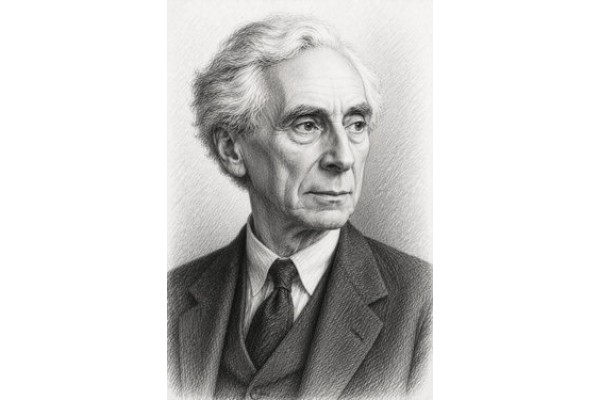
Bertrand Russell was one of the twentieth century's most influential philosophers, mathematicians, and public intellectuals. Born in Wales in 1872, he devoted his life to the pursuit of knowledge, using clear reasoning and careful analysis to examine some of humanity's most important questions. Explore Bertrand Russell books to discover the author's life, literary career, and access notable works, including Mysticism and Logic and Other Essays, The Problems of Philosophy, The Analysis of Mind, Proposed Roads to Freedom , and more.