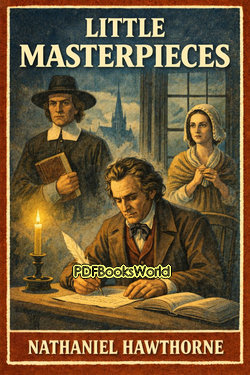
Little Masterpieces
by Nathaniel Hawthorne
A Collection Showcasing Hawthorne’s Finest Short Fiction and Imaginative Vision
Little Masterpieces by Nathaniel Hawthorne is a gathered selection of shorter works highlighting the author’s remarkable skill in symbolism, psychological insight, allegory, and atmospheric storytelling. Rather than forming a single continuous narrative, the collection presents some of Hawthorne’s most memorable tales and sketches, each exploring moral conflict, hidden emotion, imagination, and the darker complexities beneath ordinary life.
The stories reveal why Hawthorne became one of the central figures of American literary romanticism.
Stories Filled With Mystery and Moral Reflection
Across the collection, readers encounter lonely dreamers, burdened individuals, symbolic landscapes, haunted consciences, and strange encounters where outward appearances conceal deeper truths.
Many stories combine realistic settings with allegorical or supernatural suggestion, creating an atmosphere where emotional and moral tensions feel almost physically present.
Hawthorne rarely offers simple judgments or complete explanations.
Instead, his narratives invite readers to reflect upon guilt, pride, ambition, secrecy, innocence, and the uncertain nature of human morality.
The Figures and Worlds Appearing Within the Collection
- Solitary Thinkers and Dreamers
Characters struggling with memory, imagination, guilt, or emotional isolation. - Symbolic Communities and Landscapes
Settings reflecting moral tension, historical memory, or psychological conflict. - Individuals Burdened by Hidden Secrets
People attempting to conceal past actions, desires, or emotional truths. - Observers of Human Nature
Narrators reflecting thoughtfully on morality and emotional complexity.
The emotional atmosphere throughout the collection remains introspective, mysterious, and psychologically rich.
Symbolism and the Hidden Life of the Soul
One of Hawthorne’s defining literary qualities is his use of symbolism to explore inner emotional and moral experience. Objects, places, physical appearances, and seemingly ordinary events often carry deeper meanings connected to conscience, identity, or spiritual conflict.
The stories frequently suggest that beneath civilized behavior lie hidden fears, desires, guilt, and uncertainty.
This combination of realism and symbolic depth gives the collection lasting interpretive richness.
Major Themes Running Through the Collection
- Guilt and Moral Consciousness
Characters struggle with the emotional consequences of secrecy and wrongdoing. - Isolation and Emotional Distance
Many individuals become separated from society or from genuine human connection. - Appearance Versus Reality
Outward respectability often conceals hidden psychological conflict. - Imagination and Symbolic Meaning
The stories transform ordinary events into reflections on deeper human truths.
Hawthorne’s Mastery of the Short Form
Little Masterpieces demonstrates Hawthorne’s extraordinary control of mood, symbolism, and psychological suggestion within shorter fiction. Even brief tales often create emotional and philosophical depth far beyond their length.
His prose combines elegance, restraint, and haunting atmosphere, allowing moral tension to emerge gradually rather than through direct explanation.
The stories remain reflective and emotionally layered rather than purely plot-driven.
Why the Collection Still Matters
Modern readers continue appreciating Little Masterpieces because the collection captures many of the qualities that make Hawthorne’s writing enduringly powerful: psychological complexity, symbolic richness, moral ambiguity, and emotional introspection.
The stories also feel remarkably modern in their exploration of hidden identity, emotional repression, and subjective experience.
For readers interested in American literary classics, allegorical fiction, psychological storytelling, and atmospheric short prose, this collection remains intelligent, haunting, and deeply rewarding.
Similar Genres
About the Author
Nathaniel Hawthorne occupies a distinguished place in American literature for his masterful exploration of morality, guilt, and the complexities of human nature. Born in Salem, Massachusetts, in 1804, he drew inspiration from New England's colonial history and Puritan heritage, transforming historical settings into timeless works of fiction. Explore Nathaniel Hawthorne books to discover the author's life, literary career, and access notable works, including The Scarlet Letter, Mosses from an Old Manse and Other Stories, The House of the Seven Gables, The New Adam and Eve (From "Mosses from an Old Manse") , and more.