Earth's Holocaust
by Nathaniel Hawthorne
A Symbolic Bonfire Consumes the World’s Institutions and Illusions
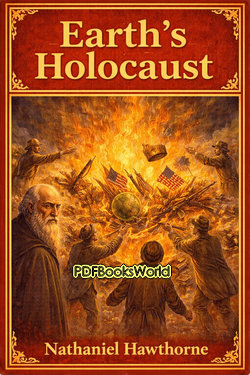
Earth’s Holocaust by Nathaniel Hawthorne is a darkly imaginative allegorical short story exploring human nature, social reform, morality, and the limits of external change. Through a vast symbolic spectacle in which humanity gathers to burn the world’s institutions, traditions, and symbols of corruption, Hawthorne questions whether evil can truly be eliminated by destroying external systems alone.
The story combines satire, fantasy, philosophical reflection, and moral symbolism in a way that feels both dreamlike and unsettling.
A Great Burning of Human Civilization
The narrative describes an enormous gathering where people from across society bring objects representing history, authority, and human culture to a gigantic fire. Political systems, social customs, weapons, legal documents, religious symbols, titles, books, and instruments of power are all thrown into the flames.
The participants believe they are purifying the world by destroying the foundations of corruption, oppression, greed, violence, and social inequality.
At first, the event carries an atmosphere of excitement and revolutionary optimism.
Yet as the destruction continues, Hawthorne gradually introduces a deeper and more troubling question: what if the true source of evil lies not within institutions, but within the human heart itself?
The Symbolic Figures Within the Story
- The Reformers and Revolutionaries
Individuals seeking to purify society through the destruction of corrupt systems. - The Observers
Voices reflecting on the meaning and consequences of the massive symbolic event. - The Human Heart
Presented ultimately as the deepest source of moral corruption and conflict.
The story’s symbolic structure allows Hawthorne to examine broad philosophical ideas through vivid imagery.
Reform Without Inner Transformation
One of the story’s central arguments is that external reform alone cannot create moral perfection. Hawthorne suggests that laws, governments, institutions, and social systems may reflect human flaws, but they are not the original cause of evil.
Even after humanity destroys nearly every symbol of corruption, selfishness and moral weakness remain alive within human nature itself.
The story therefore questions utopian visions promising perfect social transformation through external revolution alone.
Major Themes Running Through the Story
- The Limits of Social Reform
Destroying institutions cannot automatically remove human selfishness or moral weakness. - Human Nature and Sin
Hawthorne emphasizes the persistence of inner moral conflict. - Revolution and Idealism
The story explores both the appeal and danger of radical purification movements. - Symbolism and Allegory
Objects and events represent broader philosophical and moral ideas.
Hawthorne’s Moral and Philosophical Imagination
Earth’s Holocaust reflects Hawthorne’s fascination with morality, guilt, idealism, and the hidden complexity of human nature. Rather than celebrating simple progress or revolution, he approaches reform movements with skepticism and psychological depth.
The story’s imagery remains vivid and theatrical, turning abstract philosophical concerns into dramatic symbolic action.
Its mixture of satire, fantasy, and moral seriousness gives the narrative lasting intellectual power.
Why the Story Still Feels Relevant
Modern readers continue finding Earth’s Holocaust compelling because its questions remain deeply contemporary. Political movements, social reform, ideological conflict, and debates about human nature continue shaping modern societies.
The story also feels modern in its skepticism toward simplistic solutions and its recognition that external systems alone cannot fully resolve moral and psychological problems.
For readers interested in allegorical fiction, philosophical literature, and symbolic explorations of society and human nature, this story remains provocative, imaginative, and remarkably timeless.
Similar Genres
About the Author
Nathaniel Hawthorne occupies a distinguished place in American literature for his masterful exploration of morality, guilt, and the complexities of human nature. Born in Salem, Massachusetts, in 1804, he drew inspiration from New England's colonial history and Puritan heritage, transforming historical settings into timeless works of fiction. Explore Nathaniel Hawthorne books to discover the author's life, literary career, and access notable works, including The Scarlet Letter, Mosses from an Old Manse and Other Stories, The House of the Seven Gables, The New Adam and Eve (From "Mosses from an Old Manse") , and more.