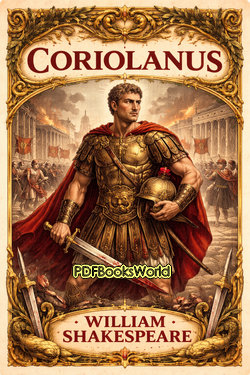
Coriolanus
by William Shakespeare
A Powerful Tragedy of Pride, Politics, and Personal Honor
Coriolanus by William Shakespeare is a politically charged tragedy that explores leadership, pride, public opinion, and the conflict between personal integrity and political compromise. Based on the life of the Roman military hero Caius Marcius Coriolanus, the play examines how strength and honor can become dangerous weaknesses when combined with arrogance and emotional inflexibility.
Unlike Shakespeare’s more romantic or psychologically emotional tragedies, Coriolanus focuses heavily on politics, warfare, and social conflict, creating a tense and intellectually complex portrait of power and public life.
A Hero Celebrated for Military Brilliance
The story begins in ancient Rome during a period of political unrest and conflict between the ruling class and ordinary citizens. Caius Marcius earns enormous admiration after defeating Rome’s enemies through exceptional courage and military skill.
In recognition of his victory at the city of Corioles, he receives the name Coriolanus and becomes one of Rome’s greatest heroes.
However, his success on the battlefield does not prepare him for the demands of political leadership.
Pride Collides With Public Politics
Coriolanus despises political flattery and openly scorns the common people whose support he must gain in order to hold political office. His inability to hide his contempt gradually turns public opinion against him.
Manipulated by political rivals and driven by his own pride, Coriolanus eventually finds himself rejected by the very society he once defended.
Characters
- Coriolanus – A proud and fearless Roman warrior struggling with politics and public opinion
- Volumnia – Coriolanus’s powerful and ambitious mother
- Menenius – A loyal Roman statesman attempting to maintain peace and balance
- Aufidius – A rival military leader who both admires and opposes Coriolanus
- Roman citizens and political tribunes representing public influence and social conflict
The relationships among these figures create the tragedy’s political and emotional tension.
Themes
- The conflict between personal honor and political compromise
- Pride, arrogance, and self-destruction
- The instability of public opinion and political power
- The tension between military strength and civic leadership
- The influence of family loyalty and social expectation
These themes give the play lasting political and psychological relevance.
William Shakespeare’s Powerful Political Writing
Shakespeare writes with intense dramatic energy and sharp political insight throughout the play. The speeches often focus on honor, power, leadership, and social division, creating an atmosphere filled with tension and confrontation.
The conflict between the ruling elite and the common people gives the tragedy unusual political complexity.
A Tragic Hero Destroyed by His Own Strengths
Coriolanus is tragic not because he lacks courage or ability, but because his greatest qualities become destructive flaws. His honesty becomes harshness, his pride becomes isolation, and his devotion to honor prevents him from adapting to political reality.
Shakespeare portrays him as both admirable and deeply flawed, creating a complex and unforgettable tragic figure.
Why Coriolanus Continues to Be Studied
Coriolanus remains important because of its exploration of politics, leadership, and the relationship between individuals and society. The play raises timeless questions about democracy, power, public image, and personal integrity.
For readers and audiences interested in political drama, classical tragedy, and psychologically complex heroes, the play offers a powerful and thought-provoking examination of pride, authority, and human conflict.
Similar Genres
About the Author

William Shakespeare is widely regarded as the greatest playwright in the English language and one of the most influential writers in world literature. Born in Stratford-upon-Avon in 1564, he transformed the stage with works that explored love, ambition, jealousy, power, revenge, and the enduring complexities of human nature. Explore William Shakespeare books to discover the author's life, literary career, and access notable works, including Romeo and Juliet, Hamlet, Macbeth, The Tempest , and more.