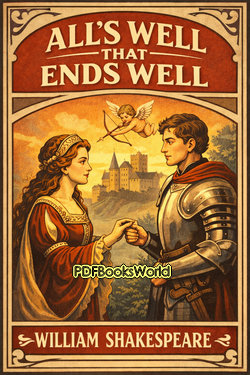
All's Well That Ends Well
by William Shakespeare
A Complex Comedy About Love, Determination, and Social Barriers
All's Well That Ends Well by William Shakespeare is one of Shakespeare’s most unusual and emotionally complicated comedies. Blending romance, social ambition, deception, and moral conflict, the play explores the pursuit of love in a world shaped by class distinction, personal pride, and emotional uncertainty.
Often considered one of Shakespeare’s “problem plays,” the drama combines comic structure with serious emotional themes, creating a story that feels both romantic and psychologically challenging.
A Young Woman in Love Beyond Her Social Position
The story centers on Helena, the intelligent and devoted daughter of a respected physician. Deeply in love with Bertram, the young Count of Roussillon, Helena faces the obstacle of social inequality because Bertram belongs to the nobility.
When Helena successfully cures the King of France using her father’s medical knowledge, she is rewarded with the opportunity to choose a husband. She selects Bertram, but he refuses to accept the marriage willingly and leaves for war shortly afterward.
Determined and resourceful, Helena continues pursuing both love and emotional recognition despite repeated rejection.
Love, Pride, and Emotional Resistance
The relationship between Helena and Bertram forms the emotional center of the play. Helena represents persistence, loyalty, and emotional intelligence, while Bertram often appears immature, prideful, and emotionally distant.
Shakespeare explores whether love can truly succeed when emotional commitment exists unevenly between two people.
Characters
- Helena – A determined and intelligent woman pursuing love despite social obstacles
- Bertram – A proud young nobleman reluctant to accept Helena as his wife
- The King of France – A ruler whose gratitude toward Helena changes her social position
- Parolles – A boastful and cowardly companion providing comic satire
- Nobles, soldiers, and attendants reflecting social expectations and emotional conflict
The contrasting personalities and emotional motivations create the play’s mixture of comedy and tension.
Themes
- The conflict between love and social class
- Persistence, loyalty, and emotional determination
- The gap between appearance and true character
- Pride, maturity, and personal growth
- The complicated relationship between desire and obligation
These themes give the play emotional and psychological complexity.
William Shakespeare’s Blend of Comedy and Serious Reflection
Shakespeare combines romantic comedy with moments of moral seriousness and emotional discomfort. While comic characters and clever schemes create humor, the central relationship remains emotionally complicated and sometimes unsettling.
The play’s shifting tone helps explain why it continues to provoke discussion and interpretation.
A Heroine Driven by Intelligence and Determination
Helena stands out as one of Shakespeare’s most active and resourceful female characters. Rather than waiting passively for romance, she uses intelligence, courage, and persistence to shape her own future.
Her emotional strength contrasts sharply with Bertram’s immaturity and uncertainty.
Why All's Well That Ends Well Continues to Fascinate Readers
All's Well That Ends Well remains significant because of its morally complex characters, unconventional romance, and exploration of love shaped by power and social expectation. The play refuses to present relationships in simple or idealized ways.
For readers and audiences interested in Shakespearean drama, psychologically layered relationships, and romantic stories with emotional ambiguity, the play offers a thoughtful and challenging exploration of love, pride, and human imperfection.
Similar Genres
About the Author
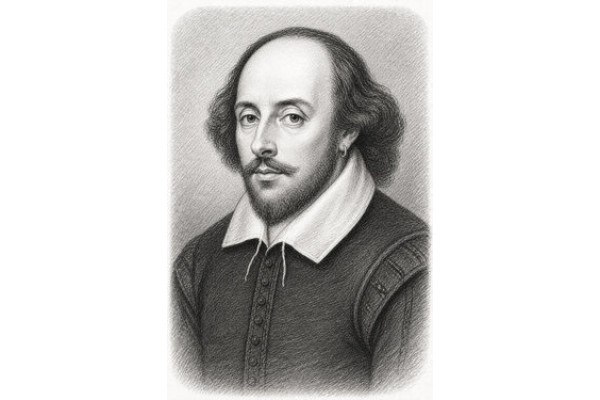
William Shakespeare is widely regarded as the greatest playwright in the English language and one of the most influential writers in world literature. Born in Stratford-upon-Avon in 1564, he transformed the stage with works that explored love, ambition, jealousy, power, revenge, and the enduring complexities of human nature. Explore William Shakespeare books to discover the author's life, literary career, and access notable works, including Romeo and Juliet, Hamlet, Macbeth, The Tempest , and more.