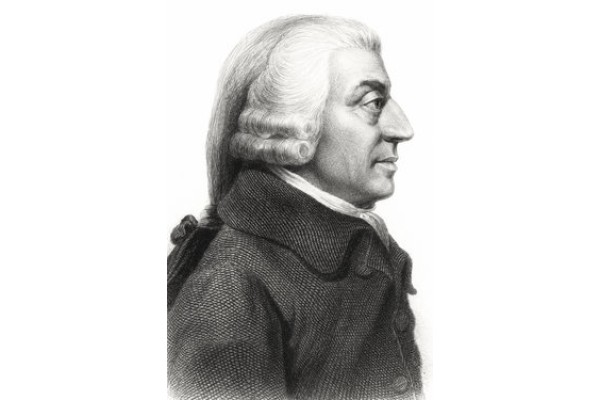
Adam Smith
Adam Smith was a Scottish economist, philosopher, and author whose pioneering ideas laid the foundations of modern economics and the study of free markets. Born in Kirkcaldy, Scotland, in 1723, Smith became one of the leading thinkers of the Scottish Enlightenment through his insightful writings on commerce, morality, government, and human behavior. His theories on division of labor, market competition, and economic freedom transformed political economy and continue to influence business, public policy, and academic research around the world. His enduring works remain essential reading for students of economics, philosophy, and history.
The Father of Modern Economics
Adam Smith believed that prosperity grows through productive labor, voluntary exchange, and the efficient use of resources. His books explored the relationship between individual self-interest, markets, moral responsibility, and national wealth, arguing that economic progress depends upon both personal initiative and sound institutions. Combining philosophical reasoning with practical observation, Smith examined trade, taxation, education, justice, and government, creating a framework that continues to shape economic thought more than two centuries later. His balanced approach united moral philosophy with economic analysis in a way that remains remarkably relevant.
Beyond economics, Smith was an influential moral philosopher whose writings examined ethics, sympathy, and the social bonds that sustain civilized society. His remarkable scholarship secured his place among the greatest intellectual figures of the Enlightenment and one of history's most influential thinkers.
Essential Works
- An Inquiry into the Nature and Causes of the Wealth of Nations is Smith's landmark masterpiece, examining the principles of trade, labor, markets, taxation, and economic growth while establishing the foundations of modern economics.
- The Theory of Moral Sentiments explores ethics, sympathy, virtue, and human behavior, providing the philosophical foundation for Smith's economic thought.
- Lectures on Jurisprudence presents Smith's reflections on law, justice, government, and the historical development of political institutions.
- Lectures on Rhetoric and Belles Lettres examines language, communication, literature, and the principles of effective expression.
- Essays on Philosophical Subjects gathers Smith's writings on science, astronomy, philosophy, and intellectual inquiry, demonstrating the breadth of his scholarship.
- Early Draft of Part of The Wealth of Nations offers valuable insight into the evolution of Smith's economic ideas and the development of one of history's most influential books.
An Enduring Legacy in Economics and Philosophy
Adam Smith's writings continue to shape discussions of economics, ethics, commerce, and public policy around the world. From An Inquiry into the Nature and Causes of the Wealth of Nations and The Theory of Moral Sentiments to Lectures on Jurisprudence and Essays on Philosophical Subjects, his works remain foundational texts for understanding markets, human behavior, and the principles of a prosperous society. His enduring legacy continues to influence economists, policymakers, business leaders, and readers interested in the development of modern economic thought.
If you enjoy economics, philosophy, political thought, and classic works that examine commerce, ethics, and society, the writings of Adam Smith are well worth exploring. At PDFBooksWorld, you can discover a carefully curated collection of his enduring works and explore the ideas of one of history's greatest economists and philosophers.