Phrenology
The Phrenology catalog offers a unique collection of books that explore the history, theories, and cultural influence of phrenology, a nineteenth-century field that sought to associate mental faculties and personality traits with the shape and structure of the human skull. Once widely discussed in scientific, medical, and social circles, phrenology played a notable role in the development of early ideas about the mind, behavior, and human individuality. The collection provides readers with valuable insights into this historical discipline and its place within the broader history of psychology and science.
Many titles focus on the foundational principles of phrenology, examining how its early proponents attempted to classify human characteristics through physical observation. Readers can explore theories concerning personality, intellect, temperament, and behavior as they were understood within the framework of phrenological thought. Through detailed explanations and historical writings, these books reveal how scholars and practitioners sought to create systematic methods for understanding human nature. The collection emphasizes the importance of historical perspective and intellectual context when studying past scientific theories.
The catalog also explores the cultural and social influence of phrenology during its period of popularity. Many works examine how phrenological ideas affected education, medicine, social reform, employment practices, and public perceptions of character and ability. Readers gain insight into the ways scientific concepts can shape cultural attitudes and influence public discourse. These studies provide a broader understanding of how theories about the human mind evolved over time and contributed to later discussions in psychology and neuroscience.
Another notable feature of the collection is its examination of the relationship between phrenology and other fields of inquiry. Books frequently discuss connections between phrenology, physiology, psychology, anthropology, and early medical science, illustrating how intellectual movements often intersect and influence one another. Readers can explore how phrenological ideas were debated, challenged, and eventually replaced as scientific methods and knowledge advanced. The collection highlights the value of critical analysis and historical scholarship in understanding the development of scientific thought.
The Phrenology catalog appeals to historians, psychologists, philosophers, researchers, students of science history, and lifelong learners interested in the evolution of ideas about the human mind and behavior. Its combination of historical texts, theoretical discussions, and cultural studies makes it a valuable resource for examining a significant chapter in intellectual history.
Overall, the Phrenology catalog serves as a gateway to the study of a once-influential approach to understanding personality and human behavior. By bringing together works on phrenological theory, cultural impact, and scientific history, the collection encourages readers to explore how knowledge evolves over time. It highlights the enduring importance of historical inquiry, critical thinking, and the continual refinement of scientific understanding.
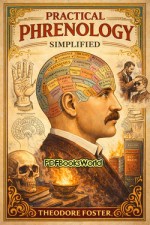
Practical Phrenology Simplified
Theodore Foster