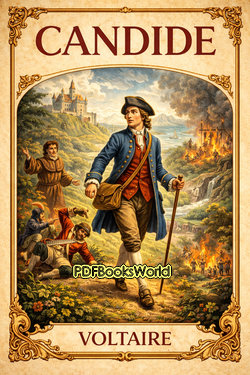
Candide
by Voltaire
A Sharp and Entertaining Satire on Optimism and Human Society
Candide by Voltaire is one of the most famous satirical works in world literature. Combining humor, adventure, philosophy, and social criticism, the novella follows the naïve young Candide as he travels through a world filled with violence, injustice, greed, disaster, and human absurdity.
Written during the Enlightenment period, the work challenges blind optimism and questions philosophical ideas that claim everything in the world happens for the best. Through fast-moving adventures and exaggerated situations, Voltaire exposes the hypocrisy, cruelty, and irrationality he saw in society, politics, religion, and human behavior.
A Young Man Raised to Believe in Perfect Optimism
Candide begins life in a sheltered environment where he is taught by the philosopher Pangloss that this is “the best of all possible worlds.” According to Pangloss, every event, no matter how terrible, ultimately serves a positive purpose.
However, once Candide leaves this protected world, he encounters war, natural disasters, corruption, betrayal, and suffering on a massive scale. These experiences gradually challenge his innocent beliefs.
An Adventure Across a Chaotic World
The story moves rapidly through many countries and situations, including battles, earthquakes, imprisonment, and encounters with strange societies. Voltaire uses these adventures to satirize governments, religious institutions, social inequality, and philosophical systems.
Despite the serious subjects, the novella maintains a lively and humorous tone filled with irony and exaggerated misfortune.
Characters
- Candide – A naïve and good-hearted young man searching for truth and happiness
- Pangloss – A philosopher stubbornly defending extreme optimism despite constant disaster
- Cunégonde – Candide’s beloved whose life becomes shaped by hardship and survival
- Martin – A skeptical companion with a darker view of human nature
- Soldiers, nobles, religious figures, and travelers representing different aspects of society
The unusual and often exaggerated personalities help strengthen the novella’s satirical effect.
Themes
- The conflict between optimism and reality
- The cruelty and absurdity of human society
- The dangers of blind philosophical belief
- The search for meaning and personal happiness
- The importance of practical action over empty theory
These themes make the novella both humorous and intellectually provocative.
Voltaire’s Wit and Satirical Style
Voltaire writes with remarkable speed, irony, and clarity. His humor often emerges through shocking contrasts between terrible events and calm philosophical explanations.
The short chapters and rapid movement from one disaster to another create an energetic style that keeps the satire sharp and entertaining.
A Landmark of Enlightenment Literature
Candide reflects many key ideas of the Enlightenment, including skepticism toward authority, criticism of intolerance, and belief in rational thought. Voltaire challenges institutions and philosophies that ignore human suffering or justify injustice.
The novella became one of the defining literary works of its era because of its fearless criticism and intellectual energy.
Why Candide Continues to Be Admired
Candide remains widely read because of its clever humor, memorable characters, and timeless social criticism. Voltaire’s observations about war, greed, hypocrisy, and human foolishness continue to feel surprisingly modern.
For readers interested in satire, philosophical fiction, and classic Enlightenment literature, the novella offers an entertaining and thought-provoking exploration of human society and the search for wisdom.
Similar Genres
About the Author

Voltaire, born François-Marie Arouet, was a French philosopher, historian, playwright, essayist, and one of the most influential writers of the Enlightenment. Born in Paris in 1694, Voltaire became renowned for his wit, eloquent prose, and fearless criticism of intolerance, injustice, and abuse of power. Explore Voltaire books to discover the author's life, literary career, and access notable works, including Toleration and other essays , and more.