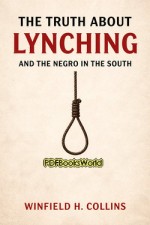
Winfield H. Collins
Winfield H. Collins was an American writer, historian, and social commentator whose work focused on the political, historical, and social issues of the United States during the late nineteenth and early twentieth centuries. He examined topics that were often controversial, encouraging readers to consider historical events and public debates through detailed analysis and documented evidence. His books reflected the intellectual climate of his era and sought to engage readers with questions about society, government, and public policy. The Truth About Lynching and the Negro in the South is one of his best-known works, offering a perspective on a deeply contested subject that has since been the focus of extensive historical research and continuing scholarly discussion.
A Writer Engaged with Public Issues
Winfield H. Collins wrote during a period when the United States was undergoing significant political and social change. His interests extended beyond historical events to include questions of public opinion, governance, and social policy. Like many writers of his time, he addressed difficult subjects that were widely debated in newspapers, public forums, and academic circles.
His writing style emphasized careful argument and historical reference. Collins sought to persuade readers by presenting evidence and interpretation, reflecting the traditions of political and historical writing common during the early twentieth century.
Understanding His Historical Context
Many of Collins's works should be read within the historical circumstances in which they were written. His views reflected the knowledge, assumptions, and public debates of his own era, and some of his conclusions differ significantly from those reached by modern historians. Contemporary scholarship has expanded access to historical records and has provided broader perspectives on race, civil rights, and American history, leading to revised interpretations of many subjects discussed in earlier publications.
For modern readers, Collins's writings serve not only as historical commentary but also as primary-source material that illustrates how social and political issues were debated during his lifetime. They provide valuable insight into the intellectual and cultural environment of the period.
His Contribution to Historical Discussion
Although some of his arguments remain controversial, Winfield H. Collins contributed to the tradition of documenting and debating important public issues through books and essays. His work demonstrates how historical interpretation evolves as new evidence, research methods, and perspectives become available. Studying such writings helps readers understand both the events being discussed and the changing ways historians have interpreted them over time.
His publications continue to interest researchers examining the history of public discourse, political thought, and social debate in the United States. They are often consulted as historical documents that reflect the viewpoints and intellectual discussions of their era rather than as definitive modern accounts.
An Enduring Historical Record
Winfield H. Collins remains a figure of interest primarily because his writings preserve aspects of early twentieth-century historical and political thought. Readers today approach his books as historical sources that reveal how certain issues were understood and debated during his lifetime. Examining these works alongside modern scholarship allows for a more complete understanding of both the historical events themselves and the evolution of historical interpretation.
The Truth About Lynching and the Negro in the South continues to be studied as a historical document reflecting the perspectives and debates of its time. PDF Books World carefully curates editions of significant historical works such as this, enabling modern readers to explore a wide range of viewpoints while encouraging informed reading alongside contemporary historical research.