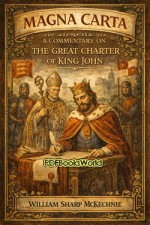
William Sharp McKechnie
William Sharp McKechnie was a Scottish legal scholar, historian, and professor whose research on constitutional law and medieval history earned lasting recognition among students of legal history. Best known for his authoritative studies of the Magna Carta, McKechnie combined careful scholarship with a clear writing style that made one of the world's most important legal documents accessible to both specialists and general readers. His book Magna Carta: A Commentary on the Great Charter of King John remains one of the classic works on the history, meaning, and influence of the famous charter.
A Scholar of Law and History
William Sharp McKechnie devoted his academic career to the study of constitutional development, medieval institutions, and legal history. As a professor of law, he believed that understanding the origins of legal systems was essential for appreciating modern principles of justice and government. His research drew upon original historical records, allowing him to present carefully documented interpretations of important legal texts and historical events.
Exploring the Legacy of Magna Carta
McKechnie's scholarship focused on explaining both the historical circumstances surrounding the creation of the Magna Carta and its lasting constitutional significance. Rather than treating the charter as a simple historical document, he examined each clause in detail, discussing its purpose, legal meaning, and influence on later constitutional traditions. His work demonstrates how the charter became a symbol of individual rights, the rule of law, and limits on governmental authority.
Magna Carta: A Commentary on the Great Charter of King John provides readers with historical background, legal analysis, and detailed commentary, making it one of the most respected studies of this foundational document in English constitutional history.
A Thorough and Accessible Writing Style
William Sharp McKechnie wrote with precision, clarity, and scholarly care. Although his research is detailed, he organized his material in a logical and readable manner that allows students, historians, and interested readers to follow complex legal discussions with confidence. His balanced approach combines historical context with careful legal interpretation, making his work valuable well beyond the academic community.
His writings continue to serve as important references for those studying constitutional development, medieval England, and the evolution of legal rights.
Notable Works
- Magna Carta: A Commentary on the Great Charter of King John – A comprehensive historical and legal analysis of the Magna Carta and its enduring influence.
- The State and the Individual – Essays examining constitutional principles and the relationship between government and citizens.
- Studies in Constitutional History – Research exploring the development of British legal and political institutions.
- Lectures on Public Law – Educational writings explaining important concepts in constitutional and legal history.
- Historical Essays on Medieval Government – Studies of the institutions and legal traditions that shaped medieval Britain.
An Enduring Contribution to Legal History
William Sharp McKechnie's scholarship continues to be valued for its careful research and thoughtful interpretation of one of history's most influential legal documents. His work has helped generations of readers understand the historical foundations of constitutional government and the enduring importance of the rule of law. His writings remain essential resources for anyone interested in legal history and constitutional development.
Readers interested in constitutional history, medieval England, and the evolution of legal rights will find lasting value in the writings of William Sharp McKechnie. Whether beginning with Magna Carta: A Commentary on the Great Charter of King John or exploring his other scholarly works, they will discover an author whose research continues to illuminate the foundations of modern law.